Plinko Casino UK: Real-Money Play and Regulation
 Available in GB

A practical look at Plinko randomness, free play, payments and the difference between UKGC-regulated operators and offshore sites.
Table of Contents
- What an Online Plinko Casino Means in the UK
- The Game Behind the Plinko Search
- Playing Plinko for Real Money: Know the Boundary
- Free Play Can Be Useful, But It Isn’t a Payout
- How to Think About Plinko’s Random Outcomes
- Casino Sites, Offshore Offers and the Bonus Small Print
- What “Best” Should Mean When You Compare Plinko Options
- Plinko Demo Searches: What Randomness Can Tell You
- Withdrawals, Payments and the Plinko Question
- Crypto Plinko Searches and Alternative Platforms
- Games
What an Online Plinko Casino Means in the UK
When I see “Plinko casino” attached to a UK label, I don’t treat the wording as proof that a site is authorised to serve people here. It tells me what someone is looking for: a casino setting with a Plinko-style game. The more important distinction is whether the operator is part of the UKGC system or is an offshore platform outside it.
A specialist review has described the 2026 online casino market as having two parallel sides: UKGC-regulated operators and offshore platforms that accept UK players. That is a useful way to understand why a search can bring up very different kinds of sites under similar wording. But the two sides are not equivalent. An offshore casino may accept customers from the UK while still operating outside UKGC regulation.
For online gambling offered to customers in England, Scotland and Wales, the operator must hold the relevant UKGC licence, regardless of where the company is based. That requirement is about the operator and the service it provides—not whether a particular game has a British-sounding name or appears on a page aimed at UK readers. Online casino games are available where the law permits them, so the site’s regulatory position matters before the game label does.
That is the part I used to skim past. A page can look polished, use pounds and mention British players, yet those details alone don’t establish that it is within the UKGC system. Nor does a claim that a casino accepts UK players mean it has the licence required to serve the British market legally. “UK-friendly” can be marketing language. The licence question is separate.
Two different meanings of “UK casino”
A UKGC-regulated casino is an operator licensed to provide gambling services to customers in the relevant British market. The regulator sets the framework for those operators. An offshore casino that accepts UK players sits outside that UKGC framework; it does not become UKGC-regulated simply by allowing people in Britain to register or by displaying games that appeal to them.
RTP in UK Casino Slots: What the Figures Mean
That difference is easy to lose when you are focused on finding an online casino with Plinko. A search result may place licensed and offshore options next to each other, and both may describe themselves as suitable for UK players. But “available to a UK visitor” and “licensed to serve UK customers” are not interchangeable descriptions.
I’d keep the labels plain. UKGC means the operator is in the British regulatory system. “Non GamStop” is a phrase people may encounter when looking at offshore options, but it is not another name for a UKGC licence. The fact that an offshore platform accepts UK players does not put it under UKGC oversight.
What the game label can and cannot tell you
The word Plinko identifies the kind of game a person hopes to find; it does not tell you who runs the casino or what regulatory system applies to it. A site’s use of the word “casino” does not settle that either. The market distinction is about the operator, not a search term, a promotional banner or a game’s presentation.
So when you are considering an online Plinko casino in the UK, separate two checks in your mind. First, is the operator licensed by the UKGC to serve customers in Great Britain? Second, does the site actually offer the game you are looking for? Those are different questions, and answering one does not answer the other. I’ve found that separating them cuts through a lot of confident-sounding copy.
Calling an option the “best” does not change its status. A strong-looking game page, a UK-facing advert or an easy registration route cannot substitute for the operator’s regulatory position. I’d rather know which side of the market I am looking at before weighing up anything else. Looks aren’t a licence.
This context matters because the same broad phrase—an online casino with Plinko—can point towards operators with different relationships to UK regulation. A UKGC-regulated casino and an offshore site may both appear relevant to someone looking for the game, but only the former is operating within the UKGC framework for serving British customers. Keep that distinction in view as you assess what a site says about itself.
Licensing
An offshore casino that accepts UK players is not the same as a UKGC-regulated operator; only the latter is licensed to serve the British market legally.
The Game Behind the Plinko Search
A name can tell you what someone is looking for without telling you exactly what happens when they play. “Plinko” is often used as a label for a falling-token or peg-board-style game, but that label alone does not establish a particular game’s rules, provider, or way of producing results. If you are looking at a casino Plinko game in the UK, start by separating the familiar visual idea from the gambling mechanics underneath it.
Casino play has a basic structure: you stake cash or chips, then an outcome determines what happens to that stake. The result may be a single event or a combination of events. That applies across very different games, even when one looks like a board and another looks like a set of cards or a machine. A colourful screen can make the experience feel unlike traditional gambling. The stake and possible result still matter.
That distinction helped me stop treating game names as explanations. A label can suggest a theme, but it does not tell you whether you are making choices, how outcomes are generated, or what conditions apply. Those details belong to the rules for the specific game. The name is only the front door.
Different formats, shared basics
Casino games are commonly encountered in several formats. A machine-style game is generally played by one person at a time, without a dealer or casino employee running each round. Table games, by contrast, involve a player or players playing against the casino and are commonly managed by a croupier or dealer. The screens may look different, but both formats can involve a stake and an uncertain result.
Fruit Machine Slots UK: Pub Cabinets to Online
This is useful when you are trying to work out whether a Plinko-branded game is a machine-style casino game, a casual game with no gambling, or something else. The title itself cannot settle that. Look at the actual play conditions: is there a stake, and can the outcome change what you receive? If so, you are dealing with gambling mechanics, whatever the artwork looks like.
I used to focus on the animation first. That was backwards. The animation is presentation; the rules explain the game.
A “Plinko slot game” description can also be imprecise. A game that resembles a slot in its presentation is not automatically a slot, and the word “game” covers plenty of formats. In the same way, calling something an app tells you about how it is accessed, not what its gambling rules are. Read the game information rather than inferring the format from a label.
Where randomness comes in
Many casino games rely on random-number systems. In those games, a computer or other gaming equipment selects numbers at random, and the game uses them to determine an outcome. The player sees the result on screen; the underlying selection is part of the game’s operation.
That broad explanation does not prove how any particular Plinko-style product works. It does explain why a familiar visual does not necessarily mean a physical object is deciding the result. A screen can display movement and suspense while the outcome is determined through the game’s random-number process. To understand a specific title, you need its own rules and information.
There is a practical difference between watching a token appear to travel through a course and knowing what determines the final result. The animation may be the part you notice, but the game rules describe what counts as a result and how it relates to a stake. Don’t let a convincing visual stand in for that information.
Why the casino format matters
Casino games typically give the operator a long-term mathematical advantage, while a player can still come out ahead over a shorter stretch. Those two things can both be true. A brief run of favourable outcomes does not change the underlying structure, and a losing run does not by itself reveal that a game is broken. The result of one session is not a guide to what must happen next.
Chicken Road game in UK casinos: format guide
I learned not to confuse a game that feels simple with one that is predictable. A Plinko-style presentation may look easy to follow, but the appearance of a path or a sequence does not explain the chances or payout rules. Those have to come from the particular game’s information, not from the name or the animation.
If you are comparing descriptions of a Plinko casino game, keep the questions plain: what is being staked, what outcomes are possible, and what rules govern them? Whether the game appears in a browser or through an app does not answer those questions. Nor does a “demo” label tell you, on its own, what version of the game you are seeing.
The point is not to decode every casino game from its graphics. It is to recognise the shared mechanics, then check the individual rules before deciding what the screen actually represents. That is less exciting than the animation. More useful, though.
Playing Plinko for Real Money: Know the Boundary
Typing “Plinko” beside “real money” can make the offer sound straightforward: find a game, stake cash and see what happens. I used to treat the words on a page as if they settled the important part. They don’t. A game being advertised to British players, or appearing on a site that accepts them, does not by itself mean the operator is legally allowed to provide real-money gambling here.
For customers in England, Scotland and Wales, an operator offering real-money gambling must hold a licence from the UK Gambling Commission (UKGC). That is the boundary to keep in view when you see a Plinko game promoted as available in the UK. The name of the game, the language on the website and the fact that an account can be opened are not substitutes for the operator having the required UKGC licence.
That distinction matters because a “Plinko casino” can mean different things in ordinary online use. It might refer to a site advertising a Plinko-style game, a game page using the Plinko name, or simply a search for somewhere to stake money. None of those descriptions establishes the legal status of the operator. Nor does a “real money” label prove that the offering is authorised for British customers. Marketing language is not a licence. Simple as that.
Do
- Establish if the operator holds a UKGC licence
- Check the legal status of the operator
- Verify if the site is authorised for Great Britain
Don’t
- Rely on “UK-friendly” marketing language
- Assume a polished page implies a licence
- Treat a “real money” label as regulatory proof
The same caution applies to phrases such as “Plinko slot machine” or “Plinko slots”. A label in a menu or review does not tell you, on its own, how a particular product is classified or whether the site carrying it is licensed to offer gambling in Great Britain. I wouldn’t infer either point from the title. The relevant question is not whether a page calls something a slot, a game or a casino feature; it is whether the operator taking real-money play from customers here has the necessary UKGC licence.
I’ve learned not to let a polished page do the thinking for me. A review, a promotional banner or a string of positive comments may describe a game or an experience, but that is separate from the legal permission an operator needs. Even a detailed “Plinko casino review” can’t turn an unlicensed operator into a licensed one. Reviews may help explain what a site claims to offer; they are not regulatory approval.
This is also why searches asking whether Plinko is “real” can be misleading unless you separate the meanings. There may be a real game or an actual website using that name; that does not answer whether real-money gambling through that operator is legally available to you in Great Britain. And “how to win real money” is a different question again. No wording about winning removes the licensing requirement or guarantees that an advertised game can lawfully take your stake.
Mines Casino Game UK: Rules, Licensing and Risks
If you are considering a real-money Plinko game, first establish who is operating the site and whether that operator holds a UKGC licence for serving customers in Great Britain. Don’t rely on the game title, a UK-facing page, or a claim that the site accepts British players. If the licence point is unclear, treat that uncertainty as a reason to pause rather than as a detail to brush past. I’d rather miss an offer than confuse access with authorisation.
This is not a claim that every site using the Plinko name is licensed, or that any particular game is approved. It is the opposite: the name alone tells you neither. A search result can put a game and a real-money offer together, but the operator’s legal position is what matters before you gamble. Keep those questions separate, and don’t let “available” quietly become “licensed” in your head.
Free Play Can Be Useful, But It Isn’t a Payout
A free version can sound like a tidy way to try Plinko before risking money. The catch is in the word “free”: it describes the cost of that session, not a promise that a real-money version will be available, or that anything you win can be withdrawn. A page or app may use the language of free play without making those distinctions clear.
If you want to play Plinko without staking cash, first work out what the offer actually means. Is it a practice mode, a promotional feature, or simply a description on a page? Does it say that the play is simulated and that any displayed balance has no cash value? If those details are hard to find, I would not treat the word “free” as a useful explanation.
Free play is a way to test a game’s presentation or controls, but it does not guarantee that a real-money version has identical conditions.
That sounds obvious, but I’ve been caught by the shine of a label before. “Free” can feel like a harmless test; it can also make you less careful about what you are signing up for. Read the conditions rather than assuming the word settles the question.
Practice is not proof of a payout
A free-play option, if one is offered, may let you get a feel for a game’s presentation or controls. That can be useful if you are unsure whether you even enjoy the format. It does not establish that a real-money version has identical conditions, nor does it tell you what a future session would return.
Casino games typically give the casino a predictable advantage over the long term, while leaving room for players to have short-term gains. That is the part worth keeping in mind before moving from practice to cash. Free play does not remove that underlying reality from casino gambling; and practice results are not a reliable promise of a later payout.
No shortcut there.
So, when you look for a way to play Plinko for free, separate the experience from the money question. A practice session can answer a limited question—whether you like the feel of the game—without answering whether real-money play is suitable for you or what it might pay. Those are different decisions.
Be wary of “free” attached to other things
The wording can shift from free play to free spins, a bonus, or an app download. They are not interchangeable. A search for a Plinko slot’s free-play mode does not prove that the game is a slot, or that a demo exists. Nor does seeing “free spins” in a heading establish that you can use them on Plinko. Check what the offer specifically covers before acting on it.
The same goes for Android. A page that promises a download may be describing an app, a mobile-friendly website, or something else. Don’t install software just because the word “free” appears beside the game’s name. Check what you are downloading and what permissions it requests. If the page does not explain the product clearly, leave it alone.
Aviator Casino Game UK: Licensing and Play Guide
I would also avoid treating a free session as a rehearsal that prepares you to win. It may help you understand the interface, but it cannot turn a casino game into a reliable way to make money. I have made the mistake of carrying confidence from one session into another and treating a good result as evidence that I had it figured out. It wasn’t.
Free play is best approached as a low-pressure way to decide whether the experience appeals to you—if that option is actually available and clearly described. It is not a payout, a guarantee, or a forecast of what real-money play will bring. Keep that distinction, and the word “free” becomes easier to assess without letting it make the decision for you.
How to Think About Plinko’s Random Outcomes
A run of results can feel like a message. A few disappointing outcomes arrive together, and it is tempting to decide that a better one must be close. Or a favourable result appears, and you start treating it as evidence that you have found a pattern. I have made both mistakes. A sequence can look meaningful without telling you what comes next.
In random-number games, selected numbers are generated by a computer or other gaming equipment. The outcomes are not a conversation with the previous round. Seeing one result does not, by itself, show that the next result is due to change, or that the same kind of result is becoming more likely. A streak is something you can observe after it happens, not a reliable forecast.
That distinction matters when you wonder how a Plinko-style casino game works. The name alone does not tell you how a particular game turns a generated result into an on-screen outcome. You need the game’s own rules to understand that mapping. Without them, it is easy to read a visual pattern into a result and mistake the animation for a clue.
What a run of results can—and can’t—show
A record of past outcomes can tell you what happened in that record. It cannot establish, on its own, what will happen in a future round. A long run of one kind of result may feel unusual, but that feeling is not a prediction. Nor does a run of favourable outcomes prove that the game has become more generous.
This is where “hot” and “due” become slippery words. They describe a player’s impression, not a dependable advantage. If you catch yourself changing your stake because a result seems overdue, pause and separate what you know from what you hope: you know the earlier outcomes; you do not know the next one.
There is no reliable trick for winning at Plinko that can be inferred just by watching a short sequence. You can choose how much to risk, and you can decide when to stop, but those choices do not make a random outcome predictable. I used to confuse having a plan with having control. Not the same thing.
Keep the long view in mind
Random outcomes can still sit inside a game designed to favour the casino over time. Casino games typically give the operator a predictable long-term advantage while leaving room for players to gain in the short term. That is why a player can have a winning session without disproving the long-run structure—and why a losing stretch does not mean a win is about to arrive.
It helps to keep those ideas separate: any single result may be favourable or not, while the broader design can still favour the casino over repeated play. A memorable win is real, but it is not evidence that you have cracked a pattern. Neither is a frustrating run proof that the game owes you one.
I now treat each result as an outcome, not a hint. If I cannot explain a supposed pattern without leaning on “it has to happen soon”, I do not treat it as information. That small check has saved me from chasing a feeling.
Attention A streak of results in a random-number game is an observation of the past, not a reliable forecast of the next outcome.
Casino Sites, Offshore Offers and the Bonus Small Print
A site offering a Plinko-style game may look like any other casino at first glance, but the operator’s status matters more than the game title. In Great Britain, a business taking bets from customers must hold the relevant UKGC licence. Offshore casinos may accept UK players while operating outside that system; that does not make them UK-licensed. So when I see “legit” attached to a casino offer, I look past the label and check whether the operator is authorised to serve customers here.
Bonuses need the same scepticism. “No deposit” means the casino says you can receive the bonus without putting in your own money. It does not automatically mean you can withdraw any resulting balance straight away. The offer may come with wagering requirements, eligibility rules or restrictions on how the bonus can be used. Read the full terms before accepting it, not just the banner.
There are guardrails for incentives at UK-licensed operators. A specialist market review reports that, from 19 January 2026, wagering requirements on bonus funds cannot exceed 10x. In plain terms, the required betting cannot be set above ten times the bonus amount. An incentive also cannot make you gamble across different product types, such as casino games and sports betting, to qualify for the reward. That matters if an offer seems to bundle unrelated activities together.
Check what counts toward the requirement, when the offer expires and whether winnings or bonus funds are subject to separate conditions. “Free” can describe how you receive an offer, not how easy it is to turn it into withdrawable cash. If the terms are hard to find or difficult to understand, I take that as a reason to pause rather than rush in.
Offers are for eligible customers aged 18 or over, and operators must verify age before allowing a deposit. A familiar game name or generous-sounding promotion does not tell you whether the casino is licensed, nor does it establish that a particular Plinko product is available there. Read the operator’s status and the offer terms separately. Small print matters.
What “Best” Should Mean When You Compare Plinko Options
When choosing a Plinko casino in the UK for 2026, payout timing is one practical detail to consider. Use these verdicts as a concise reference and check the relevant terms before you play.
1. Amunbet
Payout speed: 1-3 business days Amunbet lists a payout speed of 1–3 business days, giving you a stated timeframe to consider.
2. Revery Play
Payout speed: 1-3 business days Revery Play lists a payout speed of 1–3 business days. This gives you a clear stated timeframe when reviewing the operator.
3. EvoSpin
Payout speed: 1-3 business days EvoSpin lists a payout speed of 1–3 business days, a useful detail for you to keep in mind.
4. Britsino
Payout speed: 1-3 business days Britsino lists a payout speed of 1–3 business days. You can use this stated timing as one point of reference.
5. SpinFormula
Payout speed: 1-3 business days SpinFormula lists a payout speed of 1–3 business days, providing you with a stated payout timeframe.
6. WinBeast
Payout speed: 1-3 business days WinBeast lists a payout speed of 1–3 business days. This is the available payout detail for you to consider.
7. SlotoSport
Payout speed: 1-3 business days SlotoSport lists a payout speed of 1–3 business days, giving you a stated indication of payout timing.
8. NightLuck
Payout speed: 1-3 business days NightLuck lists a payout speed of 1–3 business days. You have a stated timeframe to refer to when assessing it.
9. x3bet
Payout speed: 1-3 business days x3bet lists a payout speed of 1–3 business days, which you can factor into your review.
10. Zombillion
Payout speed: 1-3 business days Zombillion lists a payout speed of 1–3 business days. This stated timeframe is the available point of note.
When I used to look for the “best” casino game, I treated the word as if it meant one clear winner. It doesn’t. With Plinko, it is more useful to ask what you mean by best: a game you find entertaining, one with rules you can understand, or simply an option that fits how much you are prepared to risk.
Those are different tests. A page calling something the best Plinko casino may be making a sales pitch, not offering a dependable verdict. I would not take a confident label as proof that a game pays more or gives you a better chance. The word does not change how casino games work.
The awkward part is the trade-off. Casino games can produce short-term gains for a player, but over time they typically give the casino a predictable advantage. A good run can happen; it is not evidence that the game has become favourable. I have made that mistake myself: after a win, I started treating the next round as if it owed me the same luck. It didn’t.
Practical Comparison
Determine if you understand the stakes and outcomes rather than trusting a "best" label from promotional copy.
So if you are comparing Plinko options, keep “best” personal and practical. Ask whether you understand what you are staking and what outcomes are possible. Decide whether the experience is worth the risk to you, rather than assuming a popular label signals value. If you cannot tell what the game is asking you to risk, that is a reason to pause, not a puzzle to solve by trusting promotional copy.
You may also see Plinko described as a slot. I would be careful with that shorthand. A search label does not establish the rules, classification or features of any particular game. Look at the actual game information instead of assuming that one format behaves like another.
For me, the most useful comparison is not a league table. It is whether I can approach the game without confusing entertainment with a reliable way to make money. No title can remove the house’s long-term edge. That’s the bit that matters.
Plinko Demo Searches: What Randomness Can Tell You
When I look at a Plinko casino demo, I separate what I can observe from what I’m merely being invited to assume. A playable page may show how its interface responds, what information is displayed and how an outcome is presented. That can help you decide whether the experience is clear enough to understand. It cannot, by itself, tell you that the same game is available for real money or that the two versions behave identically.
Random-number games use numbers generated by a computer or other gaming equipment to determine outcomes. Seeing a run of results in a demo does not reveal the process behind them. A streak, a cluster of similar outcomes or a sudden change in results is just what appeared in that particular run; it is not evidence that the next result is due to follow a pattern.
That distinction matters when a page is labelled as a Plinko slot demo. The word “slot” in a heading does not establish how a particular game works, who made it or whether its demonstration mode uses the same setup as real-money play. I’ve been too quick to treat a polished screen as proof. It isn’t.
A demo can still answer modest, practical questions: can you follow the on-screen information, and is it obvious what action produces a result? But it cannot certify fairness or predict what would happen in another session. Nor does a short sequence tell you the game’s long-run behaviour. A neat little sample. Nothing more.
If you find a Plinko-style demonstration, read its own explanations rather than filling gaps with assumptions. Look for clear information about the game and how the demonstration is presented. If that information is absent, the honest conclusion is limited: you have seen a display and some outcomes, not proof of how a real-money version would operate.
That is the useful boundary. A demo may help you inspect what is in front of you; it cannot turn random results into a forecast. I’ve learned not to confuse seeing a game run with understanding everything that sits behind it.
Withdrawals, Payments and the Plinko Question
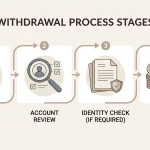
When I look at a casino’s payment page, I try not to treat a quick deposit as proof that a withdrawal will be just as smooth. The money moves in opposite directions, and the steps involved can differ. Open Banking and Faster Payments have reduced friction in transfers to and from online casinos, but that does not tell you when a particular withdrawal will arrive.
UK Casino Sites for Slots: What to Check
Some specialist reviews describe platforms where deposits are instant and withdrawals can be completed within hours rather than days. Treat that as a report about particular services, not a promise that applies to every casino with Plinko available. The payment method, the operator’s processing and any checks on an account can all matter. I would read the withdrawal terms before depositing, rather than relying on a headline about speed.
A useful check is whether the payment page explains which methods can be used for both deposits and withdrawals, and whether the account details need to match. If the terms are vague, or the site makes a sweeping promise without explaining the process, I would pause. “Fast” is an advertising word; the useful detail is what happens after you request your money.
And what is Plinko in a casino context? It is a casino game in which you stake cash or chips on possible outcomes. That means a result may be entertaining, but it is not a payment method or a route to a guaranteed return. Keep the game and the cash-out process separate in your mind: a balance shown on screen is not the same as money received in your account.
Before playing, check the withdrawal conditions and keep a record of your own deposits and requests. If a payment is delayed, use the operator’s stated support route and refer to its terms, rather than assuming a general estimate applies to your case. A sensible expectation is not that every payout arrives instantly, but that the process and any relevant conditions are clear before you put money in. Short version: check first.
Crypto Plinko Searches and Alternative Platforms
When I see a Plinko game presented alongside cryptocurrency payments, I separate two things that can easily get blurred: the game and the platform handling the account. A specialist review describes alternative platforms as accepting Bitcoin, Ethereum and Litecoin, alongside conventional cards and e-wallets. That is a report about the platforms it covers, not a promise that every site or every Plinko game offers those options.
The payment menu is only one piece of the picture. Non-traditional gaming platforms may operate under licences issued in Curaçao, Malta or Gibraltar. Those are different licensing jurisdictions; seeing one named does not, by itself, show that the operator holds a UKGC licence. The label “crypto-friendly” tells you about a payment feature, not the full regulatory position.
I would read the cashier details before treating a coin symbol as a simple alternative to a card. Check which currencies the platform says it accepts and whether the payment option is available for both deposits and withdrawals. Then read the account terms attached to that method. The details can matter more than the headline.
There is another distinction worth keeping in view: a platform’s list of accepted payment types does not confirm that a particular Plinko game is available there. Nor does it tell you what conditions apply to using that game. The site and the game are separate parts of the decision.
Crypto can make an offshore platform look more accessible, but accessibility is not the same as reassurance. I’ve learned not to let a familiar payment logo—or an unfamiliar coin—do the thinking for me. First, understand the platform. Then decide whether its payment arrangements make sense for you. No shortcut.
Games

Aviator Casino Game UK: Licensing and Play Guide
A practical look at licensing, slot rules, cash play and the limits of claims about...

3-Reel Slots in the UK: How to Find a Game
Lobby labels and artwork can be misleading, so check the game details, rules and preview...

Five-Reel Slots UK: Online Play and Safety
Five reels describe a game's format, while the UK Gambling Commission's public register helps verify...

Bonus buy slots in the UK: demos, stakes and limits
A practical guide to demo play, feature costs, volatility and session limits, with clear boundaries...

High Volatility Slots in the UK: How They Work
High-volatility slots tend to pay less often, with larger wins when they land; that pattern...

Low-Volatility Slots in the UK: RTP and Real Sessions
RTP describes a theoretical return over extensive play, while volatility shapes how results may vary...

Progressive Jackpot Slots: How They Work and Pay
Progressive slots pool part of wagers into a growing prize, while game rules, casino networks...

RTP in UK Casino Slots: What the Figures Mean
A slot’s RTP is a theoretical average across repeated play, while results in any individual...

Best Video Slots UK: How the Games Work
A practical guide to reel patterns, bonus features, browser play and the difference between demo...

Casino Dice Games in the UK: Rules and Formats
Dice-themed games can follow different rules and formats, making the instructions and platform terms important...

Chicken Road game in UK casinos: format guide
The game’s name and artwork do not establish its format; the way it is played...

Classic Slots Online in the UK: How They Work
Learn how reel combinations, paytables and familiar extras shape classic slots, and why a simple...

Crash casino games in the UK: regulation and play
The guide distinguishes UKGC-regulated operators from offshore sites and outlines checks on games, payments, demos...

Fruit Machine Slots UK: Pub Cabinets to Online
Online fruit slots keep familiar symbols and spins while replacing the physical cabinet with software,...

UK Casino Sites for Slots: What to Check
From operator authorisation and published game details to wagering terms and session limits, the guide...

Highest RTP Slots in the UK: How the Figures Work
RTP is a long-run mathematical expectation, while reel design, volatility and game settings can shape...

JetX Casino Game in the UK: What to Check
A look at JetX’s category label, demo limits, UK casino context and the checks to...

Mines Casino Game UK: Rules, Licensing and Risks
A Mines game’s name does not establish whether its operator holds the licence required to...

Online Casino Games for Real Cash in the UK: What to Know
A practical guide to slot odds, withdrawal routes, spending limits and bonus terms for UK...

Penny Slot Machines in the UK: Costs and Play
A practical guide to low-stake slots, covering total spin costs, free play, randomness, RTP and...

Progressive Slots Online UK: How Jackpots Work
Progressive prizes grow through wager contributions on connected games, while trigger rules and odds depend...

Online casino payouts in the UK: how RTP works
RTP describes a slot’s theoretical long-run return, not the result of an individual session or...