Online casino payouts in the UK: how RTP works
 Available in GB

RTP describes a slot’s theoretical long-run return, not the result of an individual session or the amount available to withdraw.
Table of Contents
- RTP on Slots: A Percentage Is Not a Promise
- Casino Payouts: The Difference Between a Game Return and a Withdrawal
- Which Casino Games Have the Highest RTP?
- What “Highest Paying” Can Honestly Mean in the UK
- High Odds, Winning Chances and the Short-Term Reality
- How to Read a Slot’s Payout Percentage
- So, What Casino Game Has the Highest RTP?
- Casino Sites, Licensing and the Checks Behind the Claims
- Playing for Real Money: Limits and Bonus Terms to Check
- Which Casino Games Pay Most—and What the House Edge Shows
- Games
RTP on Slots: A Percentage Is Not a Promise
Return to player, usually shortened to RTP, is a way of describing a slot’s theoretical return over time. It is useful when you want to understand the maths behind a game, but it is easy to read too much into the percentage. I used to see a high figure and treat it like a hint about what my next session would do. It isn’t.
An RTP of 90% means that, across the betting represented by the calculation, £90 is returned for every £100 bet. That is a description of the game’s long-run mathematical return, not a forecast that you will get £90 back after staking £100. Your own result can be higher, lower or nothing like that figure. The percentage does not tell you what will happen next.
That distinction matters when you compare slots. Their RTPs usually fall between 92% and 98%, so a published figure can help you identify how one game is designed to compare with another. But it cannot tell you whether a particular session will be generous, whether a win is due, or how much you will leave with. A percentage is context, not a personal prediction.
What the number is actually saying
Think of RTP as a property of the game’s maths rather than a promise made to an individual player. The figure describes a theoretical return across play, while your session is only a small piece of that picture. Those two things can look very different.
This is why “high RTP” needs a little translation. It means a game has a higher stated theoretical return than another game with a lower figure. It does not mean the first game will pay more to you tonight, or that it will produce wins more often in the time you play. I’ve made that leap myself. The number looked reassuring; my balance didn’t care.
The UK Gambling Commission permits gambling risks to be explained using RTP or house-edge percentages. That makes these figures useful for giving customers information about how a game is structured. It does not turn them into a guarantee of a particular result. Read the figure as information about the game, not a forecast addressed to you.
UK Casino Sites for Slots: What to Check
Comparing slots without getting carried away
If you are looking for the highest RTP slots in the UK, begin by checking the figure published for each game rather than relying on promotional language. The percentage gives you a consistent way to compare stated returns. A slot near the upper end of the usual range has a higher theoretical return than one nearer the lower end, but that comparison stays at the level of the maths.
That is also why “highest RTP casino” can be a misleading way to frame the search. RTP belongs to games; a casino may offer a selection of titles with different figures. A site’s general reputation or marketing does not tell you the RTP of the slot you are about to open. Check the game itself.
And don’t treat the largest number you find as a shortcut to a better session. A game’s stated RTP cannot tell you whether your own play will track the theoretical figure. I know how tempting it is to pick the top percentage and feel as though you have made the sensible choice. It may be a sensible comparison. It is not a prediction.
The same care applies when figures are presented as if they were a ranking of casinos. A casino’s catalogue can include games with different theoretical returns, so the game-level information is what matters for a slot comparison. If you are comparing titles, make sure you are looking at their published RTPs, not turning a broad label into a claim about what you personally will receive.
A useful figure, with limits
RTP is worth understanding because it gives you a way to interpret the return a slot is designed around. It is not useless just because it cannot predict one person’s result. It simply answers a narrower question than many players hope it will.
When I see a percentage now, I ask what it describes before I let it influence a choice. Is it the game’s theoretical return? Fine: that helps me compare the maths. Does it imply that I am likely to get a particular amount back in my session? That is a different claim, and the RTP figure alone does not support it.
Attention: A high RTP is a description of a game’s long-run mathematical return, not a personal prediction or a guarantee of what you will receive in a specific session.
Keep the number in its lane. It can describe a long-run return and help you compare slots; it cannot promise a personal payout. Useful, not magical.
Casino Payouts: The Difference Between a Game Return and a Withdrawal
“Payout” can mean two different things when you’re comparing an online casino. It might refer to the return built into a game, or to how long you wait after requesting a withdrawal. Those aren’t interchangeable measures. A casino can offer games with a high published return and still take time to process a cash-out request.
I used to see “highest payout” and assume it meant money would land in my account quickly. That was my mistake. A game’s return describes its maths over extended play; a withdrawal is a practical process involving the operator and the payment route. One tells you nothing certain about the other.
Game return is not withdrawal speed
If a slot has a published Return to Player (RTP), that figure is a long-run statistical measure. It does not say how much you will win in a particular session, or how soon a withdrawal will arrive. Nor does a high RTP tell you whether a casino will review a cash-out promptly.
Withdrawal speed is about what happens after you submit a request. A specialist review of UK casino sites reports that some operators place withdrawals on hold for a period, while the quickest may process a request almost immediately. Treat that as a description from a review, not a promise about every casino or every request. Processing can also be distinct from the time a payment takes to reach your account.
Aviator Casino Game UK: Licensing and Play Guide
That distinction matters when you’re comparing claims about the highest-paying online casino in the UK. Ask what “paying” is supposed to mean. If the claim is about game returns, look for published game information. If it is about getting your money out, look for clear withdrawal terms and current details for the specific payment option. A headline that blurs both meanings isn’t much use.
Different clocks. Different questions.
Payment options need checking individually
A specialist review of UK casinos lists options including debit cards, PayPal, Apple Pay, Google Pay, open banking, bank transfers, Paysafecard, Skrill and Neteller. That list is a snapshot from a review, not a guarantee that every operator offers every option today. Even where a method appears, it may not be available for both deposits and withdrawals.
Check the cashier and the operator’s terms before relying on a particular route. Deposit availability and withdrawal availability are separate. A method shown for putting money in does not automatically mean you can use it to take money out. If you have a preferred option, confirm that it is supported for the transaction you intend to make, rather than inferring it from a logo or a general payment list.
The same goes for timing. A casino may process a request quickly, but that does not necessarily mean your bank or payment provider will credit it at the same moment. Avoid treating a casino’s processing description as a guaranteed arrival time unless the terms clearly say what stage it covers.
I now read the withdrawal information before I deposit, not after I’ve already decided I like the site. It’s a small check, but it stops me confusing a convenient way to pay in with a workable way to cash out.
Do
- Check the cashier for withdrawal availability
- Read how the operator describes request processing
- Verify if the timing refers to casino approval or bank arrival
Don’t
- Assume a deposit method is also available for withdrawals
- Infer arrival times from a general payment logo
- Fill in unclear wording with optimistic interpretations
What to check before you play
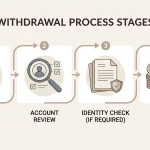
Look for the withdrawal section in the cashier or terms, then check whether your chosen method is available for withdrawals. Read how the operator describes request processing, and whether the stated timing refers to approval by the casino or arrival through the payment provider. If the wording is unclear, don’t fill in the gaps with the most optimistic interpretation.
You may also need to complete account checks before gambling or before a withdrawal can proceed. Remote operators serving Great Britain must establish a customer’s identity before they gamble, so it is sensible to take account verification seriously rather than assume it can be ignored until cash-out. Keep your account details accurate and follow the operator’s instructions.
None of this identifies a single casino as the UK’s highest-paying option. It gives you a cleaner way to compare what a claim actually measures. Game return belongs to the game; withdrawal processing belongs to the cash-out process. A strong figure in one category cannot stand in for information about the other.
No shortcut here.
Which Casino Games Have the Highest RTP?
If you compare casino games by their published Return to Player (RTP), table games can show higher figures than slots. The important catch is that a table-game return can depend on how you play. A published figure may assume optimal strategy; your decisions at the table can move your actual results away from that assumption.
Slots tend to sit in a broad RTP range of 92% to 98%. Table games such as blackjack and roulette can go beyond 99% when played according to the strategy used to calculate their return. That makes them strong candidates if you are comparing theoretical RTPs, but it does not mean they will leave you ahead after a particular session.
Progressive Slots Online UK: How Jackpots Work
I used to see a bigger percentage and read it as a better chance of walking away with something. That was the wrong shortcut. RTP is a long-run measure, not a session forecast, and a table-game figure tied to optimal strategy does not describe every way people actually play.
Why strategy changes the comparison
With a table game, the player may have choices that affect the mathematical return. The figure associated with optimal strategy assumes those choices are made in the way that produces the stated result. If you play differently, you are no longer comparing like with like. The headline percentage may still be published, but it may not be a useful description of your own play.
That is why “highest RTP” needs a little unpacking. A high figure is worth noticing, but you should also check the conditions behind it: what version of the game is offered, what the published RTP refers to, and whether the return assumes a particular strategy. Without that context, comparing a table game with a slot can look more precise than it really is.
Slots present a different comparison. Their RTP is generally stated for the game itself, rather than being raised or lowered by decisions during each spin. Still, two slot titles can have different published returns, and the return alone does not tell you how wins are distributed. A game can feel very different from another even when their RTP figures are close.
Table games like blackjack and roulette can offer RTPs above 99%, but these figures often assume the player is using an optimal strategy.
I have made the mistake of treating a high percentage like a recommendation. It isn’t one. Check the game’s published RTP, compare titles across providers, and read the paytable so you know what the game is describing. Volatility ratings can also help explain the pattern of results a game is designed around, though they do not predict what will happen next.
Comparing games without chasing a headline
For a broad category comparison, table games may have the higher theoretical return when played with optimal strategy; slots commonly fall below those figures. But that does not establish which individual title is best for you, or which casino has the highest RTP overall. Those questions depend on the specific game and the version available, not just the category label.
If you prefer table games, be honest with yourself about whether you know and follow the strategy behind the quoted return. If you prefer slots, compare the actual game information rather than relying on a site’s “high paying” label. A paytable and published RTP tell you more than a promotional phrase, while a certification check can offer another point to examine when assessing game information.
Neither category turns an advertised return into a promise. A table game can have a high theoretical RTP and still produce a losing session; a slot’s published figure works on the same long-run basis. The comparison is useful for understanding the maths, not for predicting your next result.
So, if your question is which category tends to publish the highest RTP, table games can lead when optimal strategy is part of the calculation. If you are choosing a game, check the details that sit behind the percentage. The headline is only the start.
What “Highest Paying” Can Honestly Mean in the UK
When you’re looking for a high-paying online casino in the UK, payout timing is one practical detail to check alongside the terms that apply to withdrawals. Use the listed payout speeds as a starting point and confirm the conditions before you play.
1. Amunbet
Payout speed: 1-3 business days Amunbet lists a payout speed of 1–3 business days. Check the withdrawal terms to see what conditions apply.
2. Revery Play
Payout speed: 1-3 business days Revery Play lists a payout speed of 1–3 business days. Review its withdrawal terms before you play.
3. EvoSpin
Payout speed: 1-3 business days EvoSpin lists a payout speed of 1–3 business days. Check the applicable withdrawal conditions for details.
4. Britsino
Payout speed: 1-3 business days Britsino lists a payout speed of 1–3 business days. Its withdrawal terms can provide context on how this timing applies.
5. SpinFormula
Payout speed: 1-3 business days SpinFormula lists a payout speed of 1–3 business days. Check the terms for any conditions that apply to withdrawals.
6. WinBeast
Payout speed: 1-3 business days WinBeast lists a payout speed of 1–3 business days. Review its withdrawal terms to understand the applicable conditions.
7. SlotoSport
Payout speed: 1-3 business days SlotoSport lists a payout speed of 1–3 business days. Check the withdrawal terms for further details.
8. NightLuck
Payout speed: 1-3 business days NightLuck lists a payout speed of 1–3 business days. Make sure you check the withdrawal conditions before playing.
9. x3bet
Payout speed: 1-3 business days x3bet lists a payout speed of 1–3 business days. Review the relevant withdrawal terms for details.
10. Zombillion
Payout speed: 1-3 business days Zombillion lists a payout speed of 1–3 business days. Check its withdrawal terms to see what conditions apply.
“Highest paying” sounds like a promise about what might land in your account. I used to read it that way, too. But when a casino or game is described as paying more, the useful question is what the claim measures: the game’s theoretical return, or the casino’s share of money wagered. Neither tells you what you will personally win.
Return to player (RTP) expresses the share of stakes a game is designed to return over time. House edge frames the same relationship from the casino’s side: it is the casino’s share of the amount spent on the game. The two percentages are mathematical counterparts, though the wording can make one sound more appealing than the other. “High RTP” foregrounds money returned; “low house edge” foregrounds the smaller share retained by the casino.
For instance, a 10% house edge means the casino’s share is £10 for every £100 spent on that game. That figure describes the mathematical relationship across play, not a promise that a particular player will lose that amount, or that the rest will come back to them. The framing is different; the underlying arithmetic is connected.
That distinction matters when you are looking for the highest-paying online casino in the UK. An operator is not itself a single game with one universal return figure. Its games can have different published returns, and a headline about the casino may blur that difference. I would want to know which game the percentage applies to and whether the claim is about RTP or house edge before treating it as a meaningful comparison.
RTP vs House Edge
Return to Player (RTP) and house edge are mathematical counterparts. While RTP foregrounds the money returned to players, house edge describes the casino’s share of the amount spent on the game.
The word “highest” also needs a clear comparison. Are you comparing one game with another, or a casino’s selection as a whole? Is the figure attached to a particular title, or presented as though it describes every game on the site? Without that context, a striking percentage can tell you less than it appears to. A casino-wide label is not a substitute for checking the return figure for the game you intend to play.
So a sensible interpretation of “highest paying” is narrower than the advertising version: it points to a relatively favourable theoretical return or house edge, under the conditions that figure describes. It does not mean that one operator will reliably pay you more in an individual session, or that choosing it turns a gamble into a dependable way to make money.
There is a separate question of whether an operator is authorised to serve you. The UK Gambling Commission regulates online gambling in the UK, and remote operators serving customers in Great Britain need the relevant Commission licence. The regulator’s remit applies to remote gambling offered to people in Great Britain regardless of where the operator’s key equipment is located. That is a licensing check, not evidence that a site’s games offer a higher return.
I’d treat “highest paying” as a prompt to inspect the underlying figures, not as a verdict on a casino. Look for the stated RTP or house edge and the game it refers to; then keep the meaning of that percentage in view. A mathematical comparison, not a promise.
High Odds, Winning Chances and the Short-Term Reality
I used to treat a high return figure as if it meant a game would pay me often. That was the mistake: a game’s theoretical return and the chance of winning on your next play describe different things. One concerns results averaged across play over time; the other is about what may happen on a particular spin, hand or round.
Classic Slots Online in the UK: How They Work
A game can have a favourable theoretical return without giving you a frequent run of wins. Even when a result is possible, that does not tell you how likely it is on the next play. Nor does a sequence of losses mean a win is now due. I learned that one the expensive way.
When people ask which casino game has the highest chance of winning, it helps to pin down what they mean by “winning”. They might mean getting any return at all, ending a session ahead, or receiving a large payout. Those are not interchangeable outcomes. A small return can count as a win on one definition while still leaving you down overall. A big payout is a different matter again.
So “high odds” can be slippery language. It may refer to the chance of a particular result, the size of a potential payout, or the game’s long-run return. Without knowing which, a claim about the best odds or the greatest win potential tells you little about what your next play will do. There is no honest shortcut from a high theoretical return to a promise of frequent wins.
The same goes for slots with high win potential. A headline about what a game could pay says something about a possible outcome, not how likely you are to see it. It does not turn a session into a forecast. I have chased the exciting possibility before and ignored the more basic point: a possible result is not a probable result merely because it is advertised prominently.
No sequence of losses means a win is now due, and a high theoretical return does not guarantee frequent wins in the short term.
Almost any outcome can happen over a short stretch of play, even when a game has a stated theoretical return. Individual sessions can differ considerably from that figure. You might leave ahead, lose your stake quickly, or see a mixture of results; the long-run theory does not dictate which session you will get. Short-term outcomes are messy. That is the reality.
If you are comparing games, separate the question about return from the question about the chance of a particular result. Neither, by itself, tells you whether you will finish ahead. And if a page uses “highest odds” without explaining what it measures, I would treat that as a sales phrase, not a useful prediction.
My old habit was to read a percentage and imagine it applied to my evening. It does not. A theoretical figure is not a schedule of payments, and it cannot tell you when a win will arrive or whether it will outweigh what you have staked. Once I stopped expecting a good-looking number to behave like a personal promise, the wording made more sense.
Keep the distinction plain: long-run return is not the same as the chance of winning on one play, and neither makes a short session predictable. No guarantees.
How to Read a Slot’s Payout Percentage
A slot’s Return to Player (RTP) is easiest to read as a long-run mathematical proportion, not as a receipt for your own play. If a casino has a game with a 97% RTP, the calculation means £97 is returned for every £100 wagered across all players and games over time.
Best Video Slots UK: How the Games Work
The wording matters. “For every £100 wagered” refers to the total amount staked, not necessarily the money you first put into your account. If you use some winnings for further spins, those stakes count too. I used to glance at a percentage like this and picture a neat return from one visit. That is not what the figure describes.
Nor does 97% mean a slot will hand back £97 after you stake £100 in one session. Your result can be higher, lower, or nothing like that proportion. The figure describes the game’s theoretical return over time across a much wider pool of play. It does not map out what happens to an individual player’s balance.
That distinction is useful when you compare slots with the highest payout percentage in the UK. A larger published RTP can indicate a higher theoretical return than a smaller one, but it cannot tell you which title will pay you more during your next session. A ranking based on RTP is a comparison of mathematical settings, not a promise about your personal results.
I now read the number as a way to compare games, not as a forecast. If a slot advertises a high return, I look for its published RTP and check the paytable rather than assuming the headline predicts a win. The percentage can help you understand what the game is designed to return over the long run; it cannot tell you when a return will arrive or how much any one player will receive.
Reading RTP
Understanding the percentage
If a slot has a 97% RTP, it means £97 is theoretically returned for every £100 wagered across all players over time.
Accounting for total stakes
Remember that the £100 wagered includes both your initial deposit and any winnings you use for further spins.
Managing expectations
Recognise that your individual session is a small piece of the overall picture and may result in a balance far different from the 97% figure.
Keep the scale in mind: the 97% calculation applies across all players and games over time. A single session is only one small part of that picture, so it may look nothing like the stated return. That is the bit I wish I had understood before treating a percentage as a personal target. Useful comparison. Not a promise.
So, What Casino Game Has the Highest RTP?
There isn’t one casino game that can be named as the highest-return choice in every situation. Blackjack and roulette can both reach RTP figures above 99% when played according to optimal strategy. The important qualification is the way you play: the game’s potential return is not separate from your decisions at the table.
That makes “highest payout” a slippery phrase. It might mean the largest prize from one result, or it might mean the share of wagers a game is mathematically expected to return over time. Those are different ideas. A spectacular single win does not, by itself, make a game the best choice by RTP.
I used to see a big percentage and treat it like a reason to expect a better session. That was the wrong shortcut. A high RTP describes a mathematical return under particular play, not a personal outcome you can count on. With blackjack or roulette, playing optimally is part of the condition attached to the figure; it is not a decorative extra.
So, if you want a direct answer, blackjack and roulette are strong contenders for the highest RTP among casino games when played optimally. But naming one as the universal winner would overstate what that comparison tells you. The result depends on how the game is played, and the percentage should not be read as a promise about what will happen at your table.
Low-Volatility Slots in the UK: RTP and Real Sessions
Before choosing, be honest about whether you understand the decisions the game asks you to make. If you don’t, the headline return may not describe the way you’ll actually play. I’ve learned not to confuse a favourable mathematical figure with a reason to raise my stakes or stay longer. The number can help compare games; it cannot make the outcome certain.
No magic table.
Casino Sites, Licensing and the Checks Behind the Claims
When a casino calls itself “top-paying”, I treat that as a claim to check, not proof that the site is legitimate. Licensing answers a different question: whether the operator is authorised to offer gambling to customers in Great Britain. The UK Gambling Commission regulates remote gambling offered to those customers, even when the operator’s key equipment is elsewhere.
I’ve learned to check the regulator’s public records rather than rely on a badge in a footer. The register identifies Grace Media (Gibraltar) Limited’s Remote Casino licence, reference 057869-R-334655-009, as Active and Current. That is a specific record for a named company and licence; it is not a blanket endorsement of every casino brand a reader might associate with it.
The Commission’s domain-name record is another useful cross-check. It includes 333casino.com as a White Label domain. That tells you how the domain appears in the record; it should not be stretched into a claim about payout speed, game choice or whether a particular offer is worthwhile. Details can change, so check the live records when you are assessing a site.
Verify Casino Legitimacy
- Check the regulator’s public records for the operator’s licence status
- Cross-reference the domain name in the Commission’s records
- Inspect the game’s published RTP and paytable
- Review available game certification details
Licensing also matters for game fairness. UK-licensed casinos must ensure their games meet fairness standards, but I still look at the information attached to the game itself. Published RTP, the paytable and any available certification details give you something concrete to inspect. A licence is a regulatory safeguard, not a promise that you will win or that every marketing phrase means what it sounds like.
So when comparing casino sites, separate the checks: confirm the operator and domain against the Commission’s records, then assess the game information on its own terms. A familiar name or polished badge is not enough. Check the record.
Playing for Real Money: Limits and Bonus Terms to Check
A real-money offer can look generous until you read what you must do to use it. I’ve learned to treat “free” as a label, not a description: bonus funds come with conditions, and those conditions can shape how you play. Before depositing, check which games qualify, whether particular payment methods are excluded, when the offer expires and what wagering is required. The terms should be clear before you accept.
Bonus buy slots in the UK: demos, stakes and limits
In Great Britain, wagering requirements on bonus funds are capped at 10x. That is a ceiling, not a promise that every offer has the same requirement or that the bonus is worth taking. Read the operator’s terms for the actual conditions attached to that offer, including excluded games. If the wording is hard to follow, I’d rather leave the promotion alone than guess what counts.
There are also legal limits on online slot stakes. For someone aged 25 or over, a single game cycle cannot involve a stake above £5; for customers aged 18 to 24, the ceiling is £2 per cycle. That is a limit on each game cycle, not a suggested amount to spend. A cap does not make a session affordable, either.
I’d check the stake shown before starting and set a personal spending limit that I can stick to. Slot autoplay is not allowed in Britain, and spins must last at least 2.5 seconds, so a site offering otherwise would be a warning sign. Keep the focus on the actual terms, not the banner. “Best value” can mean little if the qualifying games, restrictions or wagering do not suit you.
Fruit Machine Slots UK: Pub Cabinets to Online
For anyone comparing a highest-paying real-money casino in the UK, these conditions are separate from a game’s return figures. A bonus does not improve the underlying chance of a result; it adds rules to the money available. Read first. Then decide.
Which Casino Games Pay Most—and What the House Edge Shows
“Highest paying” can sound like a promise that one game will put more money in your pocket. I’ve learned to distrust that kind of wording. The house edge offers another way to read a game’s maths: it describes the casino’s share of the amount spent on that game.
A house edge of 10% means the casino’s mathematical share is £10 for every £100 spent. That wording puts the focus on what the house keeps, rather than what the game returns. It can feel less appealing, but it does not describe a different calculation.
RTP and house edge are two sides of the same mathematical relationship. Where one expresses the share returned to players, the other expresses the casino’s share. So if you are comparing claims about casino games in the UK, check whether a figure is an RTP or a house-edge percentage before deciding what it says. A larger RTP and a smaller house edge point in the more favourable direction for the player, but the labels frame the same underlying relationship.
That distinction matters because the wording can change how a figure feels. “Returns to players” sounds generous; “kept by the casino” sounds stark. Neither label, by itself, tells you what will happen during your own play. It is a way to describe the game’s mathematics, not a personal forecast.
I used to focus on the friendlier-sounding number and skip over how it was framed. Now I compare like with like: RTP against RTP, or house edge against house edge. If a claim does not make clear which measure it uses, I would not treat it as a useful comparison.
No magic wording. Just the maths.
What RTP rate should I look for at UK online casinos?
Compare the published RTP for each game: slots commonly range from 92% to 98%, while RTP describes long-term game maths, not what you will get back in a session.
Which casino games have the highest payout rates?
Blackjack and roulette often have RTPs above 99% when played with optimal strategy. Check each game’s published RTP and paytable, as actual results can differ considerably.
What are the differences between UK-licensed and non-UK-regulated online casinos?
Online casinos serving customers in Great Britain require the relevant UK Gambling Commission licence, and UK-licensed casinos must ensure their games meet fairness standards. A licence from another jurisdiction does not replace the required UK licence for serving Great Britain.
How do I check if an online casino is licensed in the UK?
Search the UK Gambling Commission’s public register for the operator and check that its licence is current. You can also check the register’s domain-name records for the casino’s website.
What are the UK online casino licensing requirements?
Remote operators serving customers in Great Britain need the relevant Gambling Commission licence. They must establish a customer’s identity before gambling and prompt new remote customers to consider a financial limit before their first deposit, with account-level limit facilities accessible afterwards.
What licensing and regulations apply to online casinos in the UK?
The UK Gambling Commission regulates remote gambling offered to customers in Great Britain, regardless of where the operator’s key equipment is located. It issues operating licences to businesses and personal licences to individuals, and UK-licensed casinos must meet game-fairness standards.
Games

Aviator Casino Game UK: Licensing and Play Guide
A practical look at licensing, slot rules, cash play and the limits of claims about...

3-Reel Slots in the UK: How to Find a Game
Lobby labels and artwork can be misleading, so check the game details, rules and preview...

Five-Reel Slots UK: Online Play and Safety
Five reels describe a game's format, while the UK Gambling Commission's public register helps verify...

Bonus buy slots in the UK: demos, stakes and limits
A practical guide to demo play, feature costs, volatility and session limits, with clear boundaries...

High Volatility Slots in the UK: How They Work
High-volatility slots tend to pay less often, with larger wins when they land; that pattern...

Low-Volatility Slots in the UK: RTP and Real Sessions
RTP describes a theoretical return over extensive play, while volatility shapes how results may vary...

Progressive Jackpot Slots: How They Work and Pay
Progressive slots pool part of wagers into a growing prize, while game rules, casino networks...

RTP in UK Casino Slots: What the Figures Mean
A slot’s RTP is a theoretical average across repeated play, while results in any individual...

Best Video Slots UK: How the Games Work
A practical guide to reel patterns, bonus features, browser play and the difference between demo...

Casino Dice Games in the UK: Rules and Formats
Dice-themed games can follow different rules and formats, making the instructions and platform terms important...

Chicken Road game in UK casinos: format guide
The game’s name and artwork do not establish its format; the way it is played...

Classic Slots Online in the UK: How They Work
Learn how reel combinations, paytables and familiar extras shape classic slots, and why a simple...

Crash casino games in the UK: regulation and play
The guide distinguishes UKGC-regulated operators from offshore sites and outlines checks on games, payments, demos...

Fruit Machine Slots UK: Pub Cabinets to Online
Online fruit slots keep familiar symbols and spins while replacing the physical cabinet with software,...

UK Casino Sites for Slots: What to Check
From operator authorisation and published game details to wagering terms and session limits, the guide...

Highest RTP Slots in the UK: How the Figures Work
RTP is a long-run mathematical expectation, while reel design, volatility and game settings can shape...

JetX Casino Game in the UK: What to Check
A look at JetX’s category label, demo limits, UK casino context and the checks to...

Mines Casino Game UK: Rules, Licensing and Risks
A Mines game’s name does not establish whether its operator holds the licence required to...

Online Casino Games for Real Cash in the UK: What to Know
A practical guide to slot odds, withdrawal routes, spending limits and bonus terms for UK...

Penny Slot Machines in the UK: Costs and Play
A practical guide to low-stake slots, covering total spin costs, free play, randomness, RTP and...

Plinko Casino UK: Real-Money Play and Regulation
A practical look at Plinko randomness, free play, payments and the difference between UKGC-regulated operators...

Progressive Slots Online UK: How Jackpots Work
Progressive prizes grow through wager contributions on connected games, while trigger rules and odds depend...