International casinos for UK players: legal checks
 Available in GB

A practical look at operator licensing, bonus terms, crypto payments and withdrawal waits for UK players.
Table of Contents
- The legal line between playing abroad and operating here
- What an international casino site actually is
- The business relationships behind the offshore label
- Bonus offers: the wagering maths behind the headline
- When a site accepts UK visitors, that is not a safety check
- Crypto deposits and withdrawals: fast is not the same as safe
- Non-GamStop casinos and the limits of a workaround
- Live roulette reviews: check the terms, not just the table
- Before you play for real money, know what UK rules do—and do not—cover
- Getting your money out: the method can change the wait
- Casino Types
The legal line between playing abroad and operating here
“International” sounds like a legal category, but it is usually just a loose label. It may describe a casino based overseas, one licensed by a regulator outside Britain, or simply a site that takes customers from more than one country. Those descriptions do not, by themselves, tell you whether the operator is allowed to offer gambling to people in Britain.
The important distinction is between what a player does and what a gambling business does. I used to read a foreign licence as if it settled both questions: the casino was licensed somewhere, so surely the whole arrangement was permitted. That was a muddled way to look at it. A licence from outside the UK does not replace the permission required to serve the British market.
For operators, the rule is firm. An online gambling site must hold a licence from the Gambling Commission to offer its services in England, Scotland and Wales. If it does not, offering those services there is illegal, even if the business is based abroad or has permission from another regulator. Where the company is located is not the deciding point. The question is whether it is offering gambling to customers in those parts of the UK.
That is why “international online casinos UK” can be an awkward phrase. It might sound as though it describes a special class of casino with a recognised UK status. It does not. A casino can be international in its reach and still lack the UK Gambling Commission licence needed to operate in the British market. Equally, being licensed abroad is not the same as being licensed here. Two different permissions.
Paying at a UK mobile casino with phone credit
The position of an individual player is different. Playing at a casino licensed outside the UK is not, in itself, illegal for a British player. UK law does not prohibit an individual from placing a bet with an overseas operator. The legal restriction described above falls on the operator that offers services in England, Scotland and Wales without the required Gambling Commission licence.
I think this is the point that gets blurred most easily. If a site is not permitted to offer its service here, it does not follow that the customer has committed a crime simply by placing a bet there. The operator’s obligation and the player’s position are separate questions. Mixing them up can make the law sound harsher for the player than it is, while also making the operator’s legal duty sound optional. Neither is a useful reading.
There is a practical wrinkle in the word “UK”, too. The Gambling Commission licensing rule discussed here applies to operators offering real-money gambling in England, Scotland and Wales. It is more precise to call that the British market than to assume that one sentence describes the legal position in every part of the United Kingdom. The broad point remains: a foreign company cannot treat its overseas base as a substitute for the permission required to serve customers in Great Britain.
So, when you see “international casino online” or similar wording, treat it as a description, not a legal assurance. It tells you little about the operator’s standing in Britain. A casino may have a licence in another jurisdiction; that fact alone does not establish that it holds the UK Gambling Commission licence required to offer gambling here. A player’s ability to place a bet also does not prove that the operator is authorised to provide the service.
An offshore licence is not a substitute for a UK Gambling Commission licence; it does not grant an operator permission to serve the British market.
This distinction is not a technicality to leave to lawyers. It changes how you should understand a site’s claims. “Licensed” can sound complete, but the useful question is: licensed by whom, and for which market? A licence may matter where it was issued, while still not giving the operator permission to offer its services in England, Scotland or Wales. The word on an advert cannot answer that on its own.
I’m wary of neat labels because they make a complicated boundary feel settled. “Foreign”, “international” and “overseas” describe where a business may come from or how it presents itself. They do not decide whether it can legally serve British customers. And the fact that a British player is not committing an offence by betting with an overseas casino does not turn that casino into a UK-licensed operator.
Keep the two questions apart: the player is not prohibited from placing a bet with an overseas operator, while the operator needs a Gambling Commission licence to offer online gambling in England, Scotland and Wales. That is the legal line. Not the flag on a website. Not the word “international”.
What an international casino site actually is
Choosing an international casino as a UK player calls for a clear look at the information available before you sign up. This list provides a concise starting point, with payout speed noted where it is known.
1. Amunbet
Payout speed: 1-3 business days Amunbet lists a payout speed of 1–3 business days, giving you a stated timeframe to consider.
2. Revery Play
Payout speed: 1-3 business days Revery Play lists a payout speed of 1–3 business days, offering you a clear detail to weigh when reviewing it.
3. EvoSpin
Payout speed: 1-3 business days EvoSpin lists a payout speed of 1–3 business days, so you have a stated payout timeframe to factor into your choice.
4. Britsino
Payout speed: 1-3 business days Britsino lists a payout speed of 1–3 business days, a useful point for you to check when considering the casino.
5. SpinFormula
Payout speed: 1-3 business days SpinFormula lists a payout speed of 1–3 business days, giving you one concrete detail to consider.
6. WinBeast
Payout speed: 1-3 business days WinBeast lists a payout speed of 1–3 business days, so you can take its stated timeframe into account.
7. SlotoSport
Payout speed: 1-3 business days SlotoSport lists a payout speed of 1–3 business days, providing you with a stated timeframe when reviewing it.
8. NightLuck
Payout speed: 1-3 business days NightLuck lists a payout speed of 1–3 business days, which gives you a specific detail to consider.
9. x3bet
Payout speed: 1-3 business days x3bet lists a payout speed of 1–3 business days, giving you a stated payout detail to factor into your review.
10. Zombillion
Payout speed: 1-3 business days Zombillion lists a payout speed of 1–3 business days, a concrete timeframe for you to bear in mind.
“International casino” sounds like a description of where a site is based. For a British customer, though, the useful question is simpler: does the online gambling operator accept British customers without a licence from the UK Gambling Commission? If it does, it fits the meaning of a foreign casino in the UK market. The label is about the operator’s relationship with the British market, not just the flag on its homepage.
That distinction took me a while to get straight. I used to see “international” and picture a casino with a wide reach, perhaps serving players in several countries. That tells you little about how the site is regulated here. A polished page, familiar games or a British-facing version of the site does not turn an offshore licence into a UKGC licence.
The licence is the important distinction
These sites are licensed offshore, but they are not regulated by the UK Gambling Commission. Those two statements belong together. An offshore licence is not another name for UKGC regulation, and it does not make the operator part of the British licensing system.
So when a site calls itself an international casino, don’t treat that wording as a regulatory status. It is a broad label. The practical definition rests on two points: the operator takes British customers, and it does not hold a UKGC licence. A site can be based abroad, use international branding or mention an overseas licence; none of those details changes that definition.
Gibraltar Casino Licence in the UK: What It Means
The same applies to different versions of the phrase. “International online casino” and “foreign casino” may sound like separate types of site, but in this context they can describe the same arrangement. What matters is not whether the wording feels welcoming or global. It is whether the operator accepts British customers without being licensed by the UKGC.
Short version: label, not licence.
Don’t confuse a site’s audience with its status
A site may present itself as being for players from many places. That can make the word “international” feel like a neutral description, rather than a clue that its regulatory position differs from a UKGC-licensed operator’s. I would separate those ideas. International describes the site’s presentation or reach; the licence question describes who regulates it.
There is no special UKGC category called an “international casino” that gives a site a different kind of British approval. The phrase is commonly used to refer to offshore operators serving people in Britain. That does not mean every site using the word has the same ownership, licence or terms. The shared point is narrower: it is outside UKGC regulation.
International describes the site’s presentation or reach, while the licence describes who regulates it; there is no special UKGC category called an “international casino”.
This is why the name on the site can distract. A British-style layout or wording does not tell you which company runs the gambling service, and an offshore licence does not become British because the site is easy to read from the UK. The operator’s status is the dividing line, not the site’s tone.
I’ve learned not to let the word “international” do the thinking for me. It can sound like a badge of scale or choice. It is neither a guarantee of quality nor evidence of UK regulation. Just a label.
What the term does not tell you
The phrase alone does not tell you whether a particular operator is reliable, what conditions it applies, or how it handles a disagreement. Those are separate questions, and they should not be answered by assuming that an offshore licence gives the same oversight as a UKGC licence. It does not.
Nor does calling a site “foreign” tell you that it is simply a website based in another country. The meaningful point here is that it accepts British customers without the UK Gambling Commission licence required for operators in the British market. A company’s address and its regulatory status are not interchangeable facts.
When I read a site’s description now, I mentally strip away the sales language and ask what the word is actually telling me. If the answer is only that the operator works internationally, that still leaves the key distinction unresolved. Offshore-licensed means offshore-licensed. It does not mean UKGC-regulated.
That is the plain meaning behind international casino sites for UK players: online gambling operators accepting British customers without a UKGC licence. The wording may vary from one site to another, but the regulatory distinction does not.
The business relationships behind the offshore label
The name on a casino website is only one part of the picture. Behind a brand, there may be a corporate owner, a licence holder and commercial partners, each with a different role. I used to treat the logo as the whole story. It isn’t.
Online Casino With No Sister Sites in the UK
That matters when you are looking at international casinos from the UK. A familiar-sounding brand does not tell you who runs the gambling operation or who benefits from it. Nor does an offshore licence automatically cover every company connected to a casino. The arrangements behind the name can shape who earns revenue and where responsibility sits.
A documented example involves Santeda and SIS. Santeda held a Curaçao licence, but that licence did not permit it to operate in the UK or the US. Under its contract with SIS, the latter received a percentage of revenue from losing bets made through Santeda’s brands.
That is a specific commercial link, not just a shared name on a website. It shows that a company can have a financial interest in gambling activity taking place through another company’s brands. If you are trying to understand an international casino, the operator’s name alone may not show the full chain.
VPN-Friendly Casinos in the UK: Access and Rules
Follow the roles, not the branding
I now try to separate a few basic questions when I come across a casino brand: who operates the site, whose licence is being relied on, and whether another business has a commercial arrangement connected to the gambling. Those are different things. A company might own a brand without being the licence holder; a commercial partner might receive revenue without operating the casino.
The Santeda–SIS arrangement makes the last distinction especially clear. SIS’s stated share was tied to revenue from losing bets placed via Santeda’s brands. That is a way of earning money from the business, but it does not make SIS the casino operator. And the Curaçao licence held by Santeda did not give it permission to operate in the UK or US.
This is why I’m wary of polished labels such as “international” or “global”. They can make a business sound like one neat operation, when the commercial relationships may involve separate entities. The detail worth noticing is not the grand wording on a homepage; it is the connection between the brand, the operator and the businesses that benefit from its activity.
Why the connection matters to a player
A revenue-sharing contract is not, on its own, a verdict on how a particular casino treats customers. But it does tell you something concrete about the business model: a partner’s income can be linked to losses made through the brands covered by the deal. That is more informative than a vague claim of being part of a large network.
It also helps keep different questions apart. A company’s commercial interest does not expand the permissions attached to another company’s licence. In Santeda’s case, the Curaçao licence did not authorise UK or US operation. Likewise, a partner receiving a share of revenue does not become the operator simply because money flows between the businesses.
When I see a casino presented as part of a wider group, I look for the actual relationships rather than assuming that the group label explains them. Is the connection ownership, operation, licensing or a revenue contract? Those words are not interchangeable. A loose corporate association can sound reassuring while telling you very little about who is responsible for the gambling site.
The point is not to turn every company link into a scandal. It is to read the structure accurately. Santeda’s contract with SIS is a useful illustration because it identifies both the route of the bets — through Santeda’s brands — and the basis of SIS’s revenue share — losing bets. The Curaçao licence is a separate fact, with its own limits.
I’ve learned not to mistake a recognisable partner for a stamp of approval. A business relationship can explain who profits; it cannot make a licence cover territory it does not cover. That distinction is easy to miss when the brand does all the talking.
Bonus offers: the wagering maths behind the headline
I used to read a welcome offer as if the headline amount were money I could actually take away. It isn’t. A bonus is a set of terms attached to a promotion, and the wagering requirement can matter more than the amount printed in large type.
Deposit Matches
Bonus funds are added in relation to a deposit made by the player.
Free-Spins Packages
Promotional offers specifically tied to slot game play.
No-Deposit Bonuses
Advertised bonus value that can be claimed without requiring an initial deposit.
Cashback Offers
Returns some value after play, subject to the offer’s specific rules on qualification and withdrawal.
A specialist review of foreign casinos describes the common formats as deposit matches, free-spins packages, no-deposit bonuses and cashback offers. A match bonus adds bonus funds in relation to a deposit; free spins are tied to slot play; and a no-deposit offer advertises bonus value without requiring a deposit to claim it. Cashback is framed as returning some value after play, but the offer’s own rules determine what qualifies and whether the return can be withdrawn.
That last distinction catches people out. “No deposit” sounds like no strings attached, but it describes how the offer is claimed, not whether the resulting funds can be cashed out immediately. Check the promotion’s terms before treating bonus credit or any winnings from it as withdrawable money. The conditions, not the label, decide what happens next.
The multiplier changes the picture
Wagering is the amount you must stake on qualifying bets before bonus funds become eligible to convert into withdrawable cash. A specialist review uses this illustration: a £100 bonus matching a £100 deposit, with a 35x wagering requirement, calls for £3,500 in qualifying bets. The headline says “£100 bonus”; the practical commitment is a much larger amount of play.
There’s a smaller illustration of the same maths: a £20 bonus at 35x requires £700 in qualifying bets before cash-out. That is not a prediction of what you will lose, nor does completing the wagering guarantee a profit. It is the required betting volume. Your balance can fall while you work through it.
I’ve made the mistake of focusing on the bonus size and barely noticing the multiplier. The arithmetic is plain once you write it down. The decision is less plain when the offer is dressed up as extra value.
What to read before accepting
Start with the wagering figure and establish exactly what it applies to: the bonus, the deposit, or both. Then check which games and bets count, whether the offer has an expiry condition, and what happens if you withdraw before completing the requirement. Those details can change the route from promotional funds to cash, so don’t assume that one casino’s wording tells you how another offer works.
A no-deposit offer deserves the same scrutiny. If it comes with wagering conditions, the advertised bonus is not a cash withdrawal. Find out whether winnings from the offer are subject to a cap or other restrictions, and whether you must provide identification to claim or withdraw. Read the actual terms rather than relying on a banner or a short promotional summary.
Some specialist reviews describe foreign casinos as offering larger welcome packages because they are not bound by UKGC restrictions on bonus terms, wagering requirements and promotional language. That is a description of how such offers may be presented, not evidence that a larger package is better value. The same lack of UKGC regulation applies to the operator; a generous-looking promotion does not make its terms clearer or give you UKGC protection.
My rule now is simple: calculate the required betting before I decide whether the offer is worth touching. If the headline grabs your eye, pause there. Read the small print.
Calculate Wagering
Step 1: Identify the multiplier
Find the wagering requirement (e.g., 35x) and the bonus amount (e.g., £100).
Step 2: Multiply the values
Multiply the bonus by the requirement (£100 × 35 = £3,500).
Step 3: Determine the commitment
Recognise that £3,500 in qualifying bets must be placed before funds become withdrawable cash.
When a site accepts UK visitors, that is not a safety check
A site loading on your phone can feel like a green light. It isn’t. Some casinos without a UK Gambling Commission licence are supposed to prevent people in Britain from accessing them. A report by gambling.com says that some do not enforce that restriction, and that people can sometimes get around it using a basic VPN. That describes a reported situation, not proof that a particular site is authorised to serve you.
The distinction matters. An offshore operator may accept a registration, show you an international casino app or display free spins to UK visitors. None of those things confirms that it holds a UKGC licence or is entitled to offer gambling here. An app is simply another way to reach the service; a welcome offer is advertising, not a safety check. And if a site is meant to block British customers, getting through that block does not make the operator’s position any sounder.
The legal responsibility is on the operator: providing gambling facilities to customers in the UK without a UKGC licence is illegal, as is advertising those services here. A visitor may still find the site accessible, but that access does not bring the operator under UKGC oversight. No UKGC protections. No UKGC-mandated affordability checks.
That changes what happens if something goes wrong. The UKGC cannot enforce its rules against an offshore operator that it does not regulate. A report by gambling.com also describes cases where unlicensed sites refused to pay winnings, leaving customers without legal recourse. That is a reported risk, not a claim that every offshore site will withhold a payout. But it is enough to make “the site accepted me” a poor test of whether you can rely on it.
I used to treat a smooth sign-up as a kind of informal endorsement. It proves very little. The site may simply have let you through; it has not shown that a UK regulator can step in if there is a dispute, or that UKGC safeguards apply to your account.
So don’t read access as approval. Whether you found the casino through a browser, an app, a free-spins offer or a VPN, the key point is unchanged: if the operator has no UKGC licence, it is outside UKGC regulation. Being able to deposit is not the same as having the protections that come with a UK-licensed operator. That’s the part the “easy access” pitch leaves out.
Crypto deposits and withdrawals: fast is not the same as safe
Crypto can make an international casino’s payment page look simple: choose a supported coin, send it to the address shown, and wait for the transaction to be recorded. But a familiar-looking process does not tell you whether the operator is trustworthy. These casinos are not regulated by the UK Gambling Commission, and they do not provide UKGC-mandated affordability checks. A quick transfer does not fix either gap.
Crypto Risks
Crypto transfers do not provide UKGC-mandated affordability checks, and funds sent via the wrong network may be unrecoverable.
The deposit side has its own trap. A crypto amount can change in value while you hold it, so the pounds you think you have put in may not match the value you later get back. The same applies in reverse to a withdrawal: the coin’s value can move between the operator releasing it and you converting or spending it. “Fast” describes the transfer, not the value you ultimately receive.
A specialist review reports that crypto withdrawals at foreign casinos can clear in under an hour, faster than fiat methods. Treat that as a reported possibility, not a promise for every operator or every payment. The casino may still need to approve a withdrawal, and its own terms determine what happens before a transfer is sent. I would not let a short reported processing time do the thinking for me.
Before depositing, check which coins and networks the site accepts, and make sure the receiving address and network match. A transfer sent using the wrong details may not be recoverable. Also look for the operator’s rules on withdrawal verification and any conditions attached to crypto payments. If those terms are hard to find or unclear, that is useful information in itself.
There is another distinction worth keeping straight: a blockchain transaction may be visible or confirmed without proving that the casino has properly handled your account or will release your balance. Crypto can remove some waiting associated with payment rails; it cannot give you the protections of a UKGC-licensed operator. If an offshore site refuses a payout, speed at the deposit stage offers no guarantee of a remedy.
I have learned not to confuse a smooth payment screen with a safe decision. With crypto, weigh the possible change in value alongside the operator risk, and only consider depositing money you can afford to lose. Quick is not the same as secure.
Non-GamStop casinos and the limits of a workaround
GamStop applies across UK Gambling Commission-licensed operators. If you register for self-exclusion, you are blocked from every UK-licensed gambling site covered by the scheme. A casino operating outside the UKGC’s remit is not connected to GamStop, so the exclusion will not automatically stop you opening an account there.
That gap can look like an easy route back to international casino games. I would not treat it that way. Self-exclusion is a decision you made to put distance between yourself and gambling; moving to a site that does not recognise it defeats the point, rather than solving a problem. A specialist review has described a player being able to register with a foreign casino and deposit despite a GamStop exclusion. That is a warning about the gap, not a recommendation to test it.
“Non-GamStop” describes the site’s relationship to the scheme. It does not certify the operator, the games or the experience. Some platforms may use security measures such as encryption, and some may be licensed by offshore regulators. A specialist review may point to those features, but neither an offshore licence nor data security makes a casino UKGC-regulated. It also does not bring the operator under UKGC enforcement or require UKGC-mandated affordability checks.
Do
- Maintain your GamStop self-exclusion
- Seek professional support if tempted to gamble
- Recognise that offshore licences don’t replace UKGC safeguards
Don’t
- Use foreign casinos as a workaround for GamStop
- Mistake data encryption for regulatory oversight
- Rely on offshore licences to ensure affordability checks
Those are different things. Protecting account information is not the same as checking whether gambling is affordable for you, and an offshore regulator is not the UK Gambling Commission. If a site advertises a large selection of international casino games or calls itself one of the best international non-GamStop casinos, the label tells you nothing about whether it will respect your self-exclusion.
If you have registered with GamStop, the safest practical step is not to look for another account. Keep the barrier in place and avoid using a foreign casino as a workaround. If you are already trying to get around your exclusion, pause before depositing and seek support rather than relying on a site’s security claims or offshore licence. A different regulator cannot restore the safeguard you chose.
Live roulette reviews: check the terms, not just the table
A live roulette table can look polished while the important details sit in the cashier rules. When I read an international casino review, I now look past the stream and table layout and check what the operator says happens when I try to withdraw. The game is only one part of the experience.
A specialist review reports that withdrawal limits, pending periods and verification procedures can differ considerably between operators. That makes the terms worth checking for the specific site, rather than relying on a general description of how an international live roulette casino works.
Start with the withdrawal rules. Is there a stated cap on how much you can take out, and does it apply per transaction or across a stated period? Look for any pending stage before a withdrawal is processed. A short phrase such as “fast cashouts” tells you little if the detailed terms describe a wait before processing begins.
Then check the verification section. Find out what documents the operator may request and when it can ask for them. UKGC-licensed operators must verify identity before processing withdrawals; an offshore casino is not regulated by the UK Gambling Commission, so do not assume UKGC rules or enforcement apply there. Nor should you expect UKGC-mandated affordability checks.
I used to treat a busy live lobby as a sign that the whole site had been properly thought through. It isn’t. The table tells you what playing may look like; the terms tell you what the operator says about your money and account checks. Read both before depositing.
For a useful review, I’d want the writer to distinguish what they observed at the roulette table from what the operator’s terms actually promise. If a review does not explain the withdrawal cap, pending period or verification process, it leaves out details that can matter more than the dealer’s presentation. Don’t fill those gaps with assumptions.
One more thing: an offshore licence does not make a casino UKGC-regulated. A review can help you inspect the terms, but it cannot turn those terms into UK protections. Read the operator’s own wording, and be wary of praise that does not show what happens when you ask to withdraw. No gloss.
Before you play for real money, know what UK rules do—and do not—cover
When I first looked at international casinos for UK players, I treated “legal” as a simple yes-or-no label. It isn’t. The rules draw an important distinction between the person placing a bet and the operator providing the service.
Legal Distinction
Playing at an offshore casino is not a criminal offence for the player, but the operator remains outside UKGC regulation and enforcement.
A UK resident does not commit a criminal offence simply by playing at a casino licensed abroad. There is no criminal penalty for the player for placing bets with an overseas operator. That does not make the site part of the UK-regulated market, though. Offshore casinos are not regulated by the UK Gambling Commission, and the Commission cannot enforce its rules against them in the way it can against operators holding its licence.
That difference matters when something goes wrong. A UKGC-licensed operator must verify your identity before processing a withdrawal. Offshore operators are not subject to that UKGC requirement, nor to UKGC-mandated affordability checks. They also sit outside UKGC enforcement. So the protections attached to a UK licence should not be assumed to travel with you just because a site accepts a British customer.
I used to read a foreign licence as if it were a stamp of approval from home. It isn’t. It may mean an operator answers to an offshore regulator, but it does not mean the UK Gambling Commission oversees the site or can apply its rules to it. That is the part worth keeping in view when weighing up what looks like the best international casinos for UK players in 2026: a player’s position under the law and the operator’s obligations are not the same thing.
There is a separate point about tax. Gambling winnings are not subject to UK income tax, whether they come from a UKGC-licensed operator or one licensed abroad. That tax treatment does not change the regulatory status of the casino, and it should not be mistaken for a signal that the UK endorses the site.
So the short version is: playing abroad is not itself a crime for you, but an offshore casino does not come under UKGC oversight. Two different questions.
Getting your money out: the method can change the wait
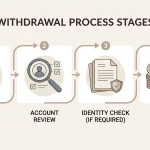
A withdrawal estimate can sound simple until you notice that the casino and the payment provider each have a part to play. The method you choose affects the wait, but the operator may also need to process the request before the money is sent. I used to read the advertised timing as a promise of when funds would land. It isn’t that straightforward.
Skrill and Neteller are often the quicker options: most foreign casinos clear withdrawals through these e-wallets within 24 hours, and many do so in under 12 hours. That is the casino’s processing time, not a guarantee that every request will appear in your wallet on the same schedule. Check the wording in the payment terms: does the stated time refer to approval, dispatch or receipt?
Bank transfers are slower. A specialist review reports that they can take five to seven business days, with some foreign casinos adding their own processing delay before the banking timeline begins. That distinction matters. If the operator holds a request before sending it, counting only the bank’s stated time will leave you wondering where the money is.
Before depositing, read the withdrawal terms for the method you expect to use. Look for the casino’s processing window and whether its estimate describes the time after approval or the whole journey. If the wording is vague, don’t treat the shortest possible estimate as the likely one.
This is also where the broader trade-off shows up. An offshore casino is not regulated by the UK Gambling Commission, and it does not provide UKGC-mandated affordability checks. A quick e-wallet estimate does not change that, nor does it guarantee a smooth payout if a dispute arises.
Keep the payment route in mind before you play for real money. Fast on paper is not the same as money in your account.
Is playing at an international casino legal for UK residents?
Yes, UK residents are not prohibited from betting with an overseas casino. However, an operator needs a Gambling Commission licence to offer online gambling in England, Scotland and Wales; an overseas licence does not replace it.
What should players check to assess whether an international casino is safe?
Check who issued the casino’s licence and whether it holds a UK Gambling Commission licence to serve customers in Great Britain. An offshore licence alone does not authorise the operator to offer gambling there.
Are winnings from foreign casinos taxable in the UK?
No. Gambling winnings are not subject to UK income tax, whether the casino is UKGC-licensed or not.
What does a wagering requirement actually mean in practice?
It is the amount you must bet on qualifying wagers before bonus funds can be withdrawn. For example, a 35x requirement on a £20 bonus means placing £700 in qualifying bets.
Can I use cryptocurrency at foreign casinos from the UK?
Yes, some foreign casinos offer crypto as a payment option. Crypto withdrawals can clear in under an hour, but the value can fluctuate.
What is the fastest way to withdraw from an online casino in the UK?
Crypto withdrawals at foreign casinos can clear in under an hour. E-wallets are also among the fastest options, with most operators processing them within 24 hours.
What should I do if a casino refuses to pay my winnings?
If the operator is unlicensed, you may have no legal recourse when it refuses to pay. Check the operator’s licensing status before depositing.
How long do withdrawals take at the listed operators?
E-wallet withdrawals are commonly processed within 24 hours, and some clear in under 12 hours. Bank transfers often take five to seven business days, while crypto withdrawals can clear in under an hour; operator processing times, pending periods and verification requirements vary.
Casino Types

Anjouan Casino Licence in the UK: What It Means
Anjouan licensing is separate from UKGC supervision, which affects how a casino’s regulatory status should...

Casino Apps in the UK: App or Browser?
Learn how browser and installed versions differ, and what to check around licensing, limits, bonuses,...

Foreign Casinos for UK Players: Rules and Risks
A guide to UKGC licensing, offshore claims, bonus terms, payment timelines and safeguards that may...

Paying at a UK mobile casino with phone credit
Phone-credit payments use a mobile account to fund a casino deposit, with charges added to...

Offshore casino sites for UK players: key risks
Foreign licences do not replace a UK Gambling Commission licence for operators serving customers in...

Offshore Casinos for UK Players: Risks and Checks
A practical look at licensing, player safeguards, bonus conditions and payment routes for offshore casinos...

British casinos not on GamStop: what the label means
The meaning of “British casino” can vary, and a site accessible in the UK is...

Casino Sites Not Registered with GamStop: What to Know
The guide explains why some casinos fall outside the scheme and how licensing, bonus terms,...

Casino Without a Swedish Licence: UK Guide
A guide to offshore licensing, player protections, dispute options, bonuses and payments for UK players....

Casinos That Bypass GamStop: What It Means
A casino outside GamStop does not apply its exclusions; that label alone says nothing about...

Curacao Casino Licence UK: What the Label Means
A licence from outside the UK does not replace the authorisation required to serve customers...

Gibraltar Casino Licence in the UK: What It Means
A Gibraltar licence signals a regulatory connection, but UK access, player safeguards and the operator’s...

Jackpot Mobile Casinos in the UK: How Slots Work
Jackpot labels can describe different prize structures, so compare how pools work alongside mobile play,...

Non-UK Licence Casinos: What the Licence Means
Licensing jurisdictions set different frameworks, so an overseas licence is not the same as permission...

Non-UK Registered Casinos in 2026: Licence Guide
A foreign licence does not authorise a casino to serve Great Britain; the operator’s regulatory...

Non-UK Regulated Casinos: What UK Players Should Know
The guide explains how UKGC authorisation differs from offshore licences and which protections may be...

Non-UKGC Casinos: Licensing and Risks Explained
Non-UKGC sites are not overseen by the UK Gambling Commission, and any other licence depends...

Online Casino With No Sister Sites in the UK
A sister-site connection can reflect shared ownership or technology, but it does not make two...

Online slots not on GamStop: what to check
The label describes a casino’s relationship with GamStop, while its licensing determines which protections apply....

Trusted Casinos Not on GamStop UK: What to Know
Understand the limits of trust claims, the protections outside the UKGC framework, and the risks...

USA Casinos for UK Players: What to Check
The guide explains how offshore status, licensing, bonus terms and payment routes affect British players....

VPN-Friendly Casinos in the UK: Access and Rules
A practical look at VPN access, casino terms, identity checks and Bitcoin withdrawals, without treating...