Trusted UK casinos: how to check a licence
 Available in GB
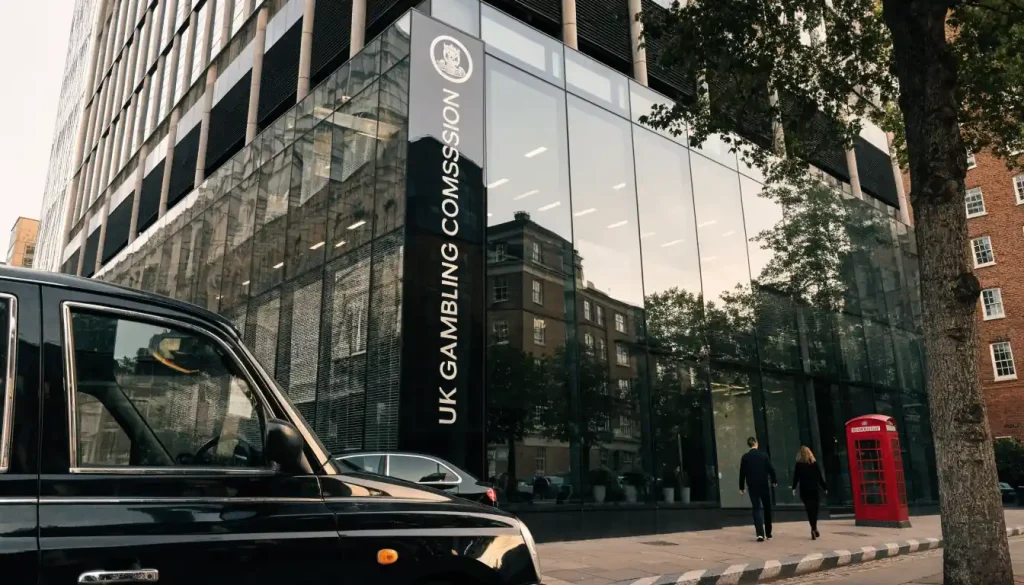
A practical way to assess licensing, site domains, terms, payment controls and trust claims before real-money play.
Table of Contents
- What a UK Casino Licence Actually Tells You
- Real-Money Play Starts With Checks and Limits
- Casino Sites: Check the Domain, Not Just the Brand
- “Best” Means Clear Terms and Useful Controls
- Crypto Casinos: Don’t Treat a Coin as a Trust Mark
- Trust Claims Need Evidence, Not a Fresh Date Stamp
- Reviews and Free Spins: Read the Small Print First
- Casino Apps Still Need the Same Safeguards
- Bitcoin and Dogecoin Don’t Replace a Licence Check
- Live Tables, E-Wallets and the Wait to Withdraw
- Safety
What a UK Casino Licence Actually Tells You
I used to read “trusted” as if it were a status an operator could award itself. It isn’t. For a casino serving customers in Great Britain, the useful question is whether the business has the relevant UK Gambling Commission licence. That requirement applies whether the operator is based in Britain or somewhere else.
The location of a company can make its branding feel more or less familiar, but it does not change the rule for offering remote gambling to people in Great Britain. A business abroad cannot avoid the UKGC regime simply by running its website from another country. If it provides online gambling facilities to customers here, it needs the relevant licence.
That is the starting point for judging a trusted online casino in the UK: the licence is a regulatory requirement, not a badge invented by the casino’s marketing team. It tells you that the operator falls within the Commission’s remit for the relevant service. Without that, a polished site, a familiar-sounding name or a claim to be “safe” does not establish that it is authorised to serve the British market.
What the licence does—and does not—say
A UKGC Licence is meaningful, but it is not a promise that every customer will enjoy their experience or that nothing can go wrong. It does not mean a casino will always make the decision you want, or that every promotion will suit you. Nor does the word “licensed” settle every practical question about an account.
I find it helps to separate the regulatory fact from the advertising language around it. “Trusted” is a judgement; a licence is a defined authorisation within a particular legal system. That distinction is less glamorous than a banner promising the best casino experience. It is also more useful.
A licence should not be treated as a lifetime endorsement. The relevant question is whether the operator is authorised for the activity it offers to customers in Great Britain. A company name on a page, a logo in a footer or a general statement about regulation is not the same thing as establishing that the service falls within the UKGC framework. The point here is not to turn a single phrase into a complete verdict. It is to understand what that phrase can actually support.
Casino No ID Verification UK: Checks and Withdrawals
This matters because “UK casino” can be used loosely in advertising. A site may be presented as British-facing even if the company behind it is elsewhere. That alone does not make the service unlawful or authorised; the location of the operator is not the test. The test, for remote gambling offered to people in Great Britain, is whether the relevant UKGC licence is in place.
Great Britain is not the whole UKGC remit
There is an important geographical distinction hidden in the word “UK”. The Gambling Commission’s jurisdiction under the Gambling Act 2005 covers England, Scotland and Wales. Northern Ireland is not covered by the Commission for remote-gambling provision in the same way.
So a statement about a “UK-licensed” casino needs to be read in context. The UKGC requirement described here concerns serving consumers in Great Britain. It should not be casually stretched into a claim that the Commission regulates every part of the United Kingdom under identical rules. Northern Ireland has a different legal context, and the UKGC’s Great Britain remit should not be presented as if it automatically answers questions about services there.
That distinction is easy to miss when a website uses “UK” as shorthand. I would not treat the shorthand as proof of what applies to a particular player or location. The regulator’s remit matters, and the customer’s jurisdiction matters too. A broad label cannot erase that boundary.
If you are in England, Scotland or Wales, the core point is straightforward: a remote gambling operator offering its facilities to you needs the relevant UKGC licence, wherever it is established. If you are in Northern Ireland, do not assume that the Great Britain rule describes the regulatory position there. The two statements can both be true: the Commission regulates remote gambling for Great Britain consumers, while Northern Ireland is not within that remit in the same way.
Attention: The UKGC’s Great Britain remit does not automatically cover Northern Ireland, which has a different legal context.
A better meaning of “trusted”
When I see a casino described as one of the most trusted online casinos, I translate that into a narrower question: what verifiable basis is being offered for the claim? A UKGC Licence is one important part of the answer for a service aimed at Great Britain, because it identifies the applicable regulatory framework. The word “trusted” by itself adds nothing.
That does not require you to become a legal expert before opening a page. It does mean being wary of wording that blurs an operator’s location, its audience and the regulator responsible for it. “Based overseas” does not remove the licensing requirement for serving Great Britain. “Available to UK players” does not, by itself, prove that the correct authorisation exists. And “regulated” is only informative when you know which regulator and which jurisdiction the claim refers to.
I have learned not to let a confident headline do the thinking for me. The licence answers a specific question: whether the operator is authorised under the UKGC regime for remote gambling offered to consumers in Great Britain. It does not turn every other claim on the page into fact, and it should not be used to imply identical coverage across Great Britain and Northern Ireland.
That’s the useful distinction. A licence is evidence of regulatory authorisation in its proper jurisdiction; “trusted” is just a word until the evidence behind it is clear.
Real-Money Play Starts With Checks and Limits
Before you can put money into a real-money casino account or play, the operator has to verify you. That is not a box you can sensibly leave for later, once a win or withdrawal makes it feel urgent. I used to treat registration as the quick bit and the checks as an annoying formality. That gets the order backwards: verification comes first.
Safety & Registration for UK Online Casinos
The practical point is simple. If an operator asks you to confirm who you are before play, that is part of the process, not a reason to try a different route around it. Have the information it requests ready and make sure the details you enter are consistent. The aim is to establish your identity and age before money is deposited or a game is played. A trusted real-money casino is not one that skips those checks; that would be a warning sign, not a perk.
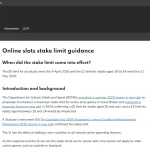
Age also affects what you can stake on online slots. Players aged 18 to 24 are limited to £2 per spin. For players aged 25 and over, the maximum is £5 per spin. Those are maximum stakes, not targets, and they do not mean that spending up to the limit is sensible for you. The age distinction is easy to miss if you skim a page of promotional copy. I would check the stake shown in the game itself before playing, particularly if you are in the younger age group.
Maximum stakes on online slots are limited by age: £2 per spin for players aged 18 to 24, and £5 per spin for those aged 25 and over.
A slot stake is only one part of keeping a session within bounds. Remote operators must prompt new customers to set a financial limit before their first deposit, and they must make account-level limit controls accessible. Take that prompt seriously rather than clicking through to get to the games. Choose a figure that fits your own budget, not a number suggested by a welcome offer or by the size of a balance on screen. Money set aside for bills, food or other commitments is not a gambling budget. Keep it out of the account.
You should also know what changing a limit means. A reduction applies straight away; an increase has a cooling-off delay. That difference matters when you are in the middle of a session and feeling impatient. Lowering a limit can take effect immediately, but raising it is not designed as a way to stretch a session at once. I find it useful to think about the limit before logging in, while I am not reacting to a win, a loss or a bonus prompt.
Online slots have other rules that shape play. Autoplay is banned in Britain, and each online slot spin must last at least 2.5 seconds. These requirements do not make a game low-risk or remove the need to keep track of your own spending. They are boundaries on how the product is offered. If the pace or the stakes are pulling you along, step away instead of treating the rules as a personal spending plan.
This is also why “real money” should not be read as “ready to play instantly”. A site may show a registration form, a payment option and a game lobby, but those things do not replace the required checks. Nor does a welcome bonus make the checks less important. A promotion can wait; identity and age verification cannot. If you cannot complete the required checks, do not deposit in the hope that the operator will sort it out after you have played.
Merkur Casino Online UK: Games, Sites and Safety
I have made the mistake of looking first at what a site seemed to offer and only later at what it expected from me. That order invites frustration: you can spend time comparing games or chasing a deal, then discover you are not ready to use the account. Start with the basics instead: complete the required verification, set a financial limit you can live with, and know the stake ceiling that applies to your age. None of that promises a win. It does make the terms of play clearer before your money is involved.
If gambling is becoming hard to control, pause rather than trying to solve it by changing sites or stakes. The National Gambling Helpline is available around the clock on 0808 8020 133. A limit is useful, but it is not a substitute for getting help when you need it.
Casino Sites: Check the Domain, Not Just the Brand
A familiar casino name is not enough to tell you who runs the website you have open. I used to treat the brand on the homepage as the answer. It isn’t: the UK Gambling Commission’s public register can connect a domain to an operator, and sometimes that operator runs a site under a different brand.
Start with the exact web address, not a search result or a logo. Open the Commission’s register and look for its domain information. Check the spelling carefully, including the ending of the address. A site using a similar name or a different domain is not automatically the same registered site. Then compare the domain entry with the operator details shown in the register. The point is to follow the connection, not to assume that two similar-looking names belong together.
A specialist casino review that cites register information gives one example of how that link can appear: 333casino.com is recorded as a white-label domain associated with Grace Media (Gibraltar) Limited, under account 57869. In plain terms, the name on the site and the company connected to it in the register are not necessarily identical. “White label” describes that kind of brand-and-operator arrangement; it is not a substitute for checking the particular domain and operator entry.
Safe Online Casinos in the UK: Licence and Checks
That distinction matters when you are comparing trusted UK casino sites. A brand can be memorable, polished and widely discussed, but those qualities do not establish which company is responsible for the site. Nor does finding a licensed company name somewhere in a register prove that every website using a related brand is connected to it. Match the site address to the entry. Then check that the operator details make sense alongside it.
The register can also show a more direct link. A specialist review of the register records leovegas.co.uk as an active UK-facing domain associated with operator account 39198; the Commission’s operator listing identifies that account as LeoVegas Gaming PLC. That is the kind of cross-check I look for: a domain entry and an operator entry that point to the same account. Register details can change, so treat these as illustrations of how to read the records, not as a permanent status report.
If you are looking at a white-label site, don’t stop at the fact that a parent operator appears in the register. Confirm that the specific domain is included and read the entry rather than relying on the brand’s own wording. If the register gives you an operator account number, use it to locate the operator record. If the domain is not there, or the names do not line up, pause and resolve the mismatch before treating the site as connected.
This is a more useful test than searching for “most trusted” or “best” casino labels. Those phrases tell you how a site wants to be perceived, not whether the address you are visiting is the one shown in the register. The same goes for a bonus page, a payment logo or a review badge: none of them connects a domain to an operator on its own.
I now check the address before I let a confident-looking homepage do the talking. It takes a little longer than clicking the first result, but it avoids a basic mistake: trusting a brand when what you needed to verify was the site itself. A name is not a match.
“Best” Means Clear Terms and Useful Controls
If you’re choosing a UK casino for 2026, payout timing is one practical detail to consider. Use this list as a starting point and check the terms that matter to you before signing up.
1. Amunbet
Payout speed: 1-3 business days Amunbet lists a payout speed of 1–3 business days, giving you a stated timeframe to consider.
2. Revery Play
Payout speed: 1-3 business days Revery Play lists a payout speed of 1–3 business days, a useful detail for your withdrawal expectations.
3. EvoSpin
Payout speed: 1-3 business days EvoSpin lists a payout speed of 1–3 business days. You can use this stated timing when reviewing its terms.
4. Britsino
Payout speed: 1-3 business days Britsino lists a payout speed of 1–3 business days, providing you with a clear stated timeframe.
5. SpinFormula
Payout speed: 1-3 business days SpinFormula lists a payout speed of 1–3 business days, which gives you one practical point to assess.
6. WinBeast
Payout speed: 1-3 business days WinBeast lists a payout speed of 1–3 business days. Consider this stated timeframe alongside the terms that matter to you.
7. SlotoSport
Payout speed: 1-3 business days SlotoSport lists a payout speed of 1–3 business days, offering you a stated guide to payout timing.
8. NightLuck
Payout speed: 1-3 business days NightLuck lists a payout speed of 1–3 business days, a useful detail for you to check against its terms.
9. x3bet
Payout speed: 1-3 business days x3bet lists a payout speed of 1–3 business days, giving you a stated timeframe to factor into your choice.
10. Zombillion
Payout speed: 1-3 business days Zombillion lists a payout speed of 1–3 business days, which you can consider when reviewing its payout terms.
When I see “best trusted casino UK”, I don’t take “best” as a verdict. It is a claim that needs to be translated into things you can actually check: whether the site explains its terms plainly, lets you control promotions, and makes account limits usable rather than hiding them in a maze.
I used to treat a polished lobby and a confident promise as signs that a site had its act together. That was lazy on my part. A better test is what happens when you try to change the settings. Can you choose which kinds of marketing you receive? Can you decide whether those messages come by email, text or another channel? Casinos must give customers more control over promotion types and delivery channels, so look for choices you can understand and change—not a single box that quietly covers everything.
That matters even if you never claim an offer. A promotion preference is not the same as accepting a bonus, and opting out of one kind of message should be clear about what it changes. If the controls are hard to find, or the wording leaves you guessing, I would not call that a small design quirk. It is a useful clue about how much attention the operator pays to customer control.
Limits should work both ways
Account limits deserve the same practical check. Look for accessible controls and clear wording about what happens when you change a limit. Lowering one takes effect immediately; increasing one is subject to a cooling-off delay. The difference is important: reducing access to funds should not be held back, while raising a limit should not happen instantly in a moment of impulse.
Online casino Malta MGA licence in the UK
I have made the mistake of setting a limit by feel, then assuming I could adjust it without friction whenever I wanted. That is not a sound plan. Read the explanation before setting anything, and make sure you understand which changes apply straight away and which must wait. Useful controls are not just present; they behave predictably.
A site does not become trustworthy because it has a long menu of settings. What counts is whether you can find the relevant controls, understand their effect, and use them without unclear wording. The same goes for promotion preferences: a genuine choice should let you shape what reaches you, not make you decode a bundle of permissions.
People looking for the most trusted UK casinos often want a simple winner. I get the appeal; I have wanted someone else to make the call too. But a bare ranking cannot tell you whether the controls will suit you. Compare the actual account options and the clarity of their explanations instead. For trusted casino games in the UK, the game itself is only one part of the experience; how the site handles your choices matters as well.
So I would not crown a “best” casino from branding alone. I would look for clear promotion choices and account limits with understandable timing. No grand promise. Just controls you can use.
Crypto Casinos: Don’t Treat a Coin as a Trust Mark
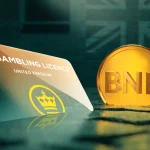
A casino accepting cryptocurrency can look modern, but the payment option tells you nothing by itself about whether the operator is authorised to serve players in Great Britain. I’ve learned not to confuse a slick feature with a meaningful safeguard. A coin logo is a way to describe how a site may take payment; it is not proof of a UKGC Licence.
Cryptocurrency logos and payment options are not proof of a UKGC Licence or regulatory authorisation.
The test is the operator’s permission to offer remote gambling to people in Great Britain. That requirement applies regardless of where the business is based. So a site does not become authorised simply because it accepts a familiar cryptocurrency, uses a wallet, or presents itself as a specialist crypto casino. The payment method and the licence are separate questions.
Separate the payment claim from the licence claim
When a site describes itself as a trusted crypto casino, I’d take that as a marketing claim until the operator’s regulatory status is clear. Ask what company is providing the gambling service, then check whether that company holds the relevant UKGC Licence for serving Great Britain. A coin accepted at checkout cannot answer that.
This distinction matters because crypto branding can dominate a page. There may be talk of private transactions, quick transfers or a new kind of casino experience. None of that establishes that the operator has the permission required for the British market. Nor does a site’s confident wording establish it. The licence is the point to verify.
I also avoid treating a list of accepted coins as a quality ranking. A casino that takes several currencies is not automatically more reliable than one that does not. If the operator’s status is unclear, the payment menu does not fill in the gap.
What I would check before trusting the label
Start with the operator behind the site, not the coin name. Then look for evidence that this operator is licensed to offer remote gambling to Great Britain consumers. If you cannot establish that connection, don’t let a polished crypto page stand in for it.
Non-GamStop Curaçao casinos: what the licence means
That is a narrower check than judging every part of a casino, but it answers the question the coin cannot: is the business authorised to serve this market? I would keep that question in view even if the site uses familiar branding or presents cryptocurrency as its main selling point.
The phrase “trusted” can make a payment feature sound like a seal of approval. It isn’t. A cryptocurrency option may be relevant to how a customer pays, but it does not establish the operator’s authority. I’d verify the UKGC Licence first and treat the coin as a separate feature, not a shortcut to trust. A simple distinction.
Trust Claims Need Evidence, Not a Fresh Date Stamp
A page can call a casino “trusted” and add 2026 to the headline without showing what has changed. I’ve learned not to treat a fresh date as proof. What matters is whether the claim can be checked against something concrete, and whether the evidence is still current.
The Gambling Commission’s public register is a useful place to test a claim, but a register check is a snapshot, not a permanent verdict. A specialist review reported that a check dated 26 September 2026 did not show a LuckyPays entry under the brand or the stated domain, luckypays.io. Another specialist review reported that a check dated 25 September 2026 found no operating-licence entry for either Usoftgaming N.V. or Hustles Casino.
A UKGC licence is not a permanent verdict; operators can still face enforcement actions, such as the £60,000 penalty imposed on Grace Media on 26 June 2025.
Those are specific findings tied to particular dates. They are not proof that a register will always show the same result, and a name that is hard to locate should not be waved through because a site looks polished. I’d note the operator’s exact legal name and the domain being checked, then compare those details with the register’s current entries. A mismatch deserves an explanation before you rely on a trust claim.
There is another point I used to miss: a licence does not mean an operator has never fallen short. On 26 June 2025, the Gambling Commission imposed a £60,000 financial penalty on Grace Media for breaches involving self-exclusion and consent for direct electronic marketing. That is a documented enforcement action, not a rumour or a review score. It does not, by itself, tell you everything about the company’s present conduct, but it is relevant evidence that deserves more weight than a row of glowing adjectives.
“Trusted” is a label; the useful question is what sits behind it. Look for an identifiable operator, a traceable register record, and a clear account of any regulatory action. If a page makes broad claims but gives no way to check them, I would treat the confidence as marketing rather than proof. A dated register result also needs context: note when it was checked, what exact name or domain was searched, and avoid presenting an old result as a live status.
That is a less exciting way to judge trusted UK casinos, but it is the one I’m comfortable with. I’ve been persuaded by neat branding before; it tells you very little once something goes wrong. Evidence first. Hype second.
No account casino UK: what to check first
Reviews and Free Spins: Read the Small Print First
A bonus headline can look generous while the wagering condition turns it into a sizeable amount of play. I used to focus on the cash figure and treat the terms as a footnote. That was backwards: the rollover tells you how much you must stake before bonus-related winnings can be withdrawn, subject to the offer’s rules.
The arithmetic is plain. A £20 bonus with 10x wagering requires £200 in total stakes. A specialist affiliate review has also described a 100% match bonus capped at £200 with a 30x rollover. That is an example of an offer, not a standard you should expect everywhere; check whether the multiplier applies to the bonus, the deposit, or both. Those details change the commitment.
Then look at what counts towards it. A specialist affiliate review says slots may count fully, while live tables and blackjack can contribute less or nothing. The promotion’s own terms should state the contribution rate for each game. If a game counts only partly, reaching the wagering target takes more in actual stakes than the headline multiplier suggests. If it does not count, playing it may not move the requirement at all.
Read the eligibility rules before opting in, too. A specialist affiliate review reports welcome deals restricted to new customers, limited to one per household, and sometimes unavailable when using certain payment methods, including e-wallets. “For new customers” can sound like a simple label, but the household condition may matter if someone else at your address has already claimed an offer. Check the wording rather than assuming you qualify.
Do
- Check the rollover multiplier and whether it applies to the bonus or deposit
- Verify the game contribution rates for slots and tables
- Note the expiry period for bonus funds and spins
Don’t
- Focus only on the headline cash figure
- Assume a bonus is available for all payment methods
- Assume the household condition doesn’t apply to you
Free spins deserve the same scrutiny as bonus cash. Find out which games they apply to, whether winnings become bonus funds, and what wagering rules then apply. The word “free” describes the spins, not necessarily unrestricted cash you can withdraw immediately. The terms decide what happens next.
Expiry is easy to miss when an offer is split across a banner and a separate terms page. A specialist affiliate review describes bonus funds and free spins as commonly expiring within a stated period of 7 to 30 days. Treat that as a prompt to check the actual offer, not a deadline that applies to every casino. Note when the clock starts and whether unused spins or remaining bonus funds are removed when it runs out.
I still read reviews, but only as signposts to the promotion terms. A confident verdict cannot replace the conditions attached to the offer you are actually claiming. Read those first. Then decide.
Casino Apps Still Need the Same Safeguards
A polished app can make a casino feel more established than it is. I’ve learned not to treat a smooth login, neat design or familiar phone-store listing as proof that the gambling service is properly regulated. The app is just another way to reach the operator; it does not create a separate set of rules.
For customers in Great Britain, remote gambling operators need the relevant UKGC Licence whether play happens in a browser or through an app. The Gambling Commission requires operators in its Great Britain regime to take part in GAMSTOP, the national online self-exclusion scheme. That participation became compulsory on 31 March 2020. So an app should not be presented as a way around a self-exclusion choice.
Non-GamStop European Casinos: UK Rules Explained
That point matters when an operator advertises its app as “trusted”. The word is easy to put on a screen. What matters is the underlying gambling service and whether it falls within the right regulatory framework. If you have excluded yourself through GAMSTOP, switching from a website to the same operator’s app should not be treated as a fresh start. Same account, same safeguards.
App access is also separate from identity or payment-ownership questions. Installing software does not prove who is using the account, and it does not settle any checks the operator may require. Those are distinct issues; the app itself is not verification.
I’d also be wary of assuming that an app’s appearance tells you how the operator handles safer-gambling protections. Look for the controls within the account, and consider whether you can reach support and responsible-gambling information without having to hunt through menus. A mobile screen can hide things in a way a larger page does not. That is a design issue, not an exemption.
If an app seems to offer a route around a restriction, stop and check what service is behind it. A download is not a licence, and a different icon does not change the operator’s obligations. The protection should follow the gambling account, not the device in your hand.
Bitcoin and Dogecoin Don’t Replace a Licence Check
Bitcoin and Dogecoin can catch your eye when you are comparing ways to pay, but a coin is not a sign that a casino is trustworthy or authorised. I’ve learned to separate the payment label from the question that matters first: who is operating the site, and are they allowed to offer real-money gambling here?
For customers in England, Scotland and Wales, an operator offering real-money gambling must hold a licence from the UK Gambling Commission (UKGC). That requirement applies whether the site talks about Bitcoin, Dogecoin, or ordinary payment options. A digital currency does not give an operator an exception.
The word “trusted” on a casino page is easy to add. It does not prove anything about the operator. Nor does seeing a familiar coin logo: that tells you what the site says it accepts, not whether it holds the required UKGC Licence. Those are separate questions.
Non-Gamban Casinos in the UK: What the Label Means
I’d check the operator behind the site rather than treating the brand or payment method as evidence. If you cannot establish that the business offering the gambling has the required UKGC Licence, the presence of Bitcoin or Dogecoin does not settle the issue. A polished page can still leave the important point unanswered.
That distinction is worth keeping in mind when comparing casinos that promote cryptocurrency. The coin may be part of the payment offer; it cannot stand in for the operator’s authorisation. Don’t let a bold payment badge do the work of a licence check.
No coin changes the rule. If an operator is offering real-money gambling to people in England, Scotland or Wales, the UKGC licence requirement still applies. I’d put that check before weighing up which payment option looks appealing. A payment method can be a preference. It is not proof of permission.
Live Tables, E-Wallets and the Wait to Withdraw
Live dealer tables can feel like the more straightforward way to play, but they may be a poor fit if you are trying to clear a bonus. A specialist review I checked describes slots as counting fully towards wagering, while live tables and blackjack may count at a lower rate or not count at all. That is not a rule to assume applies everywhere: read the offer’s game contribution table before you opt in. A generous-looking bonus can become a slow grind if your chosen games barely move the requirement.
I learned to check this before playing, not after. “Fast clearance” can mean little if the games you actually want are excluded. Small print matters.
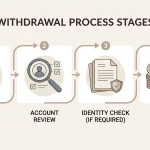
Withdrawal timing needs the same scrutiny. The first cash-out can take longer because the operator may still need to complete document checks. One specialist review puts that additional wait at 12–24 hours for a first withdrawal; treat that as an estimate from that review, not a promise from every casino. If a payment is still pending, check whether the operator is reviewing it or whether the payment provider is processing it. Those are different stages.
No ID Verification Withdrawal Casinos in the UK
The same specialist review gives PayPal withdrawal estimates of roughly 4–6 hours on weekdays, rising to 8–10 hours from Friday to Sunday. Weekends can change the wait. An estimate is not a deadline, and a delay does not by itself tell you what has happened to the request.
I would also check the cashier’s terms before depositing. Deposit and withdrawal availability are separate, so seeing an e-wallet listed for deposits does not tell you how withdrawals work. Look for the stated processing time, any conditions attached to the first cash-out, and whether the method you plan to use is supported for withdrawals. If the wording is vague, ask support before you commit money.
That is the less glamorous part of choosing live tables or an e-wallet: the game contribution and the cash-out route can matter more than the headline offer. Read both first. No guesswork.
How can I check whether a casino is legal?
For Great Britain, check the UK Gambling Commission’s public register to confirm that the operator has the relevant licence for the service it offers. A casino’s location or its own claims of being “trusted” do not establish that it is authorised.
What are the deposit limits and safer betting tools?
The stated stake limits are £5 per spin for players aged 25 and over and £2 per spin for those aged 18 to 24. You can reduce account limits immediately; increases are subject to a cooling-off delay.
How long do approved LeoVegas UK withdrawals typically take?
After the operator’s review, PayPal withdrawals typically take around 4–6 hours on weekdays and 8–10 hours from Friday to Sunday, while debit card withdrawals usually take 2–3 banking days. A first withdrawal may need an additional 12–24 hours for document checks.
What payment types are listed?
The listed payment types are PayPal, debit cards and bank transfers. Bank transfers may incur a £2–£5 charge, depending on your bank.
What is the context of GAMSTOP and self-exclusion?
Online operators in the UKGC’s Great Britain regime must participate in GAMSTOP, a self-exclusion scheme, and participation has been compulsory since 31 March 2020. This requirement applies to Great Britain, not Northern Ireland under the same UKGC remit.
Safety

Casino No ID Verification UK: Checks and Withdrawals
“No ID” often describes when checks happen, while age and identity verification may still be...

Merkur Casino Online UK: Games, Sites and Safety
Merkur branding identifies a game, while the operator runs the casino and sets its account...

Most Trustworthy Online Casinos UK: What to Check
A practical way to assess licensing, operator obligations, non-GAMSTOP status, payments and bonus terms before...

No account casino UK: what to check first
A quicker-looking sign-up route does not remove player records, age checks or the need to...

No ID Verification Withdrawal Casinos in the UK
UK rules require age and identity checks before play, while withdrawal timing and payment methods...

Non-Gamban Casinos in the UK: What the Label Means
Gamban blocks access on devices, while GAMSTOP is a national scheme for self-exclusion across participating...

Non-GamStop Curaçao casinos: what the licence means
A Curaçao label describes a licensing connection, but it does not establish that a casino...

Non-GamStop European Casinos: UK Rules Explained
A European address does not establish UK authorisation or change the importance of an existing...

Online casino Malta MGA licence in the UK
A Malta authorisation is separate from UKGC permission, which operators need to offer remote real-money...

Online Casino No Registration in the UK: Explained
A shorter sign-up does not remove identity checks, which can affect deposits, bonuses, game access...

Safe Online Casinos in the UK: Licence and Checks
A practical look at UKGC licensing, account limits, self-exclusion and the checks that shape safer...