Highest RTP Slots in the UK: How the Figures Work
 Available in GB

RTP is a long-run mathematical expectation, while reel design, volatility and game settings can shape how a session may feel.
Table of Contents
- RTP on Online Slots: The Number Is Not a Promise
- How Reel Layouts and Paylines Change a Slot
- Slot Machines: Why the Same Game Can Play Differently
- High RTP, Low Volatility: What Your Session May Feel Like
- Which Slots Have the Highest RTP? What Can Be Verified
- Choosing a UK Casino Without Treating RTP as a Guarantee
- Slot Stakes in Britain: The Limits That Apply
- Live Casino Games: Roulette Bets and Table Mechanics
- Pragmatic Play Slots: Check the Specific Game, Not the Label
- What to Check Before You Chase a 2026 RTP Claim
- Games
RTP on Online Slots: The Number Is Not a Promise
RTP stands for return to player. On a slot, it describes a theoretical relationship between the total amount wagered and the amount the game is expected to return over a very large number of plays. It is a property of the game’s mathematics, not a forecast of what will happen to your balance during an individual session.
That distinction took me a while to respect. I used to see a high RTP figure and treat it like a quiet promise: play long enough and the money would come back. It doesn’t work that way. The figure describes an average across extensive play, not a personal target the game has to meet. Your own results can be nowhere near that average.
Think of RTP as a long-run expectation rather than a refund rate. It does not mean the game keeps a record of what you have lost and then pays you back to bring your account into line. Each result is part of the game’s random process; your previous session does not create a debt the slot must settle. The number can help describe the design, but it cannot tell you what your next spin will do.
When choosing a slot, the advertised RTP is only one part of the picture, so it helps to check the details available for each operator. Use this list as a starting point when considering your options for UK play in 2026.
1. Amunbet
Payout speed: 1-3 business days Amunbet lists a payout speed of 1–3 business days, giving you a stated timeframe to consider when planning withdrawals.
2. Revery Play
Payout speed: 1-3 business days Revery Play lists a payout speed of 1–3 business days, a useful detail for you to keep in mind when reviewing the operator.
3. EvoSpin
Payout speed: 1-3 business days EvoSpin lists a payout speed of 1–3 business days. This gives you a specific withdrawal timeframe to factor into your choice.
4. Britsino
Payout speed: 1-3 business days Britsino lists a payout speed of 1–3 business days, so you have a stated timeframe to consider for withdrawals.
5. SpinFormula
Payout speed: 1-3 business days SpinFormula lists a payout speed of 1–3 business days. You can use this information when weighing practical aspects of play.
6. WinBeast
Payout speed: 1-3 business days WinBeast lists a payout speed of 1–3 business days, providing you with a stated guide to withdrawal timing.
7. SlotoSport
Payout speed: 1-3 business days SlotoSport lists a payout speed of 1–3 business days. This is a practical detail for you to consider alongside slot information.
8. NightLuck
Payout speed: 1-3 business days NightLuck lists a payout speed of 1–3 business days, giving you a stated withdrawal timeframe to bear in mind.
9. x3bet
Payout speed: 1-3 business days x3bet lists a payout speed of 1–3 business days. You have a clear stated timeframe to factor into your review.
10. Zombillion
Payout speed: 1-3 business days Zombillion lists a payout speed of 1–3 business days, which gives you a practical detail to consider when assessing the operator.
Nor does an RTP figure tell you how a session will unfold. Two players can choose the same game and come away with very different results. One may finish ahead; another may lose their stake quickly. Neither outcome proves the stated return is false or that it is due to appear next time. A long-run average is not a schedule.
The mathematical expectation also has an awkward side that advertising tends to leave in small print. If a game has a positive house edge, its expected result for the player is negative over enough sessions. That remains true whether losses arrive gradually or the play feels generous along the way. A session can still go well, of course, but a good result does not reverse the underlying expectation.
This is where I made a familiar mistake: I confused “more of the stake is expected to return over extensive play” with “this is a sensible way to make money”. Those are not the same claim. RTP is useful for comparing game mathematics when the figures are reliable and refer to the version actually offered. It is not a measure of whether playing is worthwhile for you, and it cannot turn gambling into an income plan.
The wording around RTP can make the figure sound more personal than it is. “High return” sounds like money coming back to your account. In reality, it is a statistical description of the game’s long-run design. It says nothing about whether you will get a return in a short visit, or whether any return will be large enough to cover what you staked.
Best Video Slots UK: How the Games Work
It is also worth separating the published figure from the experience of playing. A number on a game page is only useful if it applies to the version you are actually playing. Even then, it does not let you calculate the outcome of a particular session. I would treat it as background information, not a reason to raise a stake or keep playing after I had planned to stop.
When I first started paying attention to RTP, I wanted it to answer a simpler question: “Will I get my money back?” It cannot answer that. It describes an average across extensive play, while your session is a small and unpredictable slice of that picture. The gap between those two scales is exactly where a lot of wishful thinking slips in.
So if you are comparing online slots with the highest RTP, keep the meaning narrow. The figure can indicate a theoretical long-run return relative to the amount wagered. It cannot guarantee a win, set a timetable for returns, or say what will happen to your balance today. And where the house edge is positive, the mathematical expectation remains against the player over enough sessions. No magic correction later.
How Reel Layouts and Paylines Change a Slot
A slot’s layout is more than decoration. Reels, symbols and paylines determine how a game presents a spin and which combinations it checks. I used to glance at the theme, pick a stake and press spin; then I’d wonder why two games with similar-looking screens seemed to behave so differently. The layout is part of the answer.
Attention: A bet on the screen does not guarantee a return, and the pictures alone tell you very little about how a game assesses the result.
A five-reel slot can apply your bet across all five reels. That does not mean every symbol arrangement wins, or that a bet on the screen guarantees a return. It means the game uses its reel structure and stated rules to assess the result. Before playing, I now look for the paytable and check what the game counts as a winning combination. The pictures alone tell you very little.
What paylines actually do
A payline is a route through the reels that the game checks for a qualifying sequence of symbols. Some routes run in a straight line; others may move up or down as they cross the screen. The important point is not whether a pattern looks attractive to the eye, but whether it follows a line the game recognises.
This is where a busy screen can mislead you. I once assumed that matching symbols anywhere across a row would count. That is not a safe assumption: the paytable sets out the routes and combinations that matter for that particular title. Read it before you settle into a session. A line that looks like a match may not be a paid combination under the game’s rules.
The number of paylines is one part of the layout, not a shortcut to judging a slot. More lines can make the screen look more active, but the count by itself does not tell you the size or frequency of wins. Nor does it establish that one title is better than another. I learned to stop treating a crowded reel display as evidence of value.
3-Reel Slots in the UK: How to Find a Game
Following a bet across the reels
When a bet is applied across all five reels, the reel layout gives the game a defined structure for checking the spin. The paytable is where you can see how that structure works: which symbols matter, how a line is formed and what the game lists as a winning result. If the rules are not clear on the screen, I would rather pause than guess.
Paylines and bet settings should also be read together. A player can misunderstand a game by looking only at the total stake or only at the number of lines. The interface may show both, while the rules explain how the bet is used. Take a moment to check the controls and the paytable, especially when switching to a title with a different layout.
That small pause has saved me from a familiar mistake: assuming that a spin works like the last slot I played. Similar reels do not mean identical rules. Each game has its own presentation, paytable and bonus conditions. Check the one in front of you.
Bonus rounds and fixed jackpots
Low-volatility slots commonly use five reels and at least twenty-five paylines. Their layouts may also include fixed jackpot amounts rather than progressive pools, with bonus rounds that apply multipliers to wins already accumulated. Those features describe how a game can be built; they do not turn the layout into a promise about what your own spins will produce.
Low-volatility slots commonly feature five reels, at least twenty-five paylines, and fixed jackpot amounts rather than progressive pools.
A multiplier-based bonus round is worth understanding before you play. Check what the multiplier applies to and how the game says the bonus is triggered. A label such as “big bonus” sounds generous, but the rules matter more than the label. If you cannot tell what is being multiplied, you do not yet know what that feature means in practice.
The fixed-jackpot detail matters too. A fixed amount is distinct from a progressive pool, but the word “jackpot” can still make a feature sound more important than it is to your session. Read the paytable and bonus explanation rather than using the name as a guide to likely results.
Read the screen, then the rules
When I compare slots now, I start with the shape of the game: how many reels are shown, how paylines cross them, how the bet is applied and what the bonus rules say. I do not treat a high line count or a dramatic multiplier as proof that a slot is generous. They are structural features, not a verdict.
It is easy to get pulled along by animated symbols and flashing win messages. The practical check is quieter: find the paytable, confirm the game’s line rules and understand the bonus mechanics before staking money. If the layout feels unfamiliar, take the time to work it out. No rush.
Slot Machines: Why the Same Game Can Play Differently
The word “machine” makes a slot sound like a fixed bit of hardware: feed it a stake, watch the reels turn, see what comes back. Online, the familiar cabinet is mostly a presentation. What matters when you play is how the game applies your stake to its layout, and that can be easy to misread when the screen is dressed up to look simple.
Bonus buy slots in the UK: demos, stakes and limits
Take a 5 reel slot game. A bet can be applied across all five reels, rather than treated as one isolated wager on a single strip. That does not mean every spin will show a win, or that the machine is returning something to you just because all the reels were involved. It describes how the chosen stake is used in the game. I used to glance at the moving reels and assume the bet worked like one little coin dropped into one physical machine. The display encouraged that impression. It was not a useful way to understand what I had staked.
The layout can also make two slots feel unlike each other before you have looked closely at how a bet is set. One may put the reels front and centre; another may surround them with graphics, buttons and a bonus feature. Those differences affect how clear the game feels to use, not the underlying meaning of a return figure. A dramatic cabinet-style animation is still a presentation. It is not evidence that the machine is more generous.
I now pause before a spin and check what the game says about the stake. Is the amount shown for the whole spin, or is the interface presenting a choice that applies across the reel layout? If I cannot tell, I do not guess from the artwork. That small check matters because a familiar machine image can make the action feel more straightforward than it is. The screen may look like an old arcade cabinet; the wording on the bet controls is what tells you how your stake is being applied.
Do
- Check the bet controls for how your stake is applied
- Verify the return information as a separate figure
- Treat the machine as a game interface
Don’t
- Guess the stakes from the artwork or animations
- Trust a slot based on its familiar-looking layout
- Assume a machine-style design indicates the return setting
This is also why searching for the highest-return slot machines can lead to a misleading comparison if the machine-like appearance is doing all the work. A cabinet, a row of reels and a bright spin button do not identify a game’s return setting. Nor does a title that looks close to a physical fruit machine automatically behave like another title with a similar layout. The shared look is not a measurement.
I would separate three things in my head: the machine-style design, the way the stake is assigned to the reels, and the game’s return information. The first is visual. The second is something to confirm in the game’s own bet display. The third needs to be read as a separate figure, not guessed from the first two. Blurring them together is how I once treated a familiar-looking slot as if familiarity itself were a reason to trust it.
A clear layout helps you understand what you are choosing; it cannot tell you what a session will deliver. That distinction is less exciting than a glossy machine animation, but it is more useful when you are deciding whether to press spin. Check the stake first. Then treat the machine as a game interface, not a promise.
High RTP, Low Volatility: What Your Session May Feel Like
I used to treat “low volatility” as if it meant a slot was being kind to my balance. It does not. The label describes the pattern of wins, not whether a session will end in profit. Low-volatility slots tend to award smaller wins more often; high-volatility games tend to leave longer gaps between wins, with larger payouts when they arrive.
That difference can shape how a game feels. In low-volatility titles, winning combinations occur every three to six spins on average across most games. That is an average pattern, not a schedule. You can still have a run with no win, or see several combinations close together. A winning combination can also return less than you staked, so seeing one flash up does not necessarily mean your balance has grown.
High volatility has a different rhythm. You may play through a dry stretch while waiting for a larger payout, and there is no promise that it will arrive during your session. I have chased that kind of game longer than planned because the next win always felt close. It might not be. A bigger possible prize is not the same thing as a more likely one.
RTP and volatility answer separate questions. RTP describes a game’s theoretical return across extended play; volatility concerns how wins tend to be distributed along the way. A slot can therefore have a high RTP and still deliver an uneven session, while a low-volatility game can produce frequent small wins without giving you a favourable overall return. Neither label tells you what will happen in your next stretch of spins.
That is why looking for the highest RTP alongside the lowest volatility can sound like a way to make real money slots predictable. It is not. The combination may describe a theoretical return and a gentler-feeling cadence, but it cannot remove the house edge. If a game has a positive house edge, its expected result for the player is negative over enough play, even when losses arrive slowly and small wins keep appearing. A softer ride, not a changed destination.
House Edge
If a game has a positive house edge, its expected result for the player is negative over enough play, regardless of win frequency.
I learned that the annoying way: frequent wins can make a session feel as though it is paying, while the balance tells a less flattering story. If you prefer a steadier pattern, low volatility may suit your taste better than long waits for a large payout. Just keep the distinction clear. “Frequent wins” means more winning combinations, not a guarantee of profit or protection from losing your stake.
Which Slots Have the Highest RTP? What Can Be Verified
I can’t give you a dependable named winner for the highest-RTP slot in the UK. Without that, a “best” list would look precise while giving you nothing solid to compare.
That is frustrating if you came here wanting one game to open first. I’ve chased the same kind of shortcut: spot a big claim, assume it settles the choice, and start playing. It doesn’t. A confident label is not evidence that a particular slot has the highest RTP, and it says nothing about what your own session will return.
The same caution applies to broader questions about casino games. Slots and table games have different rules and payout structures, so a single league table would need a clear basis for comparison. I’d want the specific game and the figure attached to it, not a provider name, a familiar theme or a marketing phrase standing in for the number.
There’s also a distinction between a game’s long-run maths and what happens over a short visit. If a game has a positive house edge, the player’s mathematical expectation is negative over enough play. That remains true whether the losses arrive slowly or a session happens to include a win. A favourable run can happen; it does not turn the underlying expectation around.
So if you’re asking which slot has the highest RTP, the honest answer is that I can’t name one as the UK leader here. I’d rather leave the ranking blank than dress a guess up as a recommendation. If you do see a named title promoted as the top choice, look for a verifiable figure tied to that actual game rather than treating the wording as proof.
No magic pick.
Choosing a UK Casino Without Treating RTP as a Guarantee
A casino’s licensing status and a slot’s return figure answer different questions. RTP is a game statistic; it does not tell you whether the business offering the game is authorised to serve you. When I compare sites, I keep those checks separate. A promising number on a slot page is no substitute for knowing who is responsible for the casino.
In Great Britain, the UK Gambling Commission is the sole regulator of commercial gambling. Its remit includes online casinos and remote gambling offered to consumers in Great Britain, even when the operator’s key equipment is located elsewhere. So the relevant point is not simply where a company has its offices or servers. It is whether it is offering gambling to people in the British market under the required regulatory framework.
Licensing distinctions
The licensing system distinguishes between the business and the people running it: an operating licence is issued to the business, while a personal licence applies to individuals in relevant operating roles.
The licensing system also distinguishes between the business and the people running it. An operating licence is issued to a business that provides gambling services. A personal licence applies to an individual performing relevant operating roles. Those are not interchangeable badges: one concerns the operator as an organisation, the other concerns a person working within the operation.
That distinction can be easy to miss when a casino puts a licence claim beside a game catalogue. I would not treat a logo or a line of marketing copy as the whole check. Before depositing, verify the operator’s licence details against the UK Gambling Commission’s public register. It is a small step, but it gives you a clearer basis for deciding whether the site is operating within the system that regulates commercial gambling in Great Britain.
This still does not identify a casino with the highest RTP, nor does a licence make any particular slot generous. A regulated operator and a game’s return information are separate things. If you are comparing casinos for slots with a high stated RTP, first establish that the operator is properly licensed; then assess the game information on its own terms. Don’t let “licensed” turn into “best odds”—that is a different claim.
I used to read a confident casino banner as if it settled the important details. It didn’t. The regulator’s role is to oversee commercial gambling, while the operating and personal licences set out who is authorised in the business. Neither one promises a winning session or turns a high-return label into a result you can count on. Keep the checks distinct. Less guesswork.
Slot Stakes in Britain: The Limits That Apply
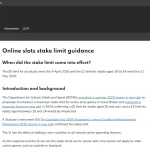
When I first looked at slot stakes, I treated the number on the spin button as the whole story. It isn’t: for online slots in Great Britain, a specialist review describes maximum stakes by age, and the cap applies to each game cycle.
According to that review, customers aged 25 and over can stake no more than £5 per cycle. For customers aged 18 to 24, the stated maximum is £2 per cycle. Those are ceilings, not suggested stakes or targets. You can choose less, and doing so does not change the limit that applies to your age group.
The distinction is worth keeping in mind when comparing real money slots. A game’s advertised features, including a high RTP claim, do not let you stake above the applicable cap. Nor does the cap say what you will get back: it limits the amount at risk in a cycle, not the result of that cycle.
One detail I would check before depositing is how the casino presents the stake. A game cycle is the relevant unit in the review’s description; don’t assume that a displayed button or a particular way of playing changes the age-based maximum. Operators must verify a customer’s age before allowing a deposit, but it is still sensible to make sure your account details are accurate.
The same specialist review says these online slot limits do not apply to roulette or blackjack. That does not mean every casino game follows the same rules, or that a table-game stake is a slot stake under another name. They are different games, with separate mechanics. I used to lump them together as “casino bets”; that shortcut made the rules harder to follow.
Check Your Stakes
- Verify your age group to determine the maximum stake per cycle
- Confirm if the game is an online slot or a table game
- Ensure your account details are accurate for age verification
- Check that the game is not using an unauthorized autoplay feature
If you move between a slot lobby and a live table, check which game you have actually opened and what the stake controls show. The slot cap is about online slot cycles, while roulette and blackjack sit outside that specific limit. Keep the distinction plain.
There is another practical difference: online slot autoplay is not allowed in Britain, and a new slot cycle cannot begin until at least 2.5 seconds have elapsed from the start of the previous one. So a session is not meant to run through unattended spins or instant cycles. Small details, but they change how a real-money session works.
Live Casino Games: Roulette Bets and Table Mechanics
When I moved from slots to live roulette, I initially treated the payout beside a bet as a clue to which game offered the best return. That was too simple. A payout describes what a winning bet earns; it does not, by itself, tell you how often that bet wins or establish a game’s overall return.
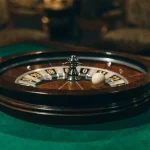
The wheel matters. European-style roulette has 37 pockets, numbered from 0 to 36. American-style roulette adds a double zero, giving it 38 pockets in total. That extra pocket changes the set of possible outcomes, so check which wheel is on the table before you place a bet. Same game name, different layout.
What the bet pays
A straight bet covers one number. If it wins, the payout is 35:1. You can also cover more numbers with a single bet, but the payout falls as the selection gets broader. A split bet on two neighbouring numbers pays 17:1; a street covering three consecutive numbers pays 11:1. A corner bet covering four numbers pays 8:1, while a six-line bet covering six pays 5:1.
Outside bets are broader still. Red or black, odd or even, and low or high each pay 1:1. A dozen or column bet pays 2:1. Those figures are payouts, not promises about a session. I’ve made the mistake of seeing a bigger number beside a bet and assuming it meant better value. It only tells you the return if that bet lands.
The round, in real time
In a live game, you choose your bets before the ball is released to start the round. That’s the point to check the wheel type and the areas your chips cover; once the ball is in motion, you’re watching the outcome, not changing the bet.
If you’re comparing casino games for a high return, don’t use a roulette payout table as a shortcut to a highest-RTP ranking. Roulette has clear mechanics you can inspect: pockets, bet coverage and stated payouts. But the payout attached to a winning selection is only one part of the picture, and the straight-up figure can look especially tempting on screen.
I still enjoy the tension of a live wheel, but I now separate the drama from the maths. A larger quoted payout means a larger win when that precise selection succeeds. It does not make the selection more likely to land. A useful distinction.
Roulette Payouts
Example: 35:1 × £1 = £35 payout for a winning straight bet.
Pragmatic Play Slots: Check the Specific Game, Not the Label
Seeing Pragmatic Play on a slot tells you who made it; it does not tell you what return figure applies to the version in front of you. I’ve learned not to treat a familiar provider name as a shortcut. A logo is not a number.
If you’re comparing Pragmatic Play games, start with the exact title and the information attached to that game by the casino. Look for a clearly stated RTP figure and check that it refers to the version you can actually play. If the details are missing or ambiguous, don’t fill in the gap with a figure from a forum post, an old comparison, or another game from the same provider. Similar branding is not evidence that the maths is identical.
That matters when people ask which Pragmatic Play slot has the highest RTP. A reliable ranking needs comparable, game-specific figures. Without those, naming a supposed winner would be guesswork dressed up as a recommendation. I wouldn’t choose a slot on that basis. Check the rules and information for the individual game, and be prepared to leave the comparison unresolved if the details aren’t clear.
Even a stated RTP is not a promise about what your session will return. It describes a mathematical expectation over enough play, not the result you should expect from a particular visit. A positive house edge means the game has a negative mathematical expectation over enough sessions, whether that disadvantage shows up slowly or feels more abrupt. No provider name changes that.
So, when you see “highest RTP” beside a Pragmatic Play title, read it as a claim that needs checking, not as proof that the game is a safer bet or a likely way to finish ahead. Match the claim to the exact game, and don’t assume another title shares its figure. If you can’t verify the detail, the honest answer is that you can’t rank it confidently.
That’s less exciting than a neat winner’s list. It’s also less likely to lead you into trusting a label more than the game information itself.
What to Check Before You Chase a 2026 RTP Claim
A headline calling a game one of the highest-RTP slots in the UK can sound like a shortcut to a better session. I’ve learned to pause before treating “highest” as useful information. It only means something if you can tie the claim to the exact game and the figure shown for it.
Start with the title, not the sales wording. Check the game’s own information and see whether it gives an RTP figure. Then make sure the claim refers to that same title, rather than a provider’s catalogue or a broad collection of games. If the wording leaves you unsure which game or figure it means, don’t fill in the gaps yourself.
Be wary of lists that promise a definitive top ten but give no clear basis for comparing their entries. A confident ranking is still a ranking made by whoever published it; it does not tell you what your next session will return. Nor does a high figure turn a slot into a reliable way to get money back.
The important distinction is between a published return figure and an individual result. A figure can help you compare games when it is clearly attached to the game you are considering. It cannot tell you how a short session will go, and it is not a promise that your stake will come back.
I used to read a big percentage as a kind of safety net. It wasn’t. If a game has a positive house edge, its mathematical expectation is negative over enough sessions, even when losses arrive gradually. That remains true however attractive the claim looks.
So before choosing a slot on a 2026 claim, check that the game is identified, that its own information supports the stated figure, and that you are not mistaking a comparison for a prediction. If the details are muddy, I’d rather leave the claim alone than gamble on what it might mean. No magic number.
Games

Aviator Casino Game UK: Licensing and Play Guide
A practical look at licensing, slot rules, cash play and the limits of claims about...

3-Reel Slots in the UK: How to Find a Game
Lobby labels and artwork can be misleading, so check the game details, rules and preview...

Five-Reel Slots UK: Online Play and Safety
Five reels describe a game's format, while the UK Gambling Commission's public register helps verify...

Bonus buy slots in the UK: demos, stakes and limits
A practical guide to demo play, feature costs, volatility and session limits, with clear boundaries...

High Volatility Slots in the UK: How They Work
High-volatility slots tend to pay less often, with larger wins when they land; that pattern...

Low-Volatility Slots in the UK: RTP and Real Sessions
RTP describes a theoretical return over extensive play, while volatility shapes how results may vary...

Progressive Jackpot Slots: How They Work and Pay
Progressive slots pool part of wagers into a growing prize, while game rules, casino networks...

RTP in UK Casino Slots: What the Figures Mean
A slot’s RTP is a theoretical average across repeated play, while results in any individual...

Best Video Slots UK: How the Games Work
A practical guide to reel patterns, bonus features, browser play and the difference between demo...

Casino Dice Games in the UK: Rules and Formats
Dice-themed games can follow different rules and formats, making the instructions and platform terms important...

Chicken Road game in UK casinos: format guide
The game’s name and artwork do not establish its format; the way it is played...

Classic Slots Online in the UK: How They Work
Learn how reel combinations, paytables and familiar extras shape classic slots, and why a simple...

Crash casino games in the UK: regulation and play
The guide distinguishes UKGC-regulated operators from offshore sites and outlines checks on games, payments, demos...

Fruit Machine Slots UK: Pub Cabinets to Online
Online fruit slots keep familiar symbols and spins while replacing the physical cabinet with software,...

UK Casino Sites for Slots: What to Check
From operator authorisation and published game details to wagering terms and session limits, the guide...

JetX Casino Game in the UK: What to Check
A look at JetX’s category label, demo limits, UK casino context and the checks to...

Mines Casino Game UK: Rules, Licensing and Risks
A Mines game’s name does not establish whether its operator holds the licence required to...

Online Casino Games for Real Cash in the UK: What to Know
A practical guide to slot odds, withdrawal routes, spending limits and bonus terms for UK...

Penny Slot Machines in the UK: Costs and Play
A practical guide to low-stake slots, covering total spin costs, free play, randomness, RTP and...

Plinko Casino UK: Real-Money Play and Regulation
A practical look at Plinko randomness, free play, payments and the difference between UKGC-regulated operators...

Progressive Slots Online UK: How Jackpots Work
Progressive prizes grow through wager contributions on connected games, while trigger rules and odds depend...

Online casino payouts in the UK: how RTP works
RTP describes a slot’s theoretical long-run return, not the result of an individual session or...