Foreign Casinos for UK Players: Rules and Risks
 Available in GB

A guide to UKGC licensing, offshore claims, bonus terms, payment timelines and safeguards that may not apply.
Table of Contents
- What “foreign casino” means for UK players
- Foreign online casinos: different rules, different safeguards
- When a casino says it accepts UK players
- How to read a foreign casino site’s claims
- Big welcome bonuses, with the maths left in
- Overseas does not mean licensed to serve Britain
- Getting money in and out: the timelines that matter
- The industry connections behind an offshore licence
- GamStop and the gap an overseas casino leaves
- Before you deposit: checks, limits and the withdrawal fine print
- Casino Types
What “foreign casino” means for UK players
“Foreign casino” sounds as if it simply means a casino based abroad. In the UK gambling context, the important point is different: the term describes an online operator that accepts British customers but does not hold a licence from the UK Gambling Commission (UKGC). Its headquarters may be overseas, but location alone does not define the issue.
That distinction is easy to miss. A company can be based abroad and still hold a UKGC licence to serve customers in Great Britain. Conversely, an operator may have a licence from another country yet lack the UKGC licence required to offer gambling here. For this discussion, “foreign casino” means the latter kind of service: one accepting British players without the local operating licence.
The law draws a line between the operator and the individual. In England, Scotland and Wales, an online gambling site must have a Gambling Commission licence to offer its services to customers. An unlicensed operator cannot lawfully provide gambling facilities to British customers or advertise those services in the UK.
If you’re considering foreign casinos as a UK player, payout timing is one practical detail to check. Use this list as a starting point and confirm the current terms before you decide.
1. Amunbet
Payout speed: 1-3 business days Amunbet lists a payout speed of 1–3 business days, giving you a stated timeframe to consider when reviewing its terms.
2. Revery Play
Payout speed: 1-3 business days Revery Play lists a payout speed of 1–3 business days. You can use that stated timeframe as one point to check against its current terms.
3. EvoSpin
Payout speed: 1-3 business days EvoSpin lists payouts as taking 1–3 business days. If timing matters to you, check the applicable terms before choosing.
4. Britsino
Payout speed: 1-3 business days Britsino gives a payout speed of 1–3 business days, a useful stated detail for you to consider when reviewing the operator.
5. SpinFormula
Payout speed: 1-3 business days SpinFormula lists a payout speed of 1–3 business days. You should check its current terms to understand how that timeframe applies.
6. WinBeast
Payout speed: 1-3 business days WinBeast lists payouts as taking 1–3 business days. This gives you a stated timeframe to factor into your review.
7. SlotoSport
Payout speed: 1-3 business days SlotoSport lists a payout speed of 1–3 business days. You can verify the details in its current terms before making a decision.
8. NightLuck
Payout speed: 1-3 business days NightLuck lists a payout speed of 1–3 business days, which you can take into account when assessing its terms.
9. x3bet
Payout speed: 1-3 business days x3bet lists payouts as taking 1–3 business days. Check its current terms to see how the stated timing applies to you.
10. Zombillion
Payout speed: 1-3 business days Zombillion lists a payout speed of 1–3 business days. You can use this stated timeframe as one detail in your review.
That does not mean the player commits a crime simply by placing a bet with an overseas operator. There is no UK law making it a criminal offence for an individual to gamble with a casino licensed outside the UK, and the player does not face a criminal penalty for doing so. The legal restriction is directed at the business offering the service, not at the customer who chooses to use it.
I think that distinction matters because “illegal casino” is often used as a loose label, and it can blur who the law is actually addressing. A site may be operating unlawfully by offering gambling in Great Britain without the required licence; that is not the same as saying a British player has committed an offence by visiting it. Different sides of the transaction. Different legal position.
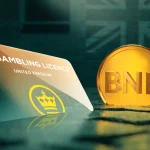
It also helps to separate a casino’s overseas licence from permission to serve this market. A licence issued elsewhere may relate to the operator’s activities under that jurisdiction’s rules. It does not, by itself, grant the right to offer gambling to customers in Great Britain. The UKGC licence is the relevant authorisation for operators selling into the British market.
So when you see “foreign casino UK” used to describe a site, read it as shorthand, not as a precise legal status on its own. The useful question is whether the operator holds a UKGC licence for the service it is offering to British customers. Being foreign does not automatically mean it is unauthorised here, and being licensed somewhere else does not automatically mean it is authorised here either.
Casino Types: Licences, Access and Site Categories
This is the boundary I keep in mind: a player’s decision to gamble overseas is not, by itself, a criminal offence; an operator offering gambling facilities to people in England, Scotland or Wales without the required UKGC licence is acting unlawfully. That is the basic meaning behind the label, before getting into what the different regulatory arrangements mean in practice.
Foreign online casinos: different rules, different safeguards
The first thing I’d keep separate is a site’s overseas licence and regulation by the UK Gambling Commission. They are not interchangeable. A foreign online casino may be licensed in another jurisdiction, but that does not bring it into the UKGC system or make its safeguards equivalent to those required of a UK-licensed operator.
That distinction can get blurred by polished websites. A page may display a licence badge, mention an overseas regulator and use the language of safety. Those details may tell you something about the operator’s claimed arrangements abroad. They do not mean the UKGC supervises the casino, applies its rules to it or can enforce those rules against it. Different rulebook. Different oversight.
Some specialist reviews describe non-GamStop casinos as licensed and regulated by reputable authorities. Treat that as a description made by the review, not as proof that a particular site is properly regulated or that its protections match Britain’s. Even where an overseas authority does regulate an operator, its requirements and the way it handles complaints may differ. A licence abroad is not a UKGC licence.
Attention: An overseas licence is not a UKGC licence; it does not mean the UK Gambling Commission supervises the casino or that its protections match British standards.
The same goes for security claims. A site might use encryption to protect information sent between your device and its systems. That can matter for data security, but it is not the same thing as gambling regulation. Encryption does not establish how the operator handles a dispute, what standards it must follow, or whether a UK regulator can hold it to account. I used to read a padlock symbol as a kind of all-clear. It isn’t.
There are two separate questions here: whether a website protects information technically, and what rules govern the gambling service itself. A positive answer to the first does not settle the second. A secure connection cannot replace regulatory supervision, just as an overseas licence cannot create UKGC oversight.
For a player, the practical difference is about the framework behind the account, not simply how the site looks. UKGC-licensed operators are regulated under British requirements. Offshore operators are not regulated by the UK Gambling Commission, so you should not assume that UKGC standards or protections apply when you use them. In particular, offshore operators do not provide the affordability checks mandated by the UKGC. That is a meaningful gap, not a small technicality.
It also changes what a reassuring statement on a website can establish. “Licensed” may refer to another jurisdiction; “secure” may refer to technical protection; “fair” may be the operator’s own description. None of those words, on their own, demonstrates that the site is covered by the UKGC’s rules. I try to read the claim for what it actually says, rather than letting one attractive label stand in for all the others.
Casino Apps in the UK: App or Browser?
This is why comparing foreign online casinos with UK-licensed sites by design or features alone can miss the point. A familiar layout, recognisable games or a professional-looking support page do not tell you which regulator oversees the operator. Nor do they make the regulatory arrangements equivalent. The visible product can look much the same while the systems of accountability behind it are different.
That difference matters most when something goes wrong. A customer may have a concern about how an operator has treated them, but the UKGC is not the regulator of an offshore casino simply because the customer lives in Britain. You should not assume that a route designed for complaints about a UK-licensed operator will apply in the same way to an overseas site. The relevant rules and channels depend on the operator’s own regulatory arrangements.
None of this means every overseas licence is meaningless or every security measure is cosmetic. It means those claims have a narrower reach than people sometimes give them. A regulator abroad may have its own standards; encryption may protect data in transit. Neither fact turns an offshore casino into a UK-regulated one. Keep the categories apart.
If you are weighing a foreign casino for UK players, the useful question is not simply whether the site says it is licensed. Ask what that licence does and does not establish, and remember that UKGC safeguards do not travel with you to an offshore account. A badge is not a safety net.
When a casino says it accepts UK players
A site can say it welcomes British customers, let you open an account and even take a deposit. That tells you what its website allows you to do; it does not tell you whether the operator is authorised to offer gambling in Great Britain. Those are separate questions, and I would not treat a working registration page as proof of permission.
For an online gambling site to lawfully provide services to customers in England, Scotland, and Wales, it must hold a licence from the UK Gambling Commission.
For remote gambling offered to customers in England, Scotland and Wales, the operator needs a UK Gambling Commission licence. A casino licensed elsewhere does not become UKGC-regulated just because it accepts a British address or displays a sterling balance. If it offers gambling here without the required licence, the operator is acting unlawfully. The legal risk is on the operator, not the individual player.
That distinction gets lost in the phrase “accepts UK players”. It can mean the site has deliberately opened its service to people in Britain. It can also mean its location controls are ineffective, or that a customer has found a way around them. From a player’s screen, those situations may look much the same: the homepage loads, the sign-up form accepts details, and the cashier appears usable. But access is not authorisation. A smooth sign-up is a poor substitute for checking what the operator is permitted to do.
There is another wrinkle. A casino licensed outside the UK may be expected to prevent British visitors from using its service, yet the block may not work in practice. Gambling.com has reported that some non-UK-licensed casinos do not enforce such restrictions, and that visitors may get around them using a basic VPN. That is a report about the way some sites behave, not a guarantee that any particular casino accepts UK customers or will continue to do so. A site can change its access rules, and a VPN connection does not turn an overseas licence into a UKGC licence.
VPN-Friendly Casinos in the UK: Access and Rules
I have learned not to confuse “I can get in” with “I am protected here”. The first is a technical fact about the page in front of you. The second depends on the operator’s legal status and the safeguards that apply to it. A banner saying “UK players welcome” is the operator’s own claim, not an independent confirmation that it is allowed to serve the British market.
The practical problem becomes sharper if a withdrawal is disputed. Gambling.com has reported cases in which unlicensed sites refused to pay customers’ winnings, leaving those customers without legal recourse. That does not mean every offshore operator will withhold a payout, but it does mean a promise on a website is not the same thing as a reliable route to resolve a dispute. If the operator is outside the UKGC system, you cannot assume that the Commission can step in and enforce a payment to you. The money may be difficult to recover. That is the part worth thinking about before depositing, not after a win.
There is also a protection that should not be quietly assumed: offshore operators do not provide the affordability checks mandated by the UKGC. Those checks are part of the UK regulatory framework. A foreign site may ask for identity documents or apply its own account rules, but that is not the same as carrying out UKGC-mandated affordability checks. A site saying it accepts customers from Britain does not mean it has adopted the UK rules.
This can make the whole process feel deceptively ordinary. You may see familiar payment labels, a UK-facing promotion or customer support that answers in English. None of those details settles whether the operator is licensed for Great Britain, what happens if it refuses a withdrawal, or which safeguards govern your account. They tell you about the site’s presentation and access, not the strength of your position if something goes wrong.
Risk of Loss
Unlicensed sites may refuse to pay winnings, leaving customers without legal recourse since the UK Gambling Commission cannot enforce payments from offshore operators.
So when an overseas casino claims it accepts UK players, read that narrowly: it is describing access, not proving UK authorisation. And if the site lets you through despite a restriction, that does not make the restriction irrelevant. Treat the ability to register as the beginning of the question, not the answer. The distinction matters.
How to read a foreign casino site’s claims
The first thing I look for on a foreign casino site is not the banner or the games page. It is the small print behind the claims. “Licensed” sounds reassuring, but on its own it tells you very little: you need to know who issued the licence, which company holds it and what activity it covers. An offshore licence does not make a site regulated by the UK Gambling Commission.
A site may display a regulator’s badge or say it is licensed overseas. Treat that as a claim to check, not as proof of UK oversight. Look for the operator’s legal name and licence details, then see whether they match the information published by the named regulator. If the badge leads nowhere, the licence holder is unclear, or the terms name a different company from the one on the homepage, pause. “Licensed” without a clear issuer is a label, not an answer.
That distinction matters because a regulator’s rules apply within its own remit. An overseas authority is not the UK Gambling Commission, and an offshore casino is not subject to UKGC regulation. The site may describe itself as regulated, but that wording does not mean UK rules govern its conduct or that UKGC protections apply if something goes wrong. Read the claim literally.
Gibraltar Casino Licence in the UK: What It Means
Security claims are not licence claims
I used to see “secure” and mentally file it beside “safe”. That was too generous. Security language generally concerns how a site says it protects information and payments; it does not tell you who oversees the operator or what happens if you dispute a decision.
A specialist review may describe non-GamStop casinos as using advanced encryption to protect personal and financial information. That is a claim worth examining, not a blanket assurance about every site. Look for a clear explanation of the security measures and check that the site uses a secure connection when you enter account or payment details. A secure connection can help protect data as it travels between your device and the site. It cannot establish that the operator is honest, that its games are fair, or that your complaint will be handled well.
Keep those questions separate. Encryption is about data transmission. Licensing is about oversight. Neither one substitutes for the other.
Read the wording, not just the badge
Casino sites use broad phrases because broad phrases sound good. “Trusted”, “fully regulated” and “player protection” are not useful on their own unless the site says what they mean and identifies who is responsible. If a page claims that an authority regulates it, find the authority’s name and the operator’s legal identity. Then check whether the site’s terms point to the same company and jurisdiction.
Do
- Identify the operator’s legal name and licence details
- Match licence information with the named regulator’s records
- Read the full terms regarding account rules and complaints
Don’t
- Trust a licence badge without verifying the issuer
- Assume “secure” or “trusted” labels imply regulatory oversight
- Rely on a review’s description of a site as “reputable”
I also read the terms where the site describes account rules and complaints. The point is not to assume every clause is unfair; it is to find out what the operator says it can do, and where it says disputes should go. If the homepage makes confident promises but the terms are hard to locate, vague, or inconsistent, I take the confidence with a pinch of salt. Fine print counts.
Some specialist reviews describe many non-GamStop platforms as licensed by reputable authorities. That is not a guarantee about any particular casino, and “reputable” is a judgement, not a regulatory category. A review can point you towards a claim, but it cannot turn that claim into UKGC supervision. Check the operator and regulator details yourself rather than relying on a badge reproduced in a review.
The British standard to keep in view
When assessing foreign casino sites, I keep one comparison clear: a site operating offshore is not regulated by the UK Gambling Commission. It also does not provide UKGC-mandated affordability checks. That remains true even when the site uses polished security language, lists an overseas licence, or offers casino slots that are easy to browse from Britain.
This is not a recommendation to choose one offshore site over another. It is a way to avoid reading overseas credentials as if they were British ones. A licence may tell you something about the operator’s stated regulatory setting; encryption may tell you something about a connection. Neither makes the site a UKGC-licensed casino.
If the claims still leave you unsure who runs the site, which regulator is named, or what “secure” is supposed to cover, do not fill the gaps in for them. I have done that before, and marketing is very good at letting you do the optimistic part yourself. Stay sceptical.
Big welcome bonuses, with the maths left in
A large welcome package can look like free money when you first see it. I’ve made that mistake: I focused on the headline and barely read the terms beneath it. With a foreign casino, the headline is only the start of the calculation.
A specialist review describes foreign casinos as offering larger welcome packages because they are not bound by UK Gambling Commission restrictions on bonus terms, wagering requirements and promotional language. Treat that as an explanation for how an offer may be presented, not proof that it is good value. These casinos are not regulated by the UKGC, and they do not provide the affordability checks that UKGC rules require.
What the offer actually gives you
A specialist review identifies four common types of welcome offer at foreign casinos serving UK players:
- Deposit match: the casino adds bonus funds linked to a qualifying deposit. The match may look generous, but the terms determine how much you must wager and which games count.
- Free spins: spins are provided for selected games. Check whether winnings are credited as cash or bonus funds, and whether further wagering applies.
- No-deposit bonus: the offer does not require an initial deposit, but that does not mean any resulting winnings can be withdrawn without conditions. Read the qualifying and cash-out rules first.
- Cashback: some losses may be returned under the offer’s terms. Check what counts as a loss, when the return is credited and whether it arrives as withdrawable cash or bonus funds.
Those labels tell you the shape of an offer, not its real value. The rules decide that.
Put the wagering requirement into pounds
A wagering requirement tells you how much qualifying betting must happen before bonus funds can become withdrawable. A specialist review uses a 100% match on a £100 deposit with a 35x requirement to show the arithmetic: the required wagering is £3,500. That is the betting turnover, not a bill you pay the casino, but it still means the bonus is tied to substantial play before it can be cashed out.
The same review gives a smaller illustration: a £20 bonus at 35x requires £700 in qualifying bets before cash-out. The multiplier applies to the bonus in that example. Offers can define the calculation differently, so check whether the requirement is based on the bonus, the deposit, or both. Don’t assume one casino’s wording applies to another.
Bonus Calculation
Step 1: Identify the wagering requirement
Find the multiplier (e.g., 35x) and what it applies to (the bonus or the deposit).
Step 2: Calculate the total turnover
Multiply the bonus amount by the requirement (e.g., £100 bonus × 35 = £3,500 in required bets).
Step 3: Review additional conditions
Check for deadlines, excluded games, and maximum stake limits that apply before cashing out.
There may also be a deadline, excluded games, a maximum stake while playing with bonus funds, or a cap on withdrawable winnings. I’m not treating any of those as standard conditions; the point is to find the terms that apply to the particular offer before you opt in. If the wording is unclear, the headline number won’t clear it up.
Compare what you can actually keep
I now read a bonus in this order: what I must deposit, what I receive, what bets qualify, how much wagering is required, and what happens to any winnings when the conditions are complete. Then I ask whether I would make that deposit without the offer. If not, the “extra” may simply be a reason to risk money I had not planned to spend.
A welcome package can be large on the page and awkward to use in practice. The maths is the offer. The headline is decoration.
Overseas does not mean licensed to serve Britain
A licence from another country tells you something about where an operator is authorised; it does not, by itself, give that operator permission to offer gambling in Great Britain. I used to read a licence badge as if it settled the question. It doesn’t.
For real-money gambling offered to customers in England, Scotland and Wales, the relevant authorisation is a licence from the UK Gambling Commission. A company can be based abroad and hold an overseas licence, yet still lack the UKGC licence required to serve the British market. Those are separate things, not two versions of the same approval.
Santeda is a useful example of why the distinction matters. It holds a Curaçao licence, but that licence does not permit it to operate in the UK or the United States. Its overseas licensing therefore cannot be treated as permission to offer gambling in Britain. The same basic point applies when you see a non-UK casino site accepting UK players: a foreign address or licensing badge is not proof of British authorisation.
That is not just a technicality. An overseas regulator’s approval does not place the operator under UKGC oversight. Offshore casinos are not regulated by the UK Gambling Commission, and they do not provide the affordability checks mandated by the UKGC. A badge can look reassuring; its scope is what counts.
I would separate three questions when a site advertises itself to British customers: where is the operator based, which regulator—if any—has licensed it, and does it hold the UKGC licence needed to offer gambling in Great Britain? The first two answers do not substitute for the third. “Licensed” can sound like a complete answer, when it only describes an authorisation with a particular territory and reach.
Regulatory Fact
Being accessible to a British customer and being authorised to serve that customer are not the same thing.
So if an overseas casino says it accepts UK players, don’t infer that its foreign licence covers Britain. Being accessible to a customer and being authorised to serve that customer are not the same thing. That distinction is easy to miss when the licence badge is prominent and the limitation is not.
Getting money in and out: the timelines that matter
When I compare cash-out options at overseas casino sites, I look past the word “instant”. It can describe the operator’s processing step, not the time until the money reaches your account. Those are two different clocks.
Skrill and Neteller are often the quickest fiat choices: most foreign casinos clear these withdrawals within 24 hours, and many process them in under 12. That is a stated processing timeline, not a promise that every payment will arrive by then. An operator may still have its own checks or queue before releasing funds.
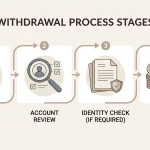
Bank transfers are slower. A specialist review reports that they often take five to seven business days, with some casinos adding an internal processing delay before the bank timeline even starts. I used to read a withdrawal estimate as if the countdown began the moment I clicked. Check the wording: “processed” and “received” are not interchangeable.
Crypto can move faster still. Specialist reviews report that withdrawals often clear in under an hour, faster than fiat methods. But speed is only one part of the calculation. The value of a cryptocurrency can move while you hold it, so the amount you eventually convert may not match the value you had in mind when you requested the withdrawal. Fast, with a catch.
Before choosing a method, check whether the casino’s estimate refers to approval, dispatch or arrival, and whether it describes business days. Those details matter more than a bold speed claim. The operator’s own payment terms are the place to look for its stated timetable, but an estimate is not a guarantee.
One more distinction matters: an offshore casino is not regulated by the UK Gambling Commission, and it does not provide UKGC-mandated affordability checks. A quick payment route does not change either point. I would not treat a short cash-out estimate as evidence that the wider service is safer or more dependable. Speed is not the whole story.
The industry connections behind an offshore licence
A licence tells you something about the rules an operator is meant to follow; it does not tell you who else has a financial interest in the business. That distinction matters when you are weighing claims made by foreign casinos.
Santeda’s Curaçao licence does not authorise it to operate in the UK or the US. There is also a documented commercial arrangement behind its brands: under the contract between Santeda and SIS, SIS received a percentage of revenue from losing bets placed through those brands.
That is more specific than a supplier simply being paid to provide a service. The contract linked SIS’s income to losses by customers. I would keep that detail in view when reading material that presents a casino’s commercial partners as a badge of quality. A business connection is not, by itself, evidence that a site is safe, fair, or authorised to serve British customers.
Commercial partnerships or the presence of a familiar name in a footer do not substitute for UKGC authorisation or consumer safeguards.
Nor should one contract be treated as proof of how every offshore operator works. It is a particular relationship, and the terms may not describe the wider market. The useful question is not whether a casino can name a partner, but what the relationship actually involves and whether the claim is supported by clear information.
For UK readers, the boundary remains straightforward: Santeda is outside the UK Gambling Commission’s regulatory system, and offshore operators do not provide UKGC-mandated affordability checks. Commercial links do not change that. They are background to assess, not a substitute for authorisation or consumer safeguards.
I’ve learned not to treat a familiar name in a footer as reassurance. It may tell you who has a stake in the business; it does not settle what happens when something goes wrong. A connection is not protection.
GamStop and the gap an overseas casino leaves
I used to think self-exclusion meant the door was shut everywhere. GamStop does shut it across UK-licensed gambling sites: once you register, every operator licensed by the UK Gambling Commission must keep you out for the period you selected.
That boundary matters. Foreign casinos outside the Commission’s remit are not covered by GamStop, so your self-exclusion does not automatically block you from registering with them. A specialist review reports that a person who has self-excluded may still be able to open an account and deposit there. That is a route around a barrier you put in place, not a loophole worth testing.
I know how quickly “just one look” can become a decision made in the moment. If you chose self-exclusion because gambling was causing harm, an overseas site may leave you without the block you intended to rely on. Stop before registration; don’t treat the absence of a GamStop block as a sign that playing is safe.
These operators are not regulated by the UKGC, and they do not provide UKGC-mandated affordability checks. The safeguards attached to UK-licensed operators cannot be assumed to follow you abroad. That gap is the point. Not a small detail.
USA Casinos for UK Players: What to Check
If you are trying to keep gambling out of your life, make the next step harder rather than easier: close the page and avoid depositing. GamStop’s protection applies to UKGC-licensed sites, not every casino you may encounter online. For support with gambling harm, contact GamCare or consider a blocking tool such as BetBlocker.
Before you deposit: checks, limits and the withdrawal fine print
Before putting money into a non-UK casino, I’d look past the cashier screen and read the account and withdrawal terms. The snag is that the procedure is not consistent from one operator to the next. Specialist reviews report differences in withdrawal limits, pending periods and verification requirements, so a rule you saw on one site tells you little about another.
Check what identification the operator asks you to provide and when. “Quick registration” can mean you create an account quickly; it does not tell you whether a later identity check will delay a withdrawal. Make sure the site explains which documents it accepts and how to submit them. Don’t assume that being able to deposit means your account is fully verified.
Then find the withdrawal terms before you play. Look for the minimum and maximum amounts, any cap on how much can be withdrawn, and whether a request sits pending before processing. Also check whether the operator can ask for further documents. If these terms are hard to find or unclear, that uncertainty matters.
One distinction is easy to miss: UK Gambling Commission-licensed operators must verify a customer’s identity before processing a withdrawal, but an offshore casino is not regulated by the Commission. It does not provide UKGC-mandated affordability checks. That does not tell you exactly what checks an individual site will make; it means you should not treat UK safeguards as a backstop.
I used to read the deposit conditions and leave the withdrawal page for later. Backwards, really. Read both first, and keep a copy of the terms that apply when you open the account.
Are bonuses at foreign casinos actually better than at UKGC-licensed sites?
Often, yes: foreign casinos commonly offer larger welcome packages and more types of promotions. Check the wagering requirements carefully, as a large bonus can require substantial betting before you can withdraw the funds.
Are foreign casinos safe for UK players to use?
Not necessarily. An overseas licence or encrypted connection does not provide UKGC oversight, and some unlicensed sites have refused to pay winnings, leaving customers with no legal recourse.
Are winnings from foreign casinos taxable in the UK?
No. Gambling winnings are not subject to UK income tax, whether the operator is UKGC-licensed or not.
Can I use cryptocurrency at foreign casinos from the UK?
Yes, some foreign casinos offer crypto payment options, and crypto withdrawals can be faster than fiat withdrawals. The value of cryptocurrency can fluctuate.
What is the fastest way to withdraw from an online casino in the UK?
E-wallets are generally the fastest option on the UK market, with most operators processing withdrawals within 24 hours. At foreign casinos, crypto withdrawals may clear in under an hour.
What should players check to assess whether an international casino is safe?
Check whether the operator holds a UKGC licence for serving British customers, and distinguish that from an overseas licence or a website’s encryption claims. A licence abroad does not mean UKGC rules or protections apply.
Is it legal for UK residents to use casino sites that operate outside the UK’s licensing framework?
A UK resident does not commit a criminal offence simply by gambling with an overseas operator. However, an operator without a UKGC licence cannot lawfully offer gambling to customers in England, Scotland or Wales.
How do I know if an online casino is safe?
Check whether it is licensed by the UK Gambling Commission; an overseas licence does not provide UKGC oversight. Treat encryption as protection for data, not as proof that the gambling service is properly regulated.
Casino Types

Anjouan Casino Licence in the UK: What It Means
Anjouan licensing is separate from UKGC supervision, which affects how a casino’s regulatory status should...

Casino Apps in the UK: App or Browser?
Learn how browser and installed versions differ, and what to check around licensing, limits, bonuses,...

International casinos for UK players: legal checks
A practical look at operator licensing, bonus terms, crypto payments and withdrawal waits for UK...

Paying at a UK mobile casino with phone credit
Phone-credit payments use a mobile account to fund a casino deposit, with charges added to...

Offshore casino sites for UK players: key risks
Foreign licences do not replace a UK Gambling Commission licence for operators serving customers in...

Offshore Casinos for UK Players: Risks and Checks
A practical look at licensing, player safeguards, bonus conditions and payment routes for offshore casinos...

British casinos not on GamStop: what the label means
The meaning of “British casino” can vary, and a site accessible in the UK is...

Casino Sites Not Registered with GamStop: What to Know
The guide explains why some casinos fall outside the scheme and how licensing, bonus terms,...

Casino Without a Swedish Licence: UK Guide
A guide to offshore licensing, player protections, dispute options, bonuses and payments for UK players....

Casinos That Bypass GamStop: What It Means
A casino outside GamStop does not apply its exclusions; that label alone says nothing about...

Curacao Casino Licence UK: What the Label Means
A licence from outside the UK does not replace the authorisation required to serve customers...

Gibraltar Casino Licence in the UK: What It Means
A Gibraltar licence signals a regulatory connection, but UK access, player safeguards and the operator’s...

Jackpot Mobile Casinos in the UK: How Slots Work
Jackpot labels can describe different prize structures, so compare how pools work alongside mobile play,...

Non-UK Licence Casinos: What the Licence Means
Licensing jurisdictions set different frameworks, so an overseas licence is not the same as permission...

Non-UK Registered Casinos in 2026: Licence Guide
A foreign licence does not authorise a casino to serve Great Britain; the operator’s regulatory...

Non-UK Regulated Casinos: What UK Players Should Know
The guide explains how UKGC authorisation differs from offshore licences and which protections may be...

Non-UKGC Casinos: Licensing and Risks Explained
Non-UKGC sites are not overseen by the UK Gambling Commission, and any other licence depends...

Online Casino With No Sister Sites in the UK
A sister-site connection can reflect shared ownership or technology, but it does not make two...

Online slots not on GamStop: what to check
The label describes a casino’s relationship with GamStop, while its licensing determines which protections apply....

Trusted Casinos Not on GamStop UK: What to Know
Understand the limits of trust claims, the protections outside the UKGC framework, and the risks...

USA Casinos for UK Players: What to Check
The guide explains how offshore status, licensing, bonus terms and payment routes affect British players....

VPN-Friendly Casinos in the UK: Access and Rules
A practical look at VPN access, casino terms, identity checks and Bitcoin withdrawals, without treating...