VPN-Friendly Casinos in the UK: Access and Rules
 Available in GB

A practical look at VPN access, casino terms, identity checks and Bitcoin withdrawals, without treating a VPN as a guarantee of anonymity.
Table of Contents
- What “VPN-friendly” Means in Practice
- What “Best” Means When No Site Is Risk-Free
- The Legal Line: UK Players and Offshore VPN Casinos
- Can You Use a VPN at a UK Online Casino?
- Crypto Deposits, KYC and the Data You Still Leave Behind
- How to Read a VPN Casino Site’s Terms Before You Play
- Are VPNs Allowed at UK Casinos?
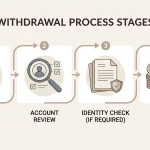
- Bitcoin Withdrawals: What the Timing Can Look Like
- A VPN Is Not an Invisible Pass
- Casinos That Allow VPNs Can Still Change Their Rules
- Casino Types
What “VPN-friendly” Means in Practice
A VPN-friendly casino is an online gambling site that lets players connect while using a virtual private network. That is the simple definition. The phrase describes whether a casino accepts a connection routed through a VPN; it is not a type of game, payment method or special casino account.
A VPN, or virtual private network, routes your internet connection through another network and changes the IP address that a website sees. So, if you open a casino while connected to a VPN, the site may see an IP address associated with the VPN connection rather than the one assigned by your internet provider. The casino is still an online gambling site; the VPN changes the route by which you reach it.
That distinction sounds obvious, but the label can make the setup seem more mysterious than it is. “VPN-friendly” does not mean a casino has a special version of its website for VPN users. It means players can connect through a VPN. The phrase is about access, not a separate kind of gambling.
I used to read labels like this as if they meant a site had been built specifically for VPN use. That is giving the wording too much credit. It is closer to a description of how the site treats a connection than a feature you can see once you start playing.
Where these casinos are commonly licensed
VPN-friendly casinos are mostly offshore operators licensed in Curaçao, the Isle of Man and Malta. Those locations are useful context when you are trying to understand what people mean by the category: it commonly refers to offshore sites, rather than casinos based within the UK market.
Offshore casino sites for UK players: key risks
The word “licensed” can also make a description sound more informative than it is. Knowing a site is associated with one of these licensing locations tells you where its licence comes from; it does not, by itself, explain every part of how the site works. The label VPN-friendly is even narrower. It tells you about the connection, not the full character of the casino.
I find it helps to keep those ideas separate. One question is whether a site allows a VPN connection. Another is where the operator is licensed. They often appear together in descriptions of VPN-friendly casinos, but they do not mean the same thing.
What the label does—and does not—tell you
When you see “online casino VPN” or “VPN-friendly online casino” used as a description, translate it into plain English: this is a casino site that allows a player to connect using a VPN. That is the useful core of the phrase. Anything beyond it needs to be considered separately rather than smuggled into the label.
For instance, the word does not tell you what games a site offers or which device works best. It does not identify a particular VPN provider, either. A VPN is the connection route; the casino is the gambling site at the other end. They are separate services, even when a player uses both at once.
Nor does “friendly” mean the site is endorsing every possible use of a VPN. It is a casual label, not a technical standard with one universal definition. One writer may use it simply to mean that a VPN connection is accepted. Another may use it loosely for offshore casinos that are discussed in the same context. Read the phrase as a starting description, not a complete account of a casino.
That wording can blur things. Keep it literal.
A VPN-friendly casino allows players to connect using a virtual private network, but it is not a technical standard or a specific type of gambling site.
There is also a difference between searching for a VPN to use while gambling and looking for a casino that accepts VPN connections. The first is about the network service. The second is about the casino’s approach to incoming connections. They are related because a player may use one to reach the other, but neither term should be mistaken for the other.
I would not treat the phrase as a stamp of quality. It does not rank casinos, tell you whether a site suits you, or describe the experience you will have there. It simply points to a site that permits players to connect through a virtual private network. The rest of the picture depends on details beyond this label.
That is why “VPN-friendly” is best read narrowly. It describes a connection being allowed, and the casinos commonly described that way are mostly offshore operators licensed in Curaçao, the Isle of Man and Malta. The term gives you a small piece of context—not a complete verdict on the site.
What “Best” Means When No Site Is Risk-Free
If you’re looking for a VPN-friendly casino in the UK, check each operator’s terms on VPN use before signing up, as payout speed alone does not confirm whether VPN access is permitted. The details below give you one practical point to consider for each option.
1. Amunbet
Payout speed: 1-3 business days You can expect a stated payout speed of 1–3 business days. This timing does not establish whether VPN use is permitted.
2. Revery Play
Payout speed: 1-3 business days The stated payout speed is 1–3 business days. Check the terms directly for information about VPN access.
3. EvoSpin
Payout speed: 1-3 business days A stated payout speed of 1–3 business days gives you one practical detail to weigh. VPN compatibility is not specified here.
4. Britsino
Payout speed: 1-3 business days You have a stated payout speed of 1–3 business days to consider. The available detail does not say whether VPN use is allowed.
5. SpinFormula
Payout speed: 1-3 business days The only supplied detail is a payout speed of 1–3 business days. Verify the operator’s terms if VPN access matters to you.
6. WinBeast
Payout speed: 1-3 business days Its stated payout speed is 1–3 business days. No VPN policy is provided, so check the terms before relying on VPN access.
7. SlotoSport
Payout speed: 1-3 business days A payout speed of 1–3 business days is the available practical detail. It does not indicate whether the operator permits VPN use.
8. NightLuck
Payout speed: 1-3 business days You can take the stated 1–3 business day payout speed into account. VPN availability is not specified.
9. x3bet
Payout speed: 1-3 business days The supplied information gives a payout speed of 1–3 business days. Check the terms for any rules on VPN use.
10. Zombillion
Payout speed: 1-3 business days Its stated payout speed is 1–3 business days, which is the only detail available here. That does not confirm VPN compatibility.
“Best” sounds like a verdict. With offshore casinos, I’d treat it more like a set of questions: what is being offered, what must you do to claim it, and does the offer still look worthwhile once the conditions are plain? A polished banner can make a bonus feel like free money. It isn’t. The conditions are part of the deal.
That matters especially when you compare VPN-friendly casinos for UK players. A site can make a generous first impression and still be a poor fit if its bonus rules are hard to understand or the play required to meet them is too demanding for you. I’ve learned not to judge an offer by its headline. Read the small print first.
The headline is not the whole offer
A welcome bonus is usually presented as a simple addition to a deposit or as extra funds for play. But the promotional figure alone doesn’t tell you what you need to wager before any bonus-related winnings can be withdrawn. That is the role of the wagering requirement.
A wagering multiple describes how much qualifying play is required in relation to the bonus. The higher the multiple, the more you may have to wager before you satisfy the condition. It does not tell you how much you will win, or promise that you will win anything. Think of it as a hurdle, not a payout forecast.
Specialist reviews have reported welcome-bonus wagering requirements of 30x, 40x or 50x at offshore casinos. Other accounts put the possible ceiling higher, at 60x. Sources therefore disagree on how high these requirements can go; don’t flatten that difference into one supposedly settled figure. The useful point is that the multiple can be substantial, so it deserves attention before you opt in.
Casino Types: Licences, Access and Site Categories
A larger advertised bonus can look more attractive at a glance, but that doesn’t make it better value. If its wagering condition is heavier than you are comfortable with, the extra bonus funds may simply keep you playing longer than you intended. I’ve made the mistake of seeing the offer first and the obligation later. Bad order.
Compare the conditions, not the adjectives
Words such as “generous”, “exclusive” and “enhanced” are sales language. They don’t tell you whether a bonus suits your budget or playing style. When I compare offers, I want to understand the requirement in plain terms before deciding whether the bonus is worth accepting at all.
Start with the wagering multiple. Then check how the casino defines eligible play and whether the offer has other conditions attached. The exact rules belong to the individual promotion, so don’t assume that two bonuses with the same headline or multiple work in the same way. If the wording leaves you unsure about what counts, the uncertainty is part of the decision—not a reason to give the offer the benefit of the doubt.
Also separate the casino’s general reputation from the specific promotion. A site may be described as VPN-friendly, but that says nothing by itself about whether a bonus is fair, understandable or suited to you. Likewise, a bonus that looks modest may be easier to assess than a louder offer whose rules take effort to decode. “Best” is not the biggest number on a banner. It is the offer whose conditions you can read and accept without hoping they mean something else.
Do
- Check the wagering multiple first
- Read the small print of the offer
- Compare conditions in plain terms
Don’t
- Judge a bonus by its headline
- Trust sales language like “exclusive”
- Treat a bonus as a safety net
Decide whether you need the bonus
You don’t have to claim every promotion offered to you. If the wagering condition would change how long you play or how much you put at risk, declining the bonus may be the clearer choice. That isn’t missing out; it is choosing not to add another obligation to a session.
I’d also be wary of treating a bonus as a way to repair a losing run. The promotion doesn’t remove the requirement attached to it, and the prospect of unlocking bonus-related funds can tempt you to keep going when you would otherwise stop. A bonus is an optional offer, not a safety net.
When comparing the best VPN-friendly casinos, keep the comparison narrow and practical: look at what the offer actually requires, whether you understand the wording, and whether you would still play if the promotion disappeared. If the answer is no, that tells you something about the appeal. If you cannot explain the conditions back to yourself in ordinary language, pause rather than guessing.
No site is risk-free, and no promotional label changes that. A bonus may suit one player and be a bad fit for another. I’d rather pass on an offer I don’t understand than let a bright banner make the decision for me. The fine print is the offer.
Anjouan Casino Licence in the UK: What It Means
The Legal Line: UK Players and Offshore VPN Casinos
The legal line is easy to blur because two different questions get bundled together: whether a UK resident commits an offence by playing at an offshore casino, and whether the casino is authorised to offer gambling to people in Great Britain. They are not the same question. I used to treat “legal” as a simple yes-or-no label. It isn’t.
For a player, the key point is that UK law does not make it a criminal offence simply to play at an offshore casino. Nor does UK law criminalise using a VPN for online gambling. That is not the same as saying that an offshore site is a legal UK casino, or that it comes with the protections you would get from a UKGC-licensed operator. Those distinctions matter once money is involved.
The Gambling Commission regulates commercial gambling in Great Britain, including online casino gambling. It is the sole regulator for commercial gambling there. Its remit covers remote gambling offered to consumers in Great Britain even when the equipment used to run the service is located elsewhere. An operator cannot avoid the British licensing requirement merely by placing its servers offshore.
That means the operator’s location and the market it serves are separate issues. An offshore casino may be based outside the UK, but if it offers remote gambling to consumers in Great Britain, the location of its key equipment does not remove the UK licensing requirement. A casino that operates outside the UKGC system is not thereby a UKGC-licensed casino. Put plainly: offshore is not a shortcut around the rules for serving the British market.
Regulatory Risk
Playing at an offshore casino means you are outside the UKGC regulatory system and do not have the same UK consumer protections if something goes wrong.
The Commission’s licensing system also covers people as well as businesses. It grants operating licences to gambling businesses and personal licences to individuals who perform certain roles in the industry. That is part of the framework behind a regulated UK casino, not a badge that an offshore site can borrow because it accepts British customers or displays a different regulator’s name.
This is where VPN casino searches can create a false sense of reassurance. A site may describe itself as welcoming UK players, or as “VPN-friendly”; that wording tells you about its own access policy, not whether it holds permission to serve the British market. A VPN does not change the casino’s regulatory status. Nor does a site’s willingness to take a player from the UK turn an offshore licence into a UK Gambling Commission licence.
The practical consequence is that playing at an offshore casino means dealing with a business outside the UKGC regulatory system. It is not regulated by the Commission, and it has no obligation to follow UK laws as a UKGC-licensed operator must. If something goes wrong, you do not have the same UK consumer protections behind you. That is a real difference, not a technicality to skim past because the site looks polished.
I find it helps to separate personal criminal liability from the operator’s regulatory position. A UK resident is not committing a criminal offence merely by placing a bet with an offshore casino, and using a VPN for that purpose is not itself a crime under UK law. But the absence of a criminal offence for the player does not mean the operator is authorised to serve Great Britain, or that the player receives the protections attached to a UKGC licence. Both statements can be true at once.
Non-UK Licence Casinos: What the Licence Means
So if a site claims it is suitable for UK players, I would not treat that claim as proof of regulatory cover. The relevant question is whether the operator holds the required UKGC licence to offer remote gambling to consumers in Great Britain. An offshore casino without that licence remains outside the UK system, regardless of how it presents itself or where it says its business is based.
That is the line I keep coming back to: the player’s act and the operator’s permission are different legal questions. You may not be committing a crime by playing, but you are still choosing a casino outside the British regulatory framework. “Available” is not the same as protected.
Can You Use a VPN at a UK Online Casino?
If you mean a UKGC-licensed casino, you should not assume a VPN connection will work. Most UKGC-licensed operators block VPN connections, and they are legally required to verify where a player is located. A VPN changes the IP address your connection presents, so the casino may block access when that address does not fit its checks.
That is different from a failed password or a slow page. You may find you cannot get into the site, or that access is interrupted when the connection is checked. The key point is that the VPN does not make a UKGC casino treat the location requirement as optional.
People often fold two separate checks into one. I used to think that if a site had accepted my account details, the connection itself was settled. It isn’t. An IP address is part of the connection picture; KYC is the operator’s process for verifying a player. Changing the IP with a VPN does not complete, replace or remove that process.
Attention: Most UKGC-licensed operators block VPN connections, and a working connection does not mean the operator has accepted your location.
So, can you play at a UK online casino through a VPN? In many cases, the operator will block the connection. Even if a page loads, that is not confirmation that the operator accepts VPN use or that its location checks are satisfied. A working connection is not permission. That distinction matters.
Offshore sites are a separate case. Some may allow VPN connections, but that depends on their own rules; it does not make them UKGC-licensed casinos or alter what a UKGC operator must check. “VPN-friendly” describes a site’s approach to VPN connections, not a general feature that carries over from one casino to another.
I’d treat the phrase as a site-specific claim, not a technical guarantee. A VPN can change the address seen by the casino, but whether the site accepts that connection is down to the operator and its checks. With a UKGC-licensed casino, the practical expectation is a block, not a smoother way in.
There is also a difference between asking why someone might use a VPN and assuming it is suitable for gambling. A VPN changes the route and apparent IP address of a connection. It does not change the operator’s obligation to verify player location, and it does not turn a location check into a KYC check. Those processes answer different questions.
My rule of thumb is simple: don’t read “the website opened” as “the casino accepts this”. For a UKGC-licensed casino, VPN use can trigger a block, while identity verification remains its own step. If a site lets VPN users connect, that tells you only about that site’s connection policy. It says nothing about how a UKGC casino will respond. Not the same thing.
Jackpot Mobile Casinos in the UK: How Slots Work
Crypto Deposits, KYC and the Data You Still Leave Behind
Crypto can make the first steps at an offshore casino feel less demanding. A deposit may involve fewer location checks and less KYC friction when the amount is small. That can be convenient, but it is not the same as opening an account anonymously. I used to treat “crypto” as if it meant “no questions asked”. It doesn’t.
KYC is the casino’s process for checking who you are. The timing can vary: some offshore casinos let small withdrawals go through without documents, then ask for verification once a larger withdrawal threshold is reached. That threshold is often £1,000 or its equivalent in cryptocurrency. The important point for a depositor is that a low-friction start does not tell you what the casino may ask for later.
Crypto changes how you fund an account; it does not make the casino’s systems stop recording activity. Casinos still collect device fingerprints, IP logs and browser data. A VPN changes the IP address visible to a site, but it does not remove the other data the site can gather from your device and browser. You can be less directly exposed in one respect while still leaving a trail in others.
That distinction matters when you see a site described as a “private” or “anonymous” crypto casino. Those words can sound like a promise that no one can connect your activity to you. The more accurate reading is narrower: crypto deposits may reduce some checks for small amounts. They do not establish that the operator collects no information, or that it will never ask you to verify your identity.
Crypto and Privacy
Crypto deposits may reduce some initial checks for small amounts, but casinos still collect device fingerprints, IP logs, and browser data. It does not establish total anonymity or a permanent waiver of KYC requirements.
I’d separate three ideas before depositing: the payment method, the connection, and the account checks. Crypto is the payment method. A VPN affects the connection and the IP address the casino sees. KYC is a separate process, and a lighter check at the beginning does not mean that it has been waived for good. Blurring those together is how “easy” turns into a surprise.
It is also worth noticing what the site says about verification before you send funds. A casino may describe when documents are requested, but a smooth deposit does not prove that the same account will remain low-friction later. If the operator asks for information, the fact that you used crypto does not itself settle the request.
I learned to be wary of any claim that makes one tool sound like a cloak. “No paperwork” may describe a limited stage of the process, not the whole relationship with the casino. And “VPN-friendly” says something about whether a connection is accepted; it does not mean the operator cannot see device or browser data.
So, if you are considering a crypto casino while using a VPN, treat reduced checks as reduced friction—not invisibility. The deposit may be simple. The data trail remains.
How to Read a VPN Casino Site’s Terms Before You Play
A site can advertise itself as “VPN-friendly” and still have terms that exclude people playing from the UK. I would treat the wording in the terms as more important than a banner, a review headline or a support agent’s quick reassurance. “Friendly” describes a connection policy at best; it does not necessarily mean the operator accepts UK customers.
USA Casinos for UK Players: What to Check
Start with the eligibility section. Look for the countries where players may register and play, and check whether the UK is named as restricted. Read the whole clause, not just the list of examples: a broad rule against customers located in prohibited territories can matter even if the UK is not spelled out in a promotional page. If the wording is unclear, do not assume that silence means permission.
Then search the terms for references to VPNs, proxies, location masking and inaccurate account details. Some operators may allow a VPN connection while still requiring that your actual country of residence or place of play be eligible. Those are separate questions. A sentence saying that VPN use is permitted does not erase a restriction elsewhere in the contract.
The consequence is not merely being asked to disconnect. If the terms exclude UK players, the operator may close an account when it decides that the restriction has been breached. That can become especially serious after a win: the site may rely on its rules to refuse a payout or treat the account as ineligible. Playing at an offshore casino that allows VPNs also means giving up UK consumer protections. These operators sit outside the UK Gambling Commission system, so you should not read their terms as if a UKGC-licensed casino were responsible for resolving a dispute.
I would pay close attention to clauses about account closure, voided play, withheld balances and the operator’s discretion. Look for what the site says it can do if it believes a customer has provided misleading information or broken a territory rule. Vague wording is not a promise that the operator will take your side. If the terms give the casino broad discretion, factor that into the decision before depositing, not after a disputed win.
Check Site Terms
- Review the eligibility section for UK restrictions
- Search for rules on VPNs and location masking
- Identify the operator’s stated jurisdiction
- Check clauses on account closure and voided play
Also check where the policy sits and whether it conflicts with other pages. A casino’s FAQ or live-chat reply may sound more welcoming than its formal terms. If the formal rules say UK residents cannot play, a casual assurance elsewhere is a poor basis for relying on access or a future withdrawal. Keep a copy of the relevant wording and any written answer you receive; that will not guarantee a remedy, but it gives you a clear record of what you were told.
Finally, look for the operator’s stated jurisdiction and licensing details in its own published information. If you cannot establish who runs the site, which rules apply, or whether UK players are eligible, stop there. I have learned not to treat “we accept your connection” as “we accept your account.” Small distinction. Big consequences.
Are VPNs Allowed at UK Casinos?
If you mean a UKGC-licensed casino, don’t assume it will accept a VPN connection. Most UKGC-licensed operators block VPN connections, so you may find that the site will not load properly or will refuse the connection. A VPN is not a reliable way to access a UK casino.
I used to treat the IP address as the whole location check. It isn’t. UKGC-licensed operators are legally required to verify where a player is located. Changing the IP address through a VPN does not replace that verification, and being able to open a site does not mean its checks have been satisfied.
Gibraltar Casino Licence in the UK: What It Means
That distinction matters. A VPN connection and a casino’s location verification are separate things: one changes the apparent network address, while the operator still has to establish the player’s location. I wouldn’t read a successful login as proof that a VPN is allowed or that the operator has approved the connection.
So, are VPNs allowed at online casinos? Policies vary by operator, but at UKGC-licensed casinos the practical answer is that most block them. If you are trying to play at a UK casino, use the service without a VPN rather than treating an IP change as a workaround. A connection that works briefly can still be refused when the operator checks it.
No clever shortcut. A VPN does not make a UKGC casino’s location requirement disappear. The operator remains responsible for verifying player location, and its systems may prevent access when they detect a VPN connection. If your connection is blocked, don’t keep changing settings in the hope that this will count as verification. It won’t.
Bitcoin Withdrawals: What the Timing Can Look Like
A specialist review of VPN-friendly casinos describes crypto withdrawals, including Bitcoin, as being processed within minutes to a few hours. That is a reported window, not a promise that every request will land on that schedule. The casino, the particular transaction and its checks can all affect what you actually see, so I would treat the estimate as a rough guide rather than a countdown.
The wording matters: “processed” does not necessarily mean the money is already visible in your wallet. A review can give you a sense of the operator’s stated pace, but it cannot guarantee the timing of your own payment. I’ve learned not to plan around a headline speed. Annoying, but sensible.
Crypto Withdrawals
Reported processing times range from minutes to a few hours.
E-wallet Payments
Estimated to take about a day.
Bank Transfers
Estimated processing window of one to five days.
Fiat routes can look slower in the same kind of reporting. One specialist review puts e-wallet or bank-transfer withdrawals at VPN-friendly casinos in a one-to-five-day window, while describing e-wallet payments as taking about a day. Those are estimates from a review, not a market-wide rule, and the timings may change as operators update their procedures.
Bitcoin is therefore not automatically the fastest choice in every case. A stated processing window is only one part of the picture, and it does not tell you whether a specific casino will approve a request promptly. Nor should you assume that every operator handles crypto in the same way.
Before choosing a withdrawal method, check what the casino currently says for that method and whether its stated time refers to processing or receipt. If the terms give no clear timing, don’t fill in the gap with the most attractive estimate you have read elsewhere. That was one of my more expensive habits.
The practical takeaway is modest: a specialist review reports crypto processing from minutes to a few hours, while its fiat estimates stretch longer. Useful context. Not a guarantee.
A VPN Is Not an Invisible Pass
I used to think that if a casino saw a different IP address, it had no useful way to connect my visit to me. That is too neat a story. A VPN can change the network address a site sees, but it does not make the rest of your activity vanish.
Casinos may collect device fingerprints, IP logs and browser data. Those details can help a site recognise patterns across visits, even when the connection is routed through a VPN. A new-looking address is only one part of the picture; the browser and device you use still leave information behind.
That matters if you treat a casino VPN as a cloak. It is not. Crypto deposits may reduce location checks and KYC friction for small amounts, but they do not switch off the collection of technical data. Payment choice and traceability are separate issues.
I would not assume that changing networks gives me a fresh identity at a casino. Nor would I treat a successful login as proof that the site cannot associate later activity with an earlier session. Those are different things.
Less visible, not invisible.
If you are deciding whether to use a VPN, keep that distinction in mind: it may alter one signal, while other data remains available to the casino. Don’t build a plan around disappearing. The system can still have a record of how you connected and what device or browser you used.
Casinos That Allow VPNs Can Still Change Their Rules
A casino described as VPN-friendly lets players connect through a virtual private network. That describes what the site permits now; it is not a promise that the same access will remain available. Offshore operators can change their VPN policies without notice.
I used to treat a working connection as proof that I had found a lasting option. It only proved that the site was letting me in at that moment. A later change to its rules could leave a VPN connection outside the permitted conditions, even if nothing about my own setup had changed.
That is why I would not rely on an old review, a saved page or the fact that the site loaded yesterday. Revisit the casino’s own terms and any policy notices before you play. Look for wording about VPN use, where players may be located and what the operator can do if it believes a rule has been broken. A general label on a homepage may not spell out every condition.
If an operator changes its policy, access may no longer be available on the same basis. Trying to hide your location after the rules change can put your account at risk: the result could be account closure and the loss of winnings. No clever workaround fixes that.
So read “allows VPNs” as a current policy, not a permanent feature. If the rules are unclear or have changed, pause rather than assume your previous access still counts. A connection can work; permission can move.
Can I use a VPN to play at online casinos in the UK?
Yes, some offshore casinos allow VPN connections. Most UKGC-licensed operators block them, and playing at an offshore casino means giving up UK consumer protections.
Are VPN-friendly casinos legal for UK players?
Yes, it is not illegal for a UK resident to play at an offshore casino. However, offshore casinos do not provide UK consumer protections or GamStop self-exclusion tools.
Is it illegal to use a VPN to gamble in the UK?
No, UK law does not criminalise using a VPN to gamble online. A VPN may still cause UKGC-licensed casinos to block your connection, and it does not replace KYC verification.
Do VPN-friendly casinos accept cryptocurrencies?
Yes, some accept crypto deposits and process crypto withdrawals, which can take from minutes to a few hours. Crypto may reduce checks for small amounts, but casinos can still collect device, IP and browser data.
Do VPN-friendly casinos pay out winnings?
They process withdrawals by crypto, e-wallet or bank transfer, but a withdrawal may require KYC verification, especially above a threshold often set at £1,000 or its crypto equivalent. Processing times vary by method: crypto takes minutes to a few hours, e-wallets about a day, and fiat withdrawals one to five days.
How do I withdraw winnings from a VPN casino?
Choose an available withdrawal method: crypto, e-wallet or bank transfer. Crypto withdrawals usually take minutes to a few hours, e-wallets about a day, and fiat withdrawals one to five days; you may need to complete KYC, particularly for a larger withdrawal.
Should you use a VPN for online casinos?
A VPN encrypts your connection and can mask your IP address, but most UKGC-licensed operators block VPN connections. Using one to play at an offshore casino means forfeiting UK consumer protections and access to GamStop tools.
Casino Types

Anjouan Casino Licence in the UK: What It Means
Anjouan licensing is separate from UKGC supervision, which affects how a casino’s regulatory status should...

Casino Apps in the UK: App or Browser?
Learn how browser and installed versions differ, and what to check around licensing, limits, bonuses,...

Foreign Casinos for UK Players: Rules and Risks
A guide to UKGC licensing, offshore claims, bonus terms, payment timelines and safeguards that may...

International casinos for UK players: legal checks
A practical look at operator licensing, bonus terms, crypto payments and withdrawal waits for UK...

Paying at a UK mobile casino with phone credit
Phone-credit payments use a mobile account to fund a casino deposit, with charges added to...

Offshore casino sites for UK players: key risks
Foreign licences do not replace a UK Gambling Commission licence for operators serving customers in...

Offshore Casinos for UK Players: Risks and Checks
A practical look at licensing, player safeguards, bonus conditions and payment routes for offshore casinos...

British casinos not on GamStop: what the label means
The meaning of “British casino” can vary, and a site accessible in the UK is...

Casino Sites Not Registered with GamStop: What to Know
The guide explains why some casinos fall outside the scheme and how licensing, bonus terms,...

Casino Without a Swedish Licence: UK Guide
A guide to offshore licensing, player protections, dispute options, bonuses and payments for UK players....

Casinos That Bypass GamStop: What It Means
A casino outside GamStop does not apply its exclusions; that label alone says nothing about...

Curacao Casino Licence UK: What the Label Means
A licence from outside the UK does not replace the authorisation required to serve customers...

Gibraltar Casino Licence in the UK: What It Means
A Gibraltar licence signals a regulatory connection, but UK access, player safeguards and the operator’s...

Jackpot Mobile Casinos in the UK: How Slots Work
Jackpot labels can describe different prize structures, so compare how pools work alongside mobile play,...

Non-UK Licence Casinos: What the Licence Means
Licensing jurisdictions set different frameworks, so an overseas licence is not the same as permission...

Non-UK Registered Casinos in 2026: Licence Guide
A foreign licence does not authorise a casino to serve Great Britain; the operator’s regulatory...

Non-UK Regulated Casinos: What UK Players Should Know
The guide explains how UKGC authorisation differs from offshore licences and which protections may be...

Non-UKGC Casinos: Licensing and Risks Explained
Non-UKGC sites are not overseen by the UK Gambling Commission, and any other licence depends...

Online Casino With No Sister Sites in the UK
A sister-site connection can reflect shared ownership or technology, but it does not make two...

Online slots not on GamStop: what to check
The label describes a casino’s relationship with GamStop, while its licensing determines which protections apply....

Trusted Casinos Not on GamStop UK: What to Know
Understand the limits of trust claims, the protections outside the UKGC framework, and the risks...

USA Casinos for UK Players: What to Check
The guide explains how offshore status, licensing, bonus terms and payment routes affect British players....