
Non-GamStop Curaçao casinos: what the licence means
 Available in GB

A Curaçao label describes a licensing connection, but it does not establish that a casino is authorised to offer real-money gambling in Britain.
Table of Contents
- What a Curaçao Casino Label Does—and Doesn’t—Tell You
- What “Not on GamStop” Means in Practice
- An Exclusion Isn’t a Loophole to Shop Around
- How to Read a Curaçao Licence Claim Without Guessing
- “Best” Is Not a Verdict I Can Verify Here
- Bitcoin at Curaçao Casinos: What This Guide Can’t Confirm
- Paysafecard, Safety and the Limits of Payment Claims
- Crypto Casinos and the Meaning of “Licensed”
- Trustly and Casinos Without GamStop: Don’t Assume Either
- Why There’s No “Top Curaçao Casinos” List Here
- Safety
What a Curaçao Casino Label Does—and Doesn’t—Tell You
A Curaçao label tells you something about how a casino presents its licensing connection. By itself, it does not tell you whether the operator is authorised to offer real-money gambling to people in Britain, or whether the protections attached to UK regulation apply. Those are separate questions, and treating them as one is an easy way to read more into a badge than it can support.
The distinction matters because the rules depend on where the casino is offering its service, not simply where the company is based. Remote gambling operators selling to customers in Great Britain must hold the relevant UK Gambling Commission licence, wherever in the world they are located. A business operating from overseas does not become exempt from that requirement just because it describes itself as an online casino licensed in Curaçao.
That is the boundary I keep in mind when I see phrases such as “Curaçao licensed” or “international casino”. They may sound like a complete answer. They are not a clear statement that the casino is licensed for the British market. A Curaçao licence claim and a UK Gambling Commission licence are not interchangeable, and one should not be assumed from the other.
In Britain, online gambling is legal when it is offered by a properly licensed and regulated operator. So the relevant question for a British player is not just whether an online casino says it has a licence somewhere; it is whether it has the UK authorisation needed to serve this market. That affects the regulatory framework surrounding the service. A foreign label alone does not establish that framework.
Safety & Registration for UK Online Casinos
The word “licensed” can do a lot of work in an advert. I have learned to slow down when it appears without saying who issued the licence, what market the operator is serving, or what the claim actually covers. That is not a verdict on any particular site. It is a reminder that a short label is not a substitute for understanding the operator’s position under UK rules.
This is especially relevant when people compare online Curaçao casinos with casinos they already know in Britain. A familiar-looking homepage, a long games menu or a smooth sign-up process does not tell you which regulator oversees the service. Nor does the country named in a licence claim, on its own, tell you what recourse or protections would apply if something went wrong. The appearance of a casino is not its regulatory status.
For UK-licensed online operators, participation in GAMSTOP became a requirement from 31 March 2020. That requirement is part of the British regulatory picture; it does not prove or disprove the details of a particular Curaçao claim. Keeping those points separate matters. The existence of a UK rule should not be stretched into evidence about a site whose UK authorisation has not been established.
You may also see phrases like “new Curaçao online casino” or “best online casino Curaçao”. Newness and praise are not regulatory categories. A site can describe itself in confident language, but those words do not answer whether it is permitted to serve British customers under the local framework. I would not use a promotional description as a shortcut for that answer.
I’m not going to treat a Curaçao badge as proof of UK coverage, and I’m not going to treat it as proof of the opposite either. The label alone cannot settle the UK question. Simple as that.
Non-GamStop European Casinos: UK Rules Explained
If you are looking at a Curacao online casino from the UK, keep the two ideas apart: a claimed connection to Curaçao, and the authorisation required to serve the British market. The first does not establish the second. That distinction is more useful than an attractive badge, a “trusted” slogan or a page calling itself one of the best Curacao casinos online. A label is a starting point for understanding what is being claimed—not a guarantee of what protections you have.
What “Not on GamStop” Means in Practice
When a casino is described as “not on GamStop”, that phrase is about whether it is covered by the national self-exclusion scheme. It does not, by itself, tell you what protections the site provides or whether it is permitted to offer gambling to people in Britain. I used to treat labels like this as if they answered more than they did. They don’t.
GamStop is a multi-operator scheme. If you register, it blocks access to your existing gambling accounts and prevents you from opening new ones with participating online gambling operators across the UK. Its coverage includes participating licensed gambling websites and apps, rather than just one casino brand. You can choose to use it to exclude yourself from UK-licensed online casinos.
That shared coverage is the key difference from a casino’s own self-exclusion option. A business may let you ask it to close your account or stop you gambling with that business. That request is specific to that operator; it is not the same as registering with a scheme designed to cover participating operators across the country. One request can have a wider reach than the other.
Non-Gamban Casinos in the UK: What the Label Means
For UK-licensed online operators, participation in GamStop became compulsory on 31 March 2020. So a site’s UK Gambling Commission licence and its GamStop obligations are linked: operators serving the British market must hold the relevant licence, and licensed online operators have been required to participate in the scheme since that date. A site calling itself a Curaçao casino, or advertising that it is not on GamStop, does not change that rule for an operator serving British customers.
The distinction matters because “not on GamStop” can sound like a feature, or even a convenient alternative. I would not read it that way. If you have registered with GamStop, looking for a casino outside its coverage is not a safe way to make the exclusion disappear. Playing elsewhere could breach the terms of your self-exclusion. Don’t open another account to get around it.
A casino’s individual process can still be useful when you want to stop gambling with that one business. For online gambling, you can contact an individual casino to request self-exclusion, as well as registering through GamStop for scheme-wide coverage. But the two routes should not be confused: excluding yourself from one operator does not provide the same cross-operator block as GamStop, and GamStop is not simply another name for an account closure.
There is a legal duty behind these tools, too. Gambling businesses must offer self-exclusion. That does not mean every site’s arrangement has identical reach: the scope depends on whether you are using a multi-operator scheme or asking an individual business to exclude you from its own service. I’d keep that distinction in mind before relying on a slogan on a casino homepage.
If you are trying to stop gambling, think beyond the label on one site and exclude yourself from every place where you may be tempted to gamble. GamStop can cover participating licensed online operators, while an individual casino’s process applies to that business. Neither should be treated as a reason to test the boundary by moving to another account. That’s not protection. It’s a gap you are trying to use.
Self-Exclusion Breach
If you have registered with GamStop, looking for a casino outside its coverage to bypass the exclusion could breach your self-exclusion terms.
One more thing I wish were clearer in the advertising: “not on GamStop” does not mean “better”, “safer” or “suitable for someone who has self-excluded”. It describes scheme coverage, not a recommendation. And a casino’s own self-exclusion button does not make it part of GamStop. If you need the national scheme, use GamStop; if you need to stop with a particular operator, contact that operator as well.
The short version is that GamStop works across participating licensed sites, while an individual exclusion concerns one gambling business. UK-licensed online operators have had to join since 2020. A non-GamStop label is not a workaround I’d rely on.
An Exclusion Isn’t a Loophole to Shop Around
When you self-exclude, it is not just a setting on one account that you can switch around. It is a formal agreement not to gamble, and you are responsible for keeping to it. I used to look for technical distinctions that made a decision feel less binding. That is a poor way to handle an exclusion.
A casino outside your exclusion may not be covered by the same arrangement. That does not make it a safe workaround. If you have excluded yourself from gambling, opening another account elsewhere to keep playing could breach the terms of your self-exclusion. The name on a casino’s licence, or whether it is described as a Curaçao casino not covered by GamStop, does not change what you agreed to do.
No account casino UK: what to check first
There is a difference between an operator blocking you and you deciding to gamble somewhere else. Self-excluded customers must be refused service by the venues and websites they excluded themselves from. Gambling businesses also have to take reasonable steps to prevent a self-excluded customer from gambling. But those steps do not turn your agreement into a guarantee that every other site will identify you or stop you. Don’t test the gap.
In Britain, gambling businesses are required by law to offer self-exclusion. The practical point for you is to use that option wherever you might be tempted to gamble, rather than treating one exclusion as permission to move to another site. If the temptation is not limited to one account, make the boundary broader. An exclusion only helps if you let it.
That applies whether the site advertises itself as a non-GamStop casino or presents a payment option you recognise. A payment method does not rewrite your agreement. I would not treat a Neteller or Skrill label as a reason to think the underlying decision no longer matters. The key issue is not how you deposit; it is that you have already made a commitment not to gamble.
If you are already excluded and feel pulled towards another casino, pause before registering or depositing. Close the page, step away from the device, and contact someone you trust. You can also speak with a gambling support service. That is not a grand fix. It is a way to put some space between the urge and the next click.
Do
- Use the operator’s self-exclusion option
- Exclude yourself from every tempting site
- Contact a gambling support service if pulled
Don’t
- Open another account to bypass exclusion
- Treat a new site as a safe exception
- Rely on a payment method to rewrite agreements
It is also worth being clear about what an exclusion cannot do. It does not promise that money already lost will be returned. The regulator cannot provide refunds for money spent gambling. So don’t make a fresh deposit on the assumption that you can undo the decision later or recover losses through self-exclusion. That thinking can make a bad moment more expensive.
If you have not yet excluded yourself, use the operator’s self-exclusion option and follow its process. If you have excluded yourself already, do not open another account elsewhere to get around it. Keep away from every place where you may be tempted, online or in person. It can feel like an overreaction when the urge passes. Better that than bargaining with yourself at the point of deposit.
I know the appeal of the “one exception” story. It sounds tidy: another brand, another account, a different label. But if the reason for moving is to keep gambling after you have agreed not to, that is not a loophole. It is the exact moment to stop.
How to Read a Curaçao Licence Claim Without Guessing
A Curaçao licence claim and permission to serve people in Britain are not the same thing. I used to see a regulator’s name or a badge and take it as a complete answer. It isn’t. The key question for a British player is whether the operator holds the UK Gambling Commission licence required to offer remote gambling to customers here.
Regulatory Requirement
Remote gambling operators selling to customers in Great Britain must hold the relevant UK Gambling Commission licence, regardless of where the business is located.
A site may describe itself as licensed in Curaçao, but that wording alone does not establish that it is authorised for the British market. Remote gambling operators serving Great Britain must hold the relevant UKGC licence, wherever the business is based. So a claim about an overseas licence cannot stand in for a UK licence. Different questions. Different regulators.
If you are trying to assess a Curaçao casino licence claim, separate the claims rather than letting one badge answer everything:
- What does the operator say it holds? Read the wording closely. A general statement about being “licensed” is not the same as clear evidence of a specific authorisation.
- Does it have permission to serve British customers? The relevant issue is whether it holds a UK Gambling Commission licence. A Curaçao label does not answer that.
- What does the claim establish about GamStop? Very little by itself. GamStop participation follows from UK licensing requirements; it is not a test that proves an overseas licence is genuine or valid.
The distinction matters because people sometimes treat “not on GamStop” as if it were evidence of a Curaçao licence. It isn’t. The Gambling Commission made participation in GamStop compulsory for online operators from 31 March 2020. GamStop is a multi-operator scheme that blocks access across participating licensed gambling websites and apps.
That is where a Curaçao eGaming reference can be misleading if you read too much into it. Seeing the name of a licensing authority, or a graphic that resembles a licence badge, does not on its own tell you whether the named operator is authorised to take British customers. Nor does it prove that the operator’s description of its licence is accurate. I would not treat a logo, a footer line or confident wording as a substitute for checking the actual regulatory position.
There is no reliable shortcut in the phrase “Curaçao-licensed casino”. It may describe the operator’s claim, but it does not settle the UK question. If the site is offering real-money gambling to people in Great Britain, the local licensing requirement still applies. A foreign licence does not switch that requirement off.
I also wouldn’t infer anything about a site’s Curaçao status from whether it appears to participate in GamStop. The scheme’s coverage and an individual operator’s licence claim are separate matters. One does not prove the other.
That is less satisfying than a neat list of names, I know. But a list built from repeated badge claims would look certain without answering the question that matters to a UK player: is this operator authorised to serve the British market? Don’t let the word “licensed” do more work than it can.
“Best” Is Not a Verdict I Can Verify Here
When you’re considering non-GamStop Curacao casino sites in 2026, checking the available practical details can help you decide what to investigate further. The payout information below is the only specific detail provided for these operators.
1. Amunbet
Payout speed: 1-3 business days Amunbet lists a payout speed of 1–3 business days. You can use that as a reference when considering its withdrawals.
2. Revery Play
Payout speed: 1-3 business days Revery Play lists a payout speed of 1–3 business days. You can use that as a reference when considering its withdrawals.
3. EvoSpin
Payout speed: 1-3 business days EvoSpin lists a payout speed of 1–3 business days. You can use that as a reference when considering its withdrawals.
4. Britsino
Payout speed: 1-3 business days Britsino lists a payout speed of 1–3 business days. You can use that as a reference when considering its withdrawals.
5. SpinFormula
Payout speed: 1-3 business days SpinFormula lists a payout speed of 1–3 business days. You can use that as a reference when considering its withdrawals.
6. WinBeast
Payout speed: 1-3 business days WinBeast lists a payout speed of 1–3 business days. You can use that as a reference when considering its withdrawals.
7. SlotoSport
Payout speed: 1-3 business days SlotoSport lists a payout speed of 1–3 business days. You can use that as a reference when considering its withdrawals.
8. NightLuck
Payout speed: 1-3 business days NightLuck lists a payout speed of 1–3 business days. You can use that as a reference when considering its withdrawals.
9. x3bet
Payout speed: 1-3 business days x3bet lists a payout speed of 1–3 business days. You can use that as a reference when considering its withdrawals.
10. Zombillion
Payout speed: 1-3 business days Zombillion lists a payout speed of 1–3 business days. You can use that as a reference when considering its withdrawals.
“Best” sounds like a useful shortcut. It suggests someone has compared the options and found a clear winner. But I won’t call a Curaçao casino the best for UK players without reliable details about the operators and products being compared. A confident label is not a comparison.
That matters because “best” depends on what you need. One person may care about the games; another may focus on customer support or account controls. If I cannot check those details for each operator on the same basis, a ranked list would give you the appearance of a proper review without the work behind it. I’ve learned not to mistake a polished table for proof. Looks convincing. Not enough.
So I can’t responsibly name a best Curaçao casino, or say which one is best for UK players who are looking beyond GamStop. That isn’t a claim that every casino is the same. It means a recommendation needs evidence about the particular businesses and what they actually provide, rather than a label that sounds reassuring.
The same goes for a list framed around 2026. A year in a heading does not make a comparison current or reliable. Operator details can change, and a recommendation should reflect what has been checked, not simply carry a fresh date. I won’t fill the gap with familiar-sounding praise such as “top choice” or “trusted favourite”. Those are conclusions, not evidence.
There is also a personal risk hidden in the word “best”. If you’re looking for a site because you have excluded yourself from gambling, a ranking can make another account seem like a sensible next move. It isn’t. Gambling businesses are expected to take reasonable measures to stop people who have self-excluded from gambling with them. A recommendation should never encourage you to work around an exclusion or treat another site as a safe exception.
I know how easy it is to read a shortlist as permission: someone has picked these, so they must be fine. That’s not what a list can establish. A ranking cannot make an operator suitable for you, and a strong-sounding verdict cannot replace checking what you are actually signing up to.
For me, the honest standard is simple: compare specific, verifiable details before recommending one business over another. Without that, “best” is sales language dressed up as a finding. I’d rather leave the crown off than hand it to a name on guesswork.
Online Casino No Registration in the UK: Explained
Bitcoin at Curaçao Casinos: What This Guide Can’t Confirm
Bitcoin is often part of the appeal when people look at Curaçao casinos, but the label alone does not tell you whether a particular site accepts it. Calling a site a “Bitcoin casino” without specific payment details is just a label, not useful guidance.
Even where a casino mentions Bitcoin, that does not settle the practical questions. Does it accept Bitcoin for deposits, withdrawals, or both? Are there conditions attached to using it? What happens if a payment is delayed or sent incorrectly? Without clear, site-specific terms, I wouldn’t treat those points as established. Don’t assume that seeing Bitcoin mentioned somewhere means you know how the full payment process works.
I’ve learned the hard way not to mistake a payment logo or a bold claim for a reliable answer. Before making any decision, look for the operator’s own current payment terms and check that they explain what Bitcoin can be used for. If those terms are unclear, don’t fill the gaps with assumptions or rely on a third party’s description as if it were a promise from the casino.
There is a separate UK point worth keeping straight. The Gambling Commission made participation in GAMSTOP compulsory for online operators from 31 March 2020. That date tells you about the scheme’s requirement for online operators; it does not establish whether a Curaçao casino accepts Bitcoin, how it handles a transaction, or what payment options it offers. Bitcoin availability and GamStop status are different questions.
Nor does a Bitcoin option, by itself, tell you whether a casino is suitable for UK customers. A payment method is not proof of a site’s regulatory position, customer protections, or the way it handles a complaint. Keep those questions separate rather than letting one attractive feature stand in for the rest.
If you’re comparing Curaçao casinos for 2026, be wary of confident claims that name Bitcoin but give no usable detail. That may be less satisfying than a list, but inventing certainty around a payment method can leave you making a decision on a guess.
No guesswork.
Casino No ID Verification UK: Checks and Withdrawals
Paysafecard, Safety and the Limits of Payment Claims
A Curaçao label and a Paysafecard logo answer different questions. One is a claim about an operator’s licensing; the other, if displayed by a casino, is a claim about a payment option. Neither tells you whether the site is safe for you, and the label alone does not establish that the operator is licensed to serve the UK market.
I wouldn’t treat a page mentioning Paysafecard as proof that every casino it discusses accepts it. Nor would I read a payment badge as a safety check. It doesn’t tell you whether the operator will apply its own self-exclusion properly or what happens if you ask it to stop you gambling.
That distinction matters if you have already self-excluded. Gambling businesses must take reasonable steps to prevent a self-excluded customer from gambling. Self-exclusion is also a formal agreement: opening an account elsewhere to get around it is not a safe workaround, and gambling at a non-GamStop casino could breach the terms you agreed to. Don’t do it. Exclude yourself from every place where you might be tempted to gamble.
Self-exclusion must be available through gambling businesses by law. But a payment method cannot stand in for that protection. Being able to pay, or seeing a method promoted, does not tell you that an operator has handled your exclusion correctly. “Easy deposit” is not a safety standard.
There is a separate point about UK access. Real-money gambling sites serving the British market must hold a UK Gambling Commission licence. A Curaçao label does not replace that requirement. If a site is outside the UK regulatory system, don’t assume that protections applying to UK-licensed casinos automatically follow you there.
And if you have already spent money gambling, don’t count on the regulator to refund it. The sensible move is to stop before making another payment, not to search for a different payment route or another account. I’ve learned that a new method can make the next deposit feel like a fresh decision. It isn’t.
Paysafecard availability, on its own, cannot tell you whether a Curaçao casino is safe or suitable for a UK player. Keep payment claims and player protections separate. If you are trying to stay away from gambling, the payment option is beside the point.
Crypto Casinos and the Meaning of “Licensed”
“Crypto casino” describes a casino associated with cryptocurrency; it does not, by itself, tell you who regulates the operator or which customers it may legally serve. Adding “Curaçao-licensed” to the description is a separate claim. It is not proof that the casino holds a UK Gambling Commission licence.
No ID Verification Withdrawal Casinos in the UK
That distinction matters if you are in Great Britain. A remote operator offering gambling to customers there must hold the relevant UKGC licence, regardless of where the business is based. A Curaçao licence claim does not replace that requirement. Nor does the word “licensed” alone tell you that a site is authorised to serve British players.
I’ve learned not to let one impressive-sounding label do the work of proper checking. “Licensed” sounds reassuring; the useful question is licensed by whom, for what activity, and for which market? With a crypto casino, the payment-related label and the regulatory claim are two different things. Neither establishes the other.
The same goes for saying that a named operator accepts cryptocurrency: those are distinct details, and a general label cannot verify either one. Keep them separate when assessing a site.
GamStop is another separate issue. The Gambling Commission required online operators to join the scheme from 31 March 2020. That date tells you about the UK scheme’s coverage among participating licensed operators; it does not establish a crypto casino’s licence or payment arrangements.
If you are looking at a site that presents itself as a Curaçao crypto casino, don’t treat “crypto” or “licensed” as a shortcut to deciding whether it is suitable for you in Britain. The UK licensing requirement is the key point for a remote operator serving the British market. Labels are not permission.
Trustly and Casinos Without GamStop: Don’t Assume Either
Trustly and GamStop answer different questions. Trustly is a payment option; GamStop is a multi-operator self-exclusion scheme that blocks access to participating licensed online gambling websites and apps. Seeing one mentioned tells you nothing reliable about the other.
I can’t confirm that a particular Curaçao casino accepts Trustly. A payment logo, a page about deposits or a claim in an advert is not enough to establish that the service is available to you or explain how it works there. Don’t treat the word “Trustly” as proof that a deposit will go through—or as a sign that a casino has a particular regulatory status.
Merkur Casino Online UK: Games, Sites and Safety
The same caution applies to claims that a site is “without GamStop”. That phrase alone does not establish whether the operator participates in the scheme, and it does not tell you whether a site is licensed to serve customers in Great Britain. GamStop’s coverage concerns participating licensed sites; a payment method cannot confirm a site’s relationship to the scheme.
If you have registered with GamStop, don’t open an account elsewhere to get around your exclusion. Gambling at a non-GamStop casino could breach the terms of your self-exclusion. I know how easy it is to focus on a deposit option and ignore the bigger question. That is the wrong way round.
For UK players, real-money online gambling is legal only on sites holding a UK Gambling Commission licence. A foreign payment option—or the absence of Trustly—does not change that. If a site advertises both Curaçao registration and Trustly, those are separate claims to assess, not evidence that it is outside GamStop or suitable for British players.
No shortcut here. Trustly’s availability and a casino’s GamStop status need separate confirmation; neither should be inferred from the other.
Why There’s No “Top Curaçao Casinos” List Here
A ranking looks decisive. That is exactly why I’m not going to invent one.
Calling a casino “top” should mean more than repeating its own claims or sorting names into a neat-looking table. You would need a sound basis for comparing the actual operators and their products. Without that, a numbered list gives an impression of checking that it hasn’t earned. I’ve trusted plenty of polished promises before. The format can look convincing. That doesn’t make the verdict useful.
There is no shortlist dressed up as a recommendation, and no “best overall” badge based on guesswork. That may be less satisfying than a quick answer, but it is more honest than steering you towards a site on a claim I cannot stand behind.
For UK players, the distinction matters: regulated online casinos serving the UK have been required to block people who have self-excluded through GamStop since 2020. A list labelled “top” should never blur that point or suggest that a ranking can settle whether a site is suitable for you.
I’d rather leave the leaderboard empty than make confidence out of thin air. If a page gives you a winner, look for the evidence behind the verdict—not just the badge, the order of the names or the word “trusted”.
No borrowed certainty.
How does self-exclusion work?
You identify the gambling venues or websites you want to exclude yourself from, provide information to confirm your identity, choose a duration and receive confirmation. The businesses you exclude yourself from must refuse you service and take reasonable steps to prevent you from gambling with them.
How does GamStop benefit me?
GamStop lets you block access to your existing accounts and prevent new accounts with participating UK-licensed online gambling operators through one free registration. It provides wider coverage than asking a single casino to close your account.
How do I return from self-exclusion?
For GamStop, contact the scheme directly to request removal. A 24-hour cooling-off period applies, and after removal it may take operators a further 24 to 48 hours to update your status.
How long does it take for GamStop to become active after sign-up?
GamStop’s 24-hour cooling-off period starts after your identity has been verified, and your exclusion remains active during that period.
How does a non-GamStop casino handle self-exclusion?
You can ask the casino to exclude you from that business, usually through its Responsible or Safer Gambling page or by contacting customer service. The request applies to that operator, which must close your account, return any funds and remove your details from its marketing databases.
What self-exclusion options are available at non-GamStop casinos?
You can request self-exclusion directly from an individual casino through its safer gambling tools or customer service. This applies only to that business; it is not the broader coverage provided by GamStop across participating UK-licensed online operators.
Safety

Casino No ID Verification UK: Checks and Withdrawals
“No ID” often describes when checks happen, while age and identity verification may still be...

Merkur Casino Online UK: Games, Sites and Safety
Merkur branding identifies a game, while the operator runs the casino and sets its account...

Most Trustworthy Online Casinos UK: What to Check
A practical way to assess licensing, operator obligations, non-GAMSTOP status, payments and bonus terms before...

No account casino UK: what to check first
A quicker-looking sign-up route does not remove player records, age checks or the need to...

No ID Verification Withdrawal Casinos in the UK
UK rules require age and identity checks before play, while withdrawal timing and payment methods...

Non-Gamban Casinos in the UK: What the Label Means
Gamban blocks access on devices, while GAMSTOP is a national scheme for self-exclusion across participating...

Non-GamStop European Casinos: UK Rules Explained
A European address does not establish UK authorisation or change the importance of an existing...

Online casino Malta MGA licence in the UK
A Malta authorisation is separate from UKGC permission, which operators need to offer remote real-money...

Online Casino No Registration in the UK: Explained
A shorter sign-up does not remove identity checks, which can affect deposits, bonuses, game access...

Safe Online Casinos in the UK: Licence and Checks
A practical look at UKGC licensing, account limits, self-exclusion and the checks that shape safer...
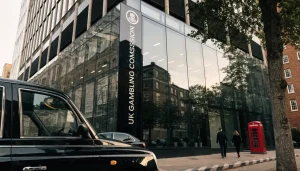
Trusted UK casinos: how to check a licence
A practical way to assess licensing, site domains, terms, payment controls and trust claims before...
































































































































































































































































